Edit
EditBelarusian nitrogen fertilizers: sanctions evasion shifts to Latvia as Poland tightens grip
Grodno Azot employs “special exporters” - Belarusian logistics firms close to Lukashenko, posing as producers
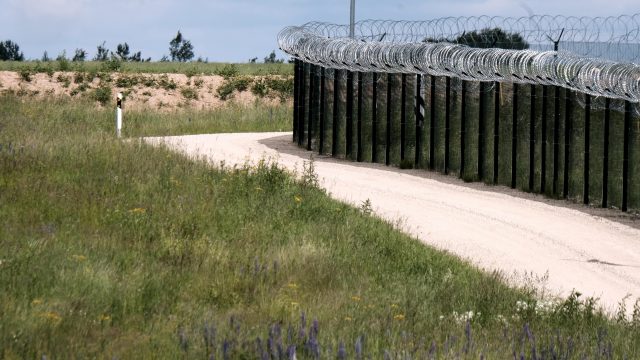
Despite EU sanctions targeting Belarusian state-owned Grodno Azot, nearly half of its nitrogen fertilizer exports – 44%, or 186,000 tons worth $330 million – reached EU markets in 2024, with Latvia emerging as a new conduit in early 2025 after Poland tightened controls.
According to Eurostat and documents uncovered by the Belarusian Investigative Center (BIC), at least 278 wagons of Belarusian fertilizers crossed into Latvia this year, destined for Germany, Hungary, and other EU countries. Grodno Azot, sanctioned for its role in suppressing workers’ protests after the disputed 2020 Belarusian election, employs “special exporters” – Belarusian logistics firms posing as producers – to evade restrictions, revealing a sophisticated scheme tied to allies of President Alexander Lukashenko.
Grodno Azot’s evasion strategy hinges on “special exporters” leasing its production facilities, allowing firms like Technospetstrading LLC to claim manufacturer status and export to the EU without triggering sanctions, per a leaked January 2025 report to Belarus’ Council of Ministers. Technospetstrading, managed by Armenian national Armen Harutyunyan – a former associate of Lukashenko’s sanctioned tennis coach Sergei Teterin – falsely claims to source carbamide from Turkmenistan via Kazakhstan, though BIC-obtained bank documents confirm 99% of its raw materials come from Grodno Azot. Discrepancies in documentation, such as mismatched carbamide grades, further undermine these claims.
Other “special exporters,” including MetaTradingProm LLC, NFT LLC, and Logistic Energy LLC, are linked to Mikalai Varabei, a businessman designated by the U.S. as Lukashenko’s “energy wallet.” Their owners include former Grodno Azot executive Aleh Aliokhin and Andrei Karpovich, an ex-director of Lukashenko’s Presidential Sports Club. These firms rely on EU intermediaries like Estonia’s Stacroloft INC OÜ, whose owner, Sergej Nemirovski, has ties to Viktar Sheiman, a Lukashenko confidant sanctioned for nearly two decades over alleged political assassinations. Sheiman’s connections extend through Nemirovski’s father-in-law, Mikhail Tsyplakov, a former deputy at a Sheiman-led state enterprise.
The shift to Latvia followed Poland’s late-2024 sanctions targeting firms like MetaTradingProm, which previously supplied Poland via intermediaries like Aliansgroup Sp. Z O.O., also linked to Sheiman through Belarusian networks. Before sanctions, over 70% of Grodno Azot’s exports went to the EU, generating significant profits. In 2024, EU sales yielded an 18% profit margin, earning $59 million in the first three quarters, while other markets incurred losses, per internal documents. The resurgence of exports through Latvia underscores the resilience of Belarus’ sanctions evasion, exploiting EU regulatory gaps and raising questions about enforcement as Lukashenko’s regime continues to profit from Western markets.
To read a longer version of this article in English, click here. For a full recap of the investigation please visit the Belarusian or Russian language page for the full version.
Caption: Protest against smuggling of the sanctioned froduction of Grodno Azot, Belarusian Investigative Center (BIC).
Updated: June 24, 2025 - 14:33