Edit
EditLithuania to purchase technologies for detecting illegal migrant tunnels
Lithuania's Border Guard Service reported that an unfinished underground tunnel was detected in the Lazdijai district near the village of Pertakas
Lithuania will acquire technologies to help border guards more effectively detect tunnels dug for illegal migration into the country. This was announced by Lithuanian Interior Minister Martynas Katelinas, as quoted by LRT and reported by European Pravda.
Katelinas described the successful testing of tunnel-detection technology borrowed from Poland.
“Last week we tested technology borrowed from the Poles that allows the detection of attempts to dig tunnels – it works, it detected the one tunnel that had been announced, so we will purchase this technology and border guards will definitely be able to use it,” the minister said.
He noted that “more than a dozen” attempts to dig tunnels across the border have been detected recently. According to him, all the tunnels were destroyed.
“Yes, this problem exists, because initially, when there was no fence yet (illegal migrants – ed.), they tried to go straight through, then a fence appeared – they tried to climb over it, then other measures appeared, and now they are trying to penetrate from below. For every restriction they try to find a way around,” the official explained.
This week the Lithuanian State Border Guard Service (VSAT) reported that an unfinished underground tunnel was detected in the Lazdijai district near the village of Pertakas using ground-surface vibration analysis. After the necessary procedures it was filled in.
At the end of July another group of illegal migrants was stopped in the south of the country after law-enforcement officers discovered an unfinished tunnel.
VSAT Commander Rustamas Liubajevas stated that a considerable number of such tunnels have been recorded recently, but cases in which migrants manage to enter Lithuania undetected remain isolated.
Neighbouring Latvia closed its border with Belarus on the evening of 31 July and urged people to use other routes to return to the country.
This year Latvia has faced a surge in illegal migration from Belarus. Almost 8,000 migrants tried to enter the country from Belarus – nearly nine times more than the number who attempted to enter Lithuania.
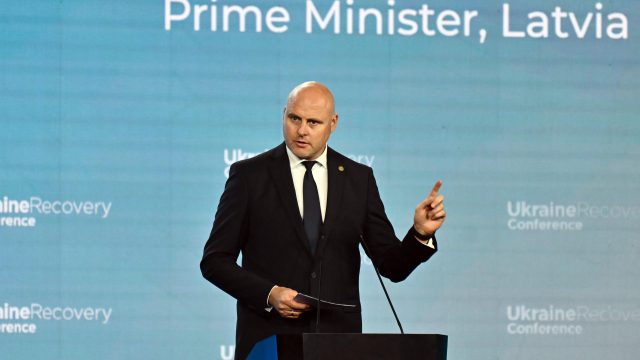
Latvian Prime Minister Andris Kulbergs said that “the higher leadership of the Russian mafia” stands behind the recent spike in attempts to cross the border illegally from Belarus into his country.
Lithuanian Interior Minister Martynas Katelinas stated that if the current scale of secondary illegal migration from Latvia continues, the authorities may consider temporarily reintroducing border controls.
Lukashenko’s hybrid warfare through weaponised migration
Since mid-2021, the regime of Belarusian leader Alexander Lukashenko has systematically used irregular migration as a tool of hybrid warfare against neighbouring EU and NATO states (primarily Poland, Lithuania and Latvia). This followed EU sanctions imposed after the disputed 2020 presidential election and the subsequent crackdown on protests.
Belarusian authorities facilitated the arrival of migrants mainly from the Middle East, Africa and Asia by easing visa rules, organising flights to Minsk and then transporting groups toward the EU’s external borders. Belarusian security forces have been documented escorting migrants to the frontier, sometimes providing tools to breach fences. The aim has been to create chaos, overwhelm border services, generate political pressure inside the EU and retaliate for Western sanctions.
EU governments and analysts describe the campaign as the “instrumentalisation of migration” – a deliberate hybrid attack rather than spontaneous refugee flows. Tens of thousands of attempted crossings were recorded in the peak years; Poland, Lithuania and Latvia responded by building border fences, declaring states of emergency in border zones and conducting pushbacks. Fatalities have occurred on both sides of the frontier.
The pressure has continued and adapted over time. After Poland and Lithuania hardened their borders, flows shifted toward Latvia (as reflected in the 2026 figures cited in the article above). Tactics have evolved from open crossings and climbing fences to digging tunnels under barriers – precisely the threat Lithuania is now addressing with new detection technology. Russian involvement or coordination is frequently alleged by Baltic and Polish officials, framing the operation as part of a broader hybrid campaign against NATO’s eastern flank.
The practice remains ongoing in 2025–2026, with Belarus continuing to facilitate migrant movements as a low-cost means of destabilising its western neighbours.
The article in Ukrainian by EUalive’s partner European Pravda can be found here.
Caption: Illustrative photo. A border fence is seen during Media day at the Baltic Defence Line near Kiiskova in Estonia, 26 June 2026. In January 2024, Latvia, Lithuania and Estonia approved the Baltic Defence Line initiative to strengthen the defence of the eastern border of the Baltic countries and NATO. EPA/VALDA KALNINA
Updated: August 2, 2026 - 11:00