Edit
Bulgaria’s “end” to Ukraine aid: rhetoric vs. reality in Sofia’s balancing act
Prime Minister Rumen Radev’s government is navigating domestic pro-Russian sentiments while maintaining EU and NATO commitments
International headlines blared this week that Bulgaria is halting military aid to Ukraine. Defence Minister Dimitar Stoyanov announced that the new government under Prime Minister Rumen Radev will send no more weapons, arguing the conflict is a war of attrition best resolved at the negotiating table. Media outlets framed this as a pro-Russian shift, aligning with Radev’s long-held view that arming Ukraine only prolongs suffering.
This reporting is technically accurate but deeply misleading without context. It conflates official declarations aimed at a domestic audience with the practical realities of Bulgaria’s contributions and its behaviour on the European stage.
Modest direct aid, substantial indirect support
Bulgaria has never been a top-tier direct donor. It delivered around 13 aid packages since 2022, often involving Soviet-era stockpiles like T-72 tanks, Su-25 aircraft (via intermediaries), BTR armored vehicles, and artillery shells – equipment Ukrainian forces could use immediately without retraining.
Much of the real impact came indirectly. In the early phases of the war, Bulgaria exported large volumes of ammunition and weapons to European intermediaries or third countries, which then routed them to Ukraine. Officials could plausibly deny direct involvement while still supplying critical Soviet-calibre munitions when Ukraine needed them most. This “arms through the back door” approach was deliberate, driven by political sensitivities at home.
Analysts expect commercial exports and third-party-funded flows to continue or even grow. Bulgaria’s defence industry, particularly producers of 122mm and 152mm shells, remains a key European supplier. Stopping official aid does not equate to shutting down production lines or private/commercial channels. The new government’s statement targets direct state-to-state transfers, not the broader ecosystem.
Domestic politics: playing to a pro-Russian public
Radev’s landslide victory reflected Bulgaria’s distinct public mood. Historic ties to Russia run deep. Large segments of the population remain skeptical of Ukraine and view the war through a lens sympathetic to Moscow. Social media – especially Facebook – amplifies these sentiments, with widespread narratives portraying Ukraine as greedy and provocative and the West as escalatory.
Previous governments downplayed or obscured aid precisely to avoid backlash. Radev, a former president now prime minister, won by courting this electorate. His rhetoric – “the war cannot be won on the battlefield,” Ukraine needs “more people, not more weapons” – resonates at home, even as battlefield realities (Ukrainian advances, Russian losses, and adaptive defence) challenge such pessimism.
This domestic posturing carries risks. If Ukrainian successes mount – potentially including major disruptions to Russian command – Radev’s predictions could look outdated. Yet his base is resilient; embarrassment abroad rarely destabilizes leaders anchored in populist sentiment.
EU and NATO: continuity over confrontation
Here lies the clarification international coverage often misses. Bulgaria remains a NATO and EU member. Radev has shown flexibility in the past: he has not blocked major decisions, and his government is unlikely to become a full-fledged spoiler like Orbán’s Hungary. At European Council tables, expect alignment with consensus positions on sanctions and support frameworks, even if qualified by calls for “diplomatic solutions.”
Radev’s team will likely maintain a two-track approach: hawkish skepticism for domestic consumption, pragmatic cooperation internationally.
The bottom line
The Stoyanov announcement is real but limited in scope. Direct official aid was always modest and politically fraught. Indirect contributions – commercially or via allies – have been far more significant and are poised to persist. Radev’s government is responding to its voters while avoiding outright rupture with Brussels and Washington.
International reporting that treats this as a clean “stop” to Bulgarian support for Ukraine does a disservice. It overlooks the gap between home-front messaging and on-the-ground logistics, as well as Sofia’s history of quiet pragmatism. In Eastern Europe’s complex geopolitics, symbols and statements matter – but sustained ammunition flows and alliance commitments matter more. The proof, as ever, will be in the eating: watch exports, EU voting records, and battlefield realities, not just press conferences in Sofia.
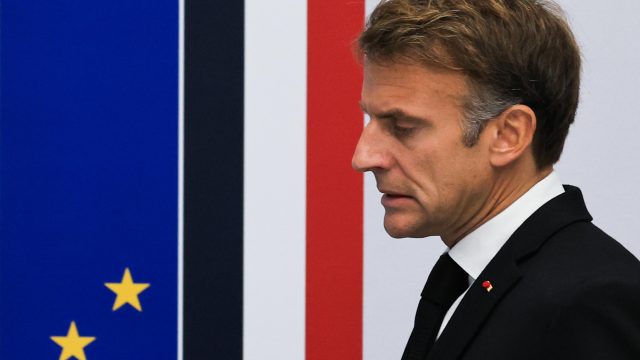
Caption: Bulgaria’s Prime Minister Rumen Radev arrives at the EU-Western Balkans summit in Tivat, Montenegro, 5 June 2026. The high-level one-day summit brings together European Union (EU) leaders and their Western Balkan counterparts to discuss concrete integration measures and accelerate the region’s path toward bloc membership. EPA/BORIS PEJOVIC
Updated: June 10, 2026 - 08:04