Edit
Putin’s proposed Trump-Xi summit on Ukraine risks being meaningless without Kyiv and Europe
Great-power deals that rearranged borders or security arrangements without the meaningful participation of the affected states have often proved unstable
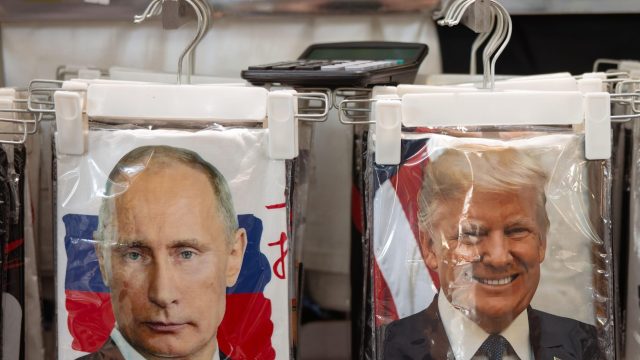
Russian President Vladimir Putin has proposed a trilateral summit with U.S. President Donald Trump and Chinese leader Xi Jinping next month to discuss ending the war in Ukraine on terms favorable to Moscow, according to The Wall Street Journal, which cited people familiar with the discussions.
The idea was raised during a 9 October telephone call between Putin and Trump – the same conversation that produced an agreement for the United States to purchase Russian diesel fuel and facilitate its sale on global markets. Kremlin spokesman Dmitry Peskov confirmed to the Journal that talks about a potential meeting are underway, though he said there is still “no clear understanding” of the summit itself or its agenda. All three sides have acknowledged the hypothetical possibility of such a gathering.
Moscow has suggested holding the talks on the sidelines of the Asia-Pacific Economic Cooperation (APEC) summit scheduled for November 18–19 in Shenzhen, China. Russian officials have floated the proposal with Beijing, and Chinese counterparts have indicated they would not object if Trump agrees to participate, people familiar with the discussions told the Journal. A senior U.S. official said Trump has not accepted the invitation but could be open to it, given his stated desire to end the conflict.
The proposal does not include Ukrainian President Volodymyr Zelenskyy. The Journal described the format as unprecedented and one that would be expected to alarm European capitals.
Why the summit would lack meaning without Ukraine and Europe
Any negotiation that excludes Ukraine – the country whose territory, sovereignty, population, and security are directly at stake – would lack basic legitimacy and practical enforceability. Ceasefires, territorial arrangements, security guarantees, prisoner exchanges, and reconstruction plans cannot be imposed from the outside and sustained without Kyiv’s consent. Ukraine has repeatedly stated its readiness for talks that include its leadership; it has also rejected deals that treat its future as a subject for external bargaining.
Europe’s absence would compound the problem. European Union and NATO countries have provided the bulk of military, financial, and humanitarian support to Ukraine since Russia’s full-scale invasion. They also have direct security interests in the outcome: border stability, energy security, refugee flows, and the risk of further Russian aggression. A settlement negotiated solely by the United States, Russia, and China would leave Europe to implement or fund outcomes it had no role in shaping – an arrangement unlikely to prove durable. Recent European reactions to the U.S.-Russia diesel deal and sanctions waiver already show growing friction with Washington over approaches to Moscow.
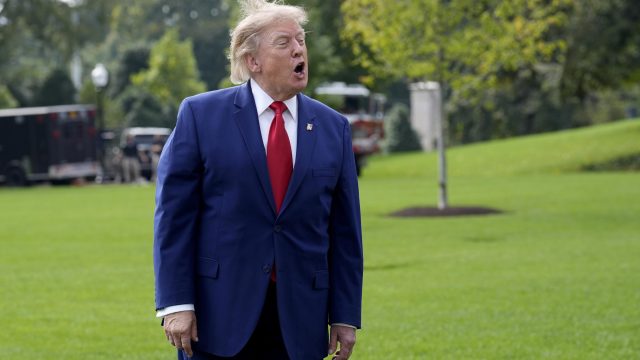
A politically weakened President Trump following the 3 November midterm elections would further diminish the significance of any such summit. With his approval ratings hovering in the low-to-mid 30s and Democrats favored by most forecasters to retake the House of Representatives – and competitive in the Senate – Republican losses would constrain his domestic political capital and ability to deliver on foreign commitments. The proposed APEC-sideline meeting, scheduled just two weeks after Election Day, would therefore occur against a backdrop of a lame-duck president facing a hostile Congress, reducing the leverage he could bring to any Ukraine discussions and underscoring the limited weight of a format that already excludes the parties most directly affected.
History offers cautionary parallels. Great-power deals that rearranged borders or security arrangements without the meaningful participation of the affected states have often proved unstable. While the proposed format has been compared in some Russian commentary to mid-20th-century conferences, those precedents involved formal wartime alliances and clear postwar occupation realities that do not exist here. In the current conflict, any lasting arrangement would still require Ukrainian buy-in for monitoring, demining, and political acceptance, plus European involvement for economic recovery and security architecture.
This article draws on reporting by the WSJ
Caption: Large inflatables depict US President Trump and Russian President Putin kissing on a participating boat during the Canal Parade in Amsterdam, the Netherlands, 1 August 2026. The boat parade is traditionally part of Pride celebrations in the Dutch capital. EPA/SEM VAN DER WAL
Updated: October 19, 2026 - 09:43