 Edit
Bulgaria and Turkey freeze controversial BOTAŞ gas deal in bid to reset strategic energy ties
The breakthrough was reached at Erdoğan-Radev talks, giving Sofia breathing space to rewrite one of its most politically contentious energy agreements
Bulgaria has secured a temporary suspension of one of its most controversial energy agreements after reaching a deal with Turkey to freeze the implementation of a long-disputed BOTAŞ gas contract, easing immediate financial pressure on state-owned supplier Bulgargaz while opening a new round of negotiations over its future.
The protocol, signed by Bulgargaz and Turkey’s state-owned energy company BOTAŞ, suspends the agreement for 15 months. During that period, Bulgaria will pay only for the import capacity it actually uses through Turkish LNG terminals and the country’s gas transmission network instead of continuing to incur charges for capacity that has largely remained unused.
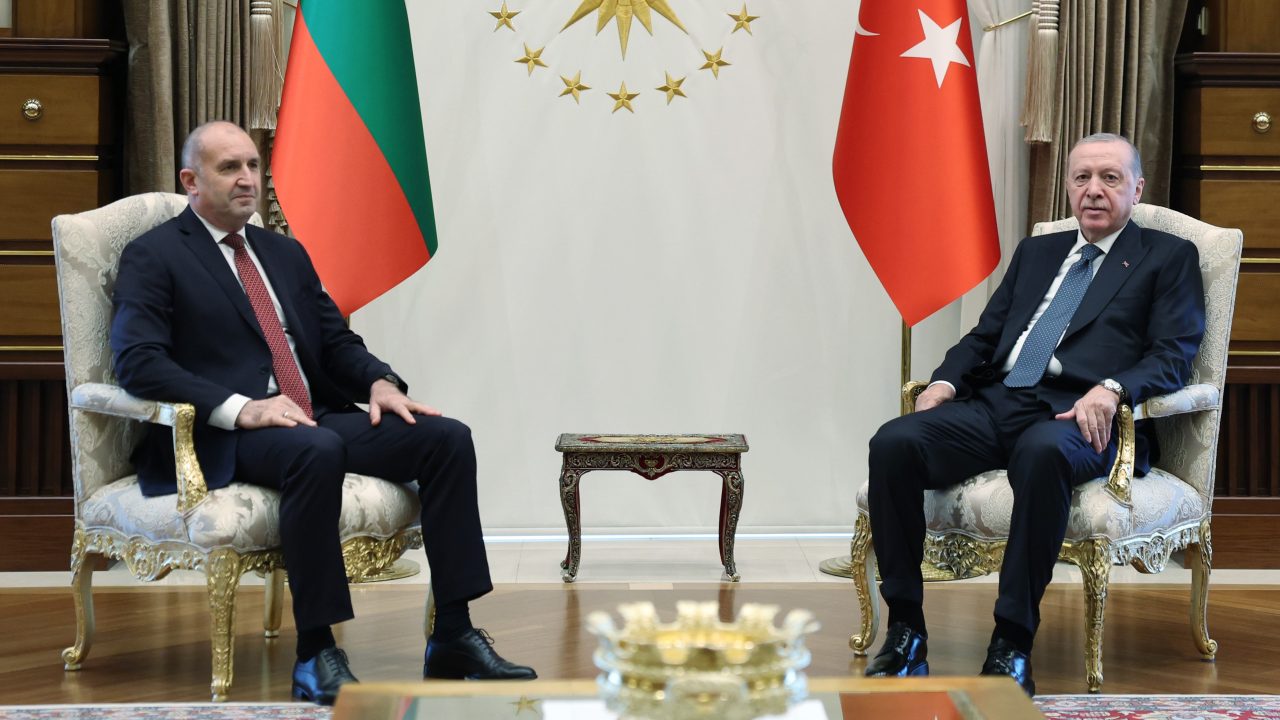
The agreement was announced by the Bulgarian government after Bulgarian Prime minister Rumen Radev met Turkish President Recep Tayyip Erdoğan in Ankara on Monday, suggesting that political intervention at the highest level was needed to unlock negotiations that had stalled for months.
Although presented as a temporary solution, the deal marks the first tangible breakthrough in one of Bulgaria’s most divisive energy disputes.
The original agreement, signed in January 2023 by a caretaker government appointed by then President Radev, committed Bulgargaz to reserve 1.8 billion cubic metres of annual import capacity through Turkish LNG terminals until 2036, on a take-or-pay basis. At the time, the contract was presented as a strategic solution to Bulgaria’s efforts to diversify gas supplies after Russia sharply reduced deliveries to Europe.
In practice, however, only minimal volumes have entered Bulgaria under the agreement.
Meanwhile, Bulgargaz continued to accumulate significant financial obligations for reserving infrastructure it barely used. According to government estimates, the company faced daily liabilities exceeding €536,000, making the contract one of the most expensive commitments in Bulgaria’s recent energy policy.
The agreement soon became the subject of fierce political controversy.
Opposition parties accused the caretaker administration of accepting commercially unfavourable conditions, while parliamentary investigations questioned both the economic rationale behind the contract and the circumstances surrounding its signing. The case was eventually referred to Bulgaria’s Prosecutor’s Office. Unable to sustain the mounting costs, Bulgargaz stopped making payments, leaving the dispute unresolved.
Successive governments acknowledged the need to amend the agreement but found themselves with little room for manoeuvre. Officials repeatedly noted that terminating the contract outright would require Bulgaria to settle its obligations for the remaining duration of the agreement, effectively making renegotiation the only viable option.
The newly signed protocol therefore represents less a cancellation of the contract than an opportunity to redesign it.
According to Bulgarian officials, Sofia’s main objective is to reduce the reservation and transmission fees that account for most of the financial burden. The overall contract period and the agreed import volumes could remain intact if both sides succeed in improving the commercial terms.
The decision to suspend the agreement also reflects changing realities in the European gas market.
When the contract was negotiated in late 2022, Europe was scrambling to replace Russian gas and competition for LNG import capacity was intense. Since then, gas markets have stabilised, prices have fallen significantly from their crisis peaks and regional infrastructure has expanded, reducing the urgency that originally justified the deal.
For Turkey, however, the discussions appear to extend well beyond natural gas.
Ankara increasingly sees Bulgaria as a strategic gateway to the European Union, not only for energy supplies but also for transport and trade. Turkish officials have repeatedly linked the resolution of the BOTAŞ dispute to broader cooperation on regional connectivity.
One issue reportedly discussed during the latest negotiations concerns Turkey’s interest in gaining access to Bulgaria’s electricity transmission network as part of future projects to transport renewable electricity from the Caspian region into the European market. Such plans would complement Ankara’s ambition to establish itself as a regional energy hub connecting suppliers in Central Asia and the Caucasus with European consumers.
Transport infrastructure also features prominently on the bilateral agenda. During a recent visit to Sofia, Turkish Foreign Minister Hakan Fidan described the BOTAŞ issue as only one element of a much larger strategic partnership, highlighting projects such as the Black Sea Motorway, a possible new railway connection, the expansion of the Kapitan Andreevo border crossing and additional checkpoints along the common border.
Against that backdrop, the timing of the agreement is unlikely to be coincidental.
The protocol was signed shortly after Radev and Erdoğan met in Ankara ahead of the NATO summit.
According to the Turkish presidency, the two leaders discussed expanding cooperation in trade, transport, defence and energy. Erdoğan also praised Bulgaria’s approach towards its ethnic Turkish community, describing it as a bridge between the two countries, and invited Radev to attend the COP31 climate summit that Turkey will host in Antalya in November.
While the suspension does not eliminate Bulgaria’s contractual obligations, it immediately removes one of the most pressing financial burdens facing Bulgargaz and creates a 15-month window to negotiate a more sustainable arrangement.
While Bulgaria tries to renegotiate its gas deal with Turkey, Ankara eyes even bigger projects
Caption: Bulgarian Prime Minister Rumen Radev (left) meets Turkish President Recep Tayyip Erdoğan in Ankara ahead of the NATO Summit, 6 July 2026. [Bulgarian Government Information Service]
Updated: July 7, 2026 - 03:07