 Edit
Ukraine hardens Belarus policy as Kyiv rejects Western outreach to Lukashenko
The visit of Belarusian opposition leader Sviatlana Tsikhanouskaya to Kyiv highlighted a growing divergence between Ukraine and some Western partners over how to deal with Alexander Lukashenko’s regime
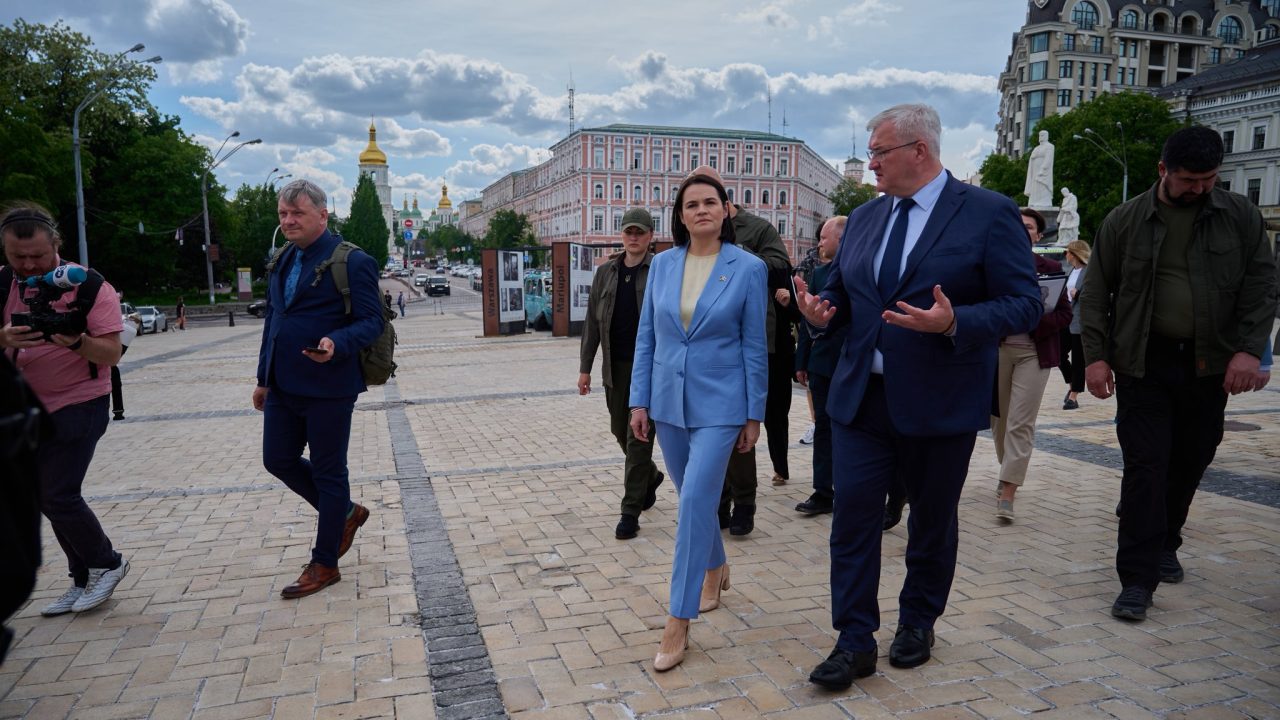
This week’s visit to Kyiv by Belarusian opposition leader Sviatlana Tsikhanouskaya marked more than a symbolic shift in Ukraine’s relations with Belarusian democratic forces in exile. It also exposed an increasingly visible geopolitical divide between Kyiv and several Western capitals over the future of Belarus and the policy that should be pursued toward the regime of Alexander Lukashenko.
For years, Ukraine avoided formal political engagement with the Belarusian opposition, partly in the hope that maintaining limited channels with Minsk could help restrain Lukashenko or reduce Belarus’ involvement in Russia’s war against Ukraine. That policy has now changed officially and, according to Ukrainian officials and Belarusian opposition representatives, irreversibly.
Kyiv has increasingly aligned itself with Belarusian democratic forces while simultaneously advocating tougher pressure on Minsk, even as the United States and several European governments appear to be cautiously reopening channels with Lukashenko.
For Ukraine, the Belarus question is not primarily ideological but strategic.
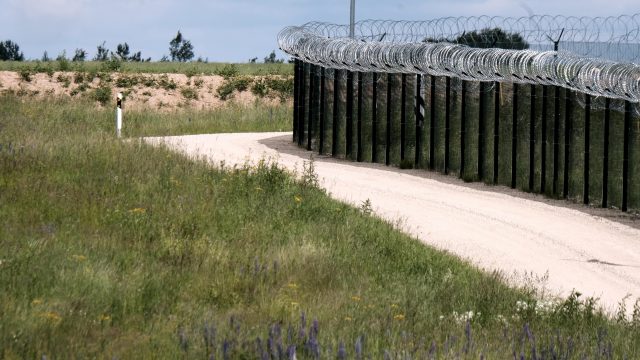
Ukraine shares more than 1,000 kilometres of border with Belarus, and Kyiv increasingly sees the future of the neighbouring country as directly tied to its own long-term security and geopolitical position. Russian troops launched their 2022 assault on Kyiv from Belarusian territory, while Belarus continues to play an important logistical and military role in Russia’s war effort, including in aerial attacks and operations involving long-range drones.
Ukrainian officials and analysts argue that even after the war ends, Belarus will remain one of the decisive factors shaping Ukraine’s security environment. A hostile Belarus integrated into Russia’s military and political system would mean that Ukraine continues facing threats not only from the east, but also permanently from the north.
Conversely, a Belarus detached from Moscow’s orbit would radically reshape the regional geopolitical balance in Ukraine’s favour.
That calculation increasingly explains Kyiv’s more open support for the Belarusian opposition.
Ukrainian Foreign Minister Andrii Sybiha stated during Tsikhanouskaya’s visit that Ukraine supports “a European and democratic future for Belarus”, adding that Belarus “is also Europe”. He also confirmed that Kyiv sees Tsikhanouskaya and her team as representatives with whom Ukraine intends to maintain dialogue.
Tsikhanouskaya, for her part, said that Ukraine and the Belarusian people share a common objective: ending Russian aggression and later “building a European future together”.
According to her, “without a free Belarus there cannot be a secure Ukraine, and without an independent and free Ukraine there cannot be a democratic Belarus”.
For Kyiv, Belarus also carries broader economic significance. Ukrainian analysts argue that a future Belarus outside Russian influence would open direct access to Baltic ports and Baltic markets, while reducing Ukraine’s logistical dependence on Poland.
The shift in Ukrainian policy has become even more significant because it coincides with growing signs of a policy adjustment in Washington and several European capitals toward Minsk.
From pariah to partner? Belarus frees 250 prisoners in exchange for U.S. sanctions relief
The United States has gradually begun recalibrating its approach to Lukashenko. Contacts between Washington and Minsk intensified last year after several political prisoners were released in exchange for limited sanctions relief, including measures affecting the Belarusian airline Belavia. U.S. President Donald Trump also appointed a special representative for Belarus, John Cole.
Those negotiations produced tangible results. Several prominent political prisoners were released, including Tsikhanouskaya’s husband Siarhei Tsikhanouski, Nobel Prize laureate Ales Bialiatski and ethnic Polish activist Andrzej Poczobut.
Around 2,000 political prisoners nevertheless remain in Belarusian prisons, and further releases are expected to require additional Western concessions.
In most cases, those concessions have involved partial sanctions relief, particularly concerning Belaruskali, Belarus’ major potash exporter. Yet despite some U.S. easing measures, broader restrictions imposed by the EU and Ukraine still prevent Belarusian potash exports from fully returning to global markets.
The issue has become especially sensitive because Belarusian fertiliser exports historically depended on Lithuanian ports, which remain closed to Belaruskali.
According to Ukrainian media reports, the United States has also pressured Kyiv to allow Belarusian fertiliser transit through Odesa. While the Ukrainian route is not viewed as the primary export option, Ukrainian officials reportedly saw the request as politically significant because it could create a precedent for wider sanctions relaxation.
Kyiv refused.
Instead of softening pressure, Ukraine has publicly called for even tougher measures against Minsk.
Sybiha openly rejected the idea that sanctions relief could pull Belarus away from Russia, arguing that the Lukashenko regime is already too deeply integrated with Moscow politically, economically and militarily.
“People should have no illusions that any easing will remove Belarus from Russia’s sphere of influence. It will not,” Sybiha said.
The dispute has expanded beyond Washington. French President Emmanuel Macron recently held telephone talks with Lukashenko amid concerns over a potential Russian attack from Belarusian territory against an EU or NATO member state.
Although details of the conversation were not disclosed, the contact itself was interpreted by many in Kyiv as evidence that some Western governments increasingly view Lukashenko as a negotiating partner rather than an isolated authoritarian leader.
Ukraine fears that such contacts risk repeating a long-standing cycle in which Lukashenko exchanges promises of limited distancing from Moscow for sanctions relief, without fundamentally changing Belarus’ political course or reducing Russian influence.
Kyiv now appears determined to challenge that approach directly.
Tsikhanouskaya’s visit to Kyiv took place precisely at the moment when Lukashenko was reportedly attempting to restore dialogue with Ukraine, a move that could have strengthened arguments in favour of sanctions easing.
Instead, Ukraine publicly sided with the Belarusian opposition.
Sybiha also announced that Kyiv would consider introducing additional sanctions proposed by Belarusian democratic forces during the visit.
Lukashenko frees husband of exiled Belarus opposition leader in U.S.-brokered deal
Caption: Ukrainian Foreign Minister Andrii Sybiha welcomes Sviatlana Tsikhanouskaya, Head of the United Transitional Cabinet of the Belarusian Democratic Opposition and leader of the Belarusian democratic forces, in Kyiv./MFA of Ukraine
The full article in Ukrainian by EUalive’s partner European Pravda – here.
Updated: May 27, 2026 - 05:32