 Edit
The untapped potential of the Cyprus-Haifa corridor
By treating Haifa and Cyprus as a unified economic zone, the region can establish itself as a vital link between Europe and the Middle East
The geographical proximity of Haifa and Cyprus presents an underutilized corridor that could enhance connectivity between the Middle East and the EU , writes Shay Gal.
Shay Gal is an expert in international politics, crisis management and strategic communications. He focuses on power relations, geopolitical strategy and public diplomacy, and their impact on policy and decision-making.
Haifa and Cyprus sit just 260 kilometres apart – a gap so small it seems accidental, yet so underused it functions like an untouched frontier.
See them not as two coastlines but as one corridor, and the shortest, calmest seam between the Middle East and the EU suddenly becomes the region’s most undervalued strategic asset.
For most of the twentieth century, this seam was alive.
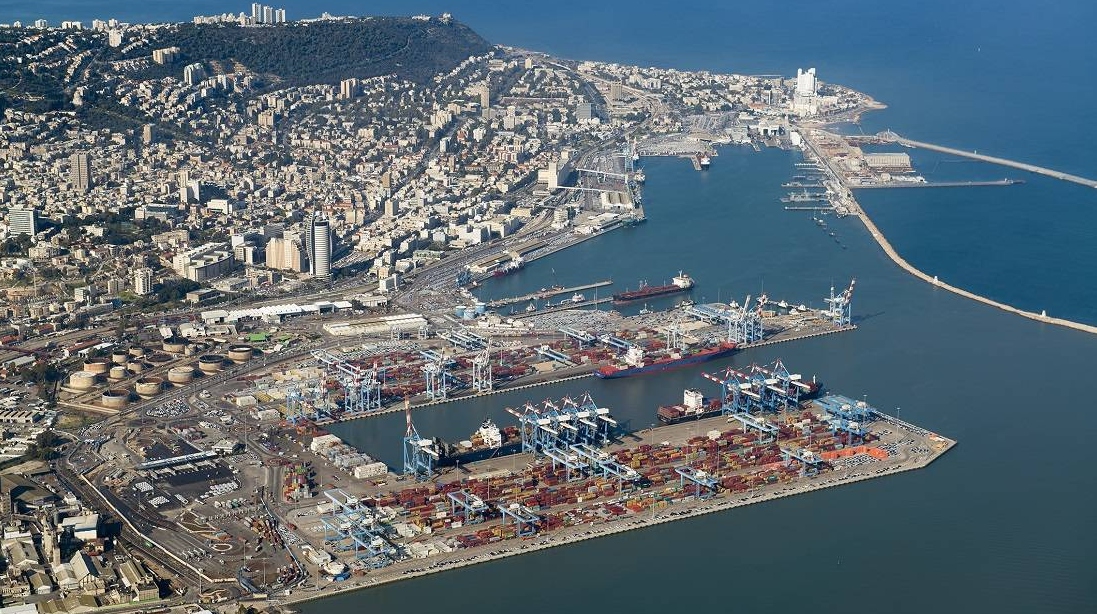
Haifa’s deep-water port was the British Mandate’s gateway to the Levant; large ships sailed to Cyprus and onwards to Greece; seasonal ferries connected communities and travellers across the region.
When those ferries disappeared in the 2000s, nothing replaced them.
The geography stayed the same, but the institutions that once enabled a short sea link between Israel and the EU fell dormant.
Aviation partially filled the void, but not to the extent or with the scale or intentionality that a real corridor requires.
Haifa Airport, with its 1,300-metre runway, will never compete with Ben-Gurion International Airport. It does not need to.
What it can do well is operate high-frequency turboprop and regional jet flights on short sectors. Haifa-Larnaca is a feeder that spends barely half an hour in the air and now operates with reliable weekly frequencies.
On the Cypriot side, Larnaca and Paphos handle more than 12 million passengers annually, supported by Cyprus Airways and a network of European carriers.
Open skies
The EU-Israel open-skies agreement already treats Israel as a near-internal market, making Haifa-Larnaca not a side route but a legitimate regional feeder into the European system.
The moment Cyprus completes its entry into Schengen – a process already technically achieved and awaiting political confirmation – the geometry changes entirely. Larnaca becomes the external Schengen checkpoint for Northern Israel.
A traveller from Haifa boarding a turboprop clears Schengen entry there and steps into Europe with the same ease that Eurostar passengers once crossed into Paris as if on a domestic line. For a region that today requires a 2-hour drive south to reach an international gateway, the nearest door to Europe is only an hour north by air.
Codeshare agreements then turn convenience into strategy. If Cyprus Airways and selected European carriers treat Haifa-Larnaca as a timed connector into their departure banks, Haifa becomes the northern rail-head of Israel’s global aviation and Cyprus the interchange.
Travellers across northern Israel begin to think of Europe not as a journey to Ben-Gurion but as a short hop to Cyprus.
This is how the Oresund corridor turned Copenhagen and Malmo into one labour market; how the Channel Tunnel shifted London-Paris from aviation to rail in under a decade; how short distances create economic gravity when frequency and reliability do the work.
The sea can do the same for freight and tourism. Limassol is already a high-capacity container, cruise and ro-ro port. Haifa, now operated under modern concession models, is expanding throughput and cutting turnaround times.
A Haifa-Limassol sail is roughly 150 nautical miles – 7 hours on a modern ferry. Cyprus proved the viability of such services when it reopened its link to Greece in 2022.
Extending that spine eastwards to Haifa creates a continuous Haifa-Limassol-Piraeus line tied directly into European highways and railways.
For tourists it becomes a reliable short-sea alternative; for exporters a predictable, congestion-reducing corridor; for IMEC the Eastern Mediterranean leg it lacks.
Trade boost
The economics already exist. Goods trade between Israel and Cyprus exceeds US$1.1 billion, with services accounting for an additional US$2 billion. Cyprus receives over 4 million tourists a year; more than 400,000 arrive from Israel – a disproportionate figure reflecting close ties.
If connectivity through Haifa increases the flow by even 10%-20%, both economies benefit: Cypriot resorts, Israeli hospitality clusters in the north, and SMEs on both sides. Short corridors multiply demand because they collapse mental distance.
Beyond aviation and tourism, the Haifa-Cyprus axis is already becoming the backbone for energy and data. The Great Sea Interconnector – linking Israel, Cyprus and Greece – is the most transformative power project the Eastern Mediterranean has ever attempted, ending both grids’ isolation and plugging them directly into Europe’s energy market.
Israel reiterates support for Great Sea Interconnector linking it to Cyprus and Greece
In parallel, subsea fibre systems such as Quantum, Andromeda and Blue-Raman are carving new Asia-Europe routes that bypass old chokepoints. The electricity and the internet of the next decade will run along the same line as this article proposes for people and cargo.
Israel and Cyprus are not just neighbours; they are Sovereign Edge States – small, capable actors positioned on the world’s seams, carrying disproportionate responsibility for the stability of the Eastern Mediterranean. A corridor between them is not a convenience. It is a strategic function.
This is where IMEC stops being a slogan and becomes a chain. The India-Middle East-Europe Corridor is expected to move 1.5-3 million containers a year.
No planner wants that volume resting on a single port or a single coastline. Adding Limassol – and, in time, Larnaca – alongside Haifa builds redundancy, spreads risk, lifts throughput and turns the Eastern Mediterranean from a bottleneck into a region.
None of this requires grand gestures.
It requires regulators to treat Haifa-Larnaca as a public-interest feeder within an existing open-skies regime; maritime authorities to jointly notify a start-up ferry scheme under EU short-sea rules; customs agencies to pilot a trusted-trade lane between Haifa and Limassol; tourism boards to market twin itineraries; and policymakers to do what the geography already demands: declare the Haifa-Cyprus axis not as a curiosity but as a strategic spine.
If even a modest share of IMEC freight – say 10% – flows through a Haifa-Cyprus short-sea leg, that is 150,000 to 300,000 containers a year: within existing capacity yet enough to generate hundreds of specialised jobs and justify dedicated infrastructure.
Larnaca gateway
If Schengen entry through Cyprus becomes the default for Northern Israelis, Larnaca becomes to Haifa what Copenhagen Airport is to Malmo: the nearest gateway to the world.
And if Haifa becomes a weekend destination for Cypriots and Europeans sailing eastward, Northern Israel gains not only tourists but also relevance.
The point is not new ships or aircraft, but a new framework: Haifa and Cyprus as a single economic space under two flags. Together, they form the most compact and controllable bridge between Europe and the Middle East.
The cables are being laid, the data routes mapped, the aviation rules agreed, and the demand already proven. All that remains is intent. Geography has finished its work. Leadership must begin its own.
The original article with EUalive’s partner LevantIntel can be found here.
Caption: Haifa port @capbcon on X
Updated: February 3, 2026 - 06:58




