 Edit
EditPedro Sánchez under siege: can Spain’s socialist leader survive the corruption storm?
Despite the turmoil, the Prime Minister remains defiant and has ruled out early elections, insisting he will serve until the end of his term in 2027
Spain is witnessing one of the most intense periods of political turbulence in recent memory. On Wednesday, agents from the Civil Guard’s elite Central Operative Unit raided the national headquarters of the ruling Socialist Party (PSOE) in Madrid’s Ferraz Street.
The operation, authorized by Spain’s National Court, sought documents linked to an alleged plot to obstruct justice and discredit critics pursuing legal cases against the government and party. This dramatic move has intensified scrutiny on Prime Minister Pedro Sánchez, whose administration now faces a cascade of corruption allegations that threaten to destabilize his minority coalition government.
The raid was not a conventional search. Investigators informed the PSOE in advance and limited their actions to specific items, reflecting the sensitive nature of probing the ruling party. Prime Minister Sánchez, speaking from Rome after meeting Pope Leo XIV, emphasized full cooperation with the judiciary while reaffirming his support for key figures under investigation. Yet the timing and scope of the probe have fueled opposition claims that the government is mired in systemic misconduct.
Mounting scandals shake the PSOE
At the heart of the latest investigation is a scheme allegedly involving payments to operatives tasked with countering legal complaints against the PSOE and its leaders. One key figure is Leire Díez, accused of running a misinformation campaign to impede proceedings. The inquiry also names former PSOE secretary Santos Cerdán and party finance manager Ana María Fuentes as defendants. Cerdán, once a close Sánchez ally, has already stepped down from his party role amid earlier bribery accusations related to public contracts, which he denies.
The pressure on Sánchez intensified further with the indictment of his predecessor, José Luis Rodríguez Zapatero. The former prime minister, who led Spain from 2004 to 2011, faces charges of influence peddling and money laundering connected to the controversial €53 million bailout of the small airline Plus Ultra during the COVID-19 pandemic. Prosecutors allege Zapatero used his influence to secure the funds in exchange for personal benefits. A striking detail in the 4,000-page judicial summary is the discovery of valuable jewels and luxury watches in Zapatero’s safe, which his associates attribute to family inheritances. Zapatero has vehemently denied wrongdoing, and Sánchez has publicly backed him, stressing the presumption of innocence.
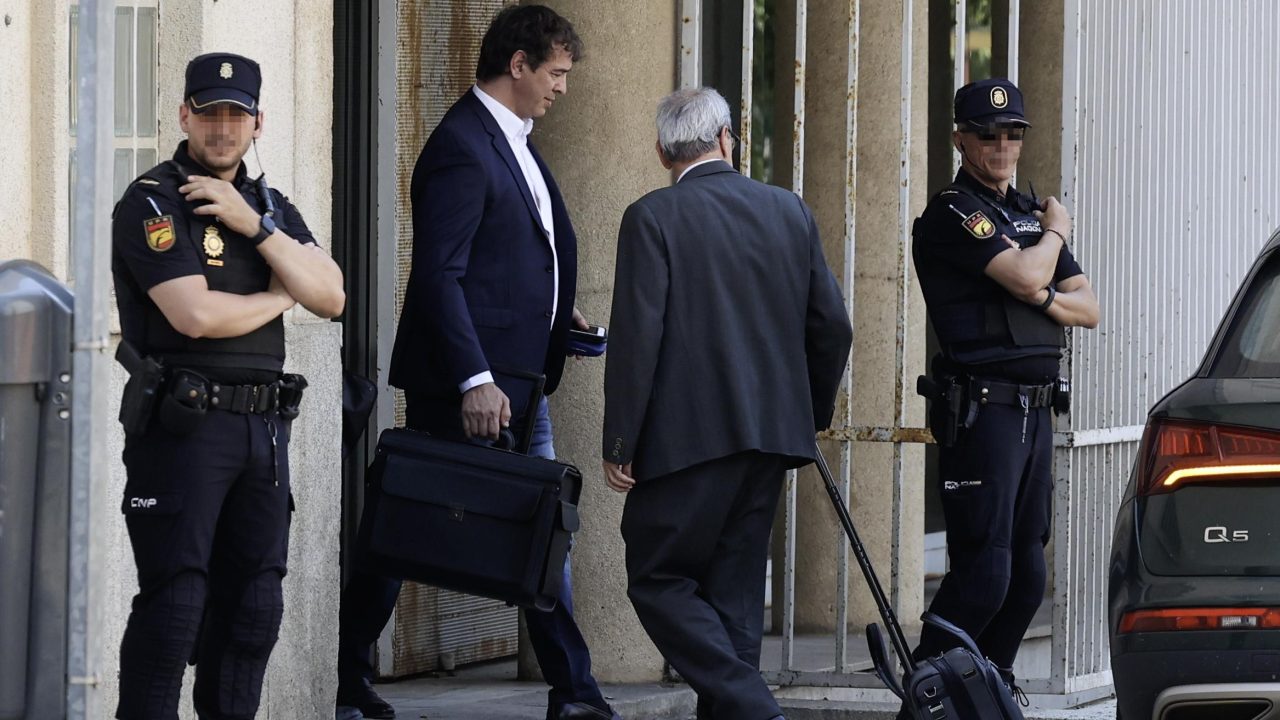
These cases do not stand alone. Sánchez’s inner circle and family have come under fire as well. His wife, Begoña Gómez, was charged last month with embezzlement, influence peddling, and corruption in business dealings. His brother David faces trial on influence-peddling charges alongside other defendants. Both deny the accusations. Additionally, former Transport Minister José Luis Ábalos awaits a verdict in a separate trial involving illegal commissions on mask procurement during the pandemic.
The cumulative weight of these investigations, now reportedly totaling nine open cases, has created a perception of pervasive vulnerability at the top of Spanish politics. Sánchez insists he learned of many details through the media and maintains that his government is cooperating fully with authorities. PSOE spokesperson Montse Mínguez has pushed back aggressively, accusing the conservative opposition of possessing “privileged information” and orchestrating a politically motivated campaign. She highlighted what she sees as differential treatment by the judiciary compared to past scandals involving the People’s Party (PP).
Coalition cracks and the battle for political survival
The scandals have placed immense strain on Sánchez’s fragile governing alliance. After the conservative PP won the most seats in the 2023 election but failed to form a government, Sánchez cobbled together a left-wing minority coalition with support from regional and nationalist parties, including the Republican Left of Catalonia (ERC), the Basque Nationalist Party (PNV), and Sumar. These partners are now growing restless.
Enrique Santiago of Sumar has declared irregular financing a “red line,” warning that his party could withdraw support if allegations of systemic graft are proven. Aitor Esteban of the PNV has urged Sánchez to call snap elections before the end of the year, arguing that governing without a stable majority amid constant legal battles is unsustainable. Gabriel Rufián of ERC has drawn parallels to the PP’s Gürtel scandal, suggesting his party would back efforts to oust Sánchez if evidence of widespread illegal party financing emerges.
Opposition leader Alberto Núñez Feijóo of the PP has been unrelenting. He described the government as one that “stinks” of corruption and repeatedly called for immediate elections. “How many more raids, how many more commissions, how many more bribes?” he demanded. Feijóo’s rhetoric reflects a broader conservative strategy to portray the PSOE as morally bankrupt after eight years in power.
Despite the turmoil, Sánchez remains defiant. He has requested to appear before Congress in late June to address the political situation and has ruled out early elections, insisting he will serve until the end of his term in 2027. “I cannot call elections for partisan interests,” he stated in Rome. “I have to call elections for the general interest of the citizens.” Transport Minister Óscar Puente echoed this resolve, denouncing what he called “undemocratic methods” aimed at toppling the government.
Political analysts note the structural barriers to removing Sánchez. Under Spain’s constitution, ousting a prime minister requires a successful no-confidence motion with an alternative candidate securing a parliamentary majority. While Feijóo would be the natural contender, forging the necessary alliances with ideologically opposed parties like Vox, Basque nationalists, or Catalan separatists remains highly improbable in the short term. Regional power dynamics further complicate any potential realignment.
As summer approaches, Sánchez is expected to adopt a lower profile, hoping public attention will wane during the holiday season. Yet the judicial proceedings show no signs of slowing. For now, Sánchez’s survival hinges on his coalition partners’ tolerance and his ability to project stability amid relentless adversity.
Sources: EFE, El Pais, Reuters, Politico
Caption: David Sanchez, brother of Spanish Prime Minister Pedro Sanchez, is seen leaving the regional Court of Badajoz, Spain, 28 May 2026. David Sanchez was allegedly hired illegally within the provincial government of Badajoz. Sanchez, who resigned from the post in February, faces charges of embezzlement and influence peddling related to his appointment. EPA/Jero Morales
Updated: May 29, 2026 - 10:12