 Edit
Caution and strategy in Balkan reactions to the Israel-Iran conflict
From Ankara to Bucharest, the region offers a mixed bag of reactions, miroring different backrgounds and interests
Since Israel’s surprise strike on Iran on 13 June, the reverberations across the Middle East have been significant and Balkan governments are responding in diverse and sometimes ambiguous ways.
Operation “Rising Lion,” as Tel Aviv named it, was launched amid Israeli suspicions of Iran’s nuclear ambitions. As both sides continue to exchange blows, much of the region – and especially the Balkans – waits for Washington’s next move.
Turkey: mediation offer under own agenda
President Recep Tayyip Erdoğan swiftly reiterated Turkey’s readiness to mediate, though the atmosphere in the country is overshadowed by fears of a broader regional conflagration.
Ankara condemned Israel’s attacks on Iran, while refraining from overt support for its neighbor. It maintains active dialogue with the U.S., a NATO ally and major partner.
Despite tense but pragmatic ties, Iran and Turkey remain united in their opposition to Israel and the war in Gaza. According to analyst Gönül Tol at a Middle East Institute roundtable, a regional war could derail Erdoğan’s foreign policy strategy, aimed at forging economic and energy ties and expanding Turkey’s influence.
The Israeli strike has rekindled debate over the NATO radar base in Kürecik, Eastern Turkey. Some critics accused Ankara of indirectly aiding Israel via intelligence-sharing – a claim the Turkish government vehemently denied.
Instability in Iran could further destabilize Turkey’s struggling economy, disrupt delicate negotiations with the PKK, and trigger new waves of Iranian refugees. In response, Erdoğan announced a build-up of medium- and long-range missile stockpiles.
“Let us hope,” he declared, “that we soon reach a defense capability strong enough to prevent anyone from imposing their will on us.”
Turkey’s offer to mediate in the Israel-Iran are not purely altruistic; they are deeply tied to its strategic ambitions and regional rivalries, particularly with Iran, in shaping the Middle East’s geopolitical landscape, with Syria as a key battleground.
Deciphering Turkey’s efforts in seeking de-escalation in the Israel-Iran clash
Albania: Tehran seen as destabilising actor
As tensions mount, Albanian authorities have taken a strong rhetorical stance, identifying Tehran as a major destabiliser. President Bajram Begaj expressed concern over the regional escalation, reaffirming Israel’s right to security and calling on Iran to dismantle its ballistic and nuclear programs in line with international law.
Former Prime Minister Sali Berisha welcomed the Israeli strikes, branding the Iranian regime a “terrorist and obscurantist dictatorship” and arguing its collapse would be a victory for peace.
Ex-Foreign Minister Genc Pollo echoed this, labeling Israel’s actions as a “legitimate preventive strike” against Tehran’s declared intention to annihilate Israel and develop nuclear arms.
Security expert Ilir Kulla warned that “Israel and Iran have entered a war without knowing how to end it.” Speaking on TV1, he said nuclear escalation is not unthinkable, given Iran’s fortified facilities.
The Albanian government’s response came later and was notably more subdued. After three days of silence, the foreign ministry issued a statement that analysts described as tepid, especially when compared to the stronger voices from within the country’s political elite.
Kosovo: quiet alignment with Israel
Kosovo’s interim government has maintained a tactful but evident alignment with Israel. Prime Minister Albin Kurti voiced concern over the escalation, calling for diplomatic solutions while focusing criticism on Tehran. His statement urged Iran to halt “hybrid threats” and comply with IAEA obligations.
Kurti had previously condemned Hamas’ October 2023 attack and expressed solidarity with Israel, yet refrained from criticising Israel’s operations in Gaza – a contrast to Kosovo’s more vocal stance on Ukraine.
This policy continuity dates back to the 2020 White House-brokered agreements under the Trump administration, which led to mutual recognition and the establishment of Kosovo’s embassy in Jerusalem. Though Kurti questioned the legal validity of this move, his government has not revisited it.
Opposition parties, such as the Democratic Party of Kosovo (PDK) and Democratic League of Kosovo (LDK), have remained silent on the conflict, focusing on domestic crises. Media coverage has centered on fuel price hikes and other economic consequences of the conflict.
Bosnia and Herzegovina: a split landscape
Bosnia and Herzegovina’s political fault lines are once again exposed. No official state-level response has been issued, but influential religious leaders have spoken out. Grand Mufti Husein Kavazović condemned Israel’s military aggression, lamenting “the endless suffering of Gaza’s people” and criticizing politicians who “fuel new spirals of violence.”
Spontaneous pro-Palestine and pro-Iran rallies took place in Sarajevo, primarily involving Turkish and Syrian nationals. Bosnia’s ambassador to Tehran stated Iran had only “reacted after red lines were crossed” and “was acting in self-defense.”
During the Bosnian war, Iran was among the first to support Sarajevo both diplomatically and militarily – a legacy that persists in today’s cautious but ongoing cultural and diplomatic ties.
Meanwhile, Republika Srpska President Milorad Dodik has openly supported Israel and recently visited the country. In contrast, a planned gathering of Orthodox rabbis in Sarajevo was canceled after a federal minister denounced “genocide against civilians in Gaza.”
Serbia: Strategic neutrality with subtle leaning
Mirroring its stance on Ukraine and Gaza, Serbia is officially neutral but shows implicit alignment with Israel. President Aleksandar Vučić continues a balancing act between the EU, Russia, China, and the Non-Aligned Movement.
Serbia has not sanctioned Russia; direct flights to Moscow continue. Though the EU expressed disapproval over Vučić’s visit to Moscow’s 8 May parade, it has taken no concrete steps in response.
Foreign policy analyst Boško Jakšić criticized the sharp rise in Serbian arms exports to Israel – from $1.4 million to $42 million between 2023 and 2024, calling it “complicity in the Gaza tragedy.”
Still, Vučić emphasised Serbia’s economic interests and neutrality: “We maintain friendly relations with both peoples,” he told RTS. Yet he acknowledged the rising cost of oil is a direct consequence of the conflict, with implications for Serbia.
Greece: a call for diplomacy
Greek Prime Minister Kyriakos Mitsotakis spoke by phone with Benjamin Netanyahu shortly after Israel’s initial strikes. While affirming that Iran must not acquire nuclear weapons, Mitsotakis stressed diplomacy over escalation.
He also emphasized the urgent need for a ceasefire in Gaza, the release of hostages, and unrestricted humanitarian aid delivery – reinforcing Greece’s preference for diplomatic containment over military confrontation.
Chaos in Iran would inevitably result in a new tsunami of refugees. Of all EU member states, Greece is the most exposed to immigration waves from the Middle East.
Romania: guarded support for Israel, emphasis on diplomacy
Romania’s first official response came on 15 June via the Ministry of Foreign Affairs, expressing “deep concern” over the regional escalation. The statement stressed diplomacy as the only sustainable path and reaffirmed commitment to non-proliferation principles.
The ministry voiced support for “Israel’s right to self-defense” but added that regional security hinges on “active diplomatic engagement.”
Bucharest also confirmed its embassies and consular services in affected areas were mobilised to ensure the safety of Romanian citizens.
Bulgaria: diplomatic support for de-escalation, concern for civilians safety
At an emergency EU Foreign Affairs Council held via videoconference, Bulgarian Foreign Minister Georg Georgiev reaffirmed Bulgaria’s support for all diplomatic efforts aimed at de-escalating tensions and restoring stability in the Middle East, according to a statement by the Ministry of Foreign Affairs in Sofia.
The ministers focused on the military escalation between Israel and Iran, expressing a shared view that Iran must return to full compliance with its commitments regarding the peaceful use of nuclear energy and cooperate constructively with the International Atomic Energy Agency (IAEA). The Council issued a unified call for an immediate cessation of hostilities and a return to negotiations as the only viable path toward a lasting resolution of the Iranian nuclear issue.
Georgiev voiced strong concern over the growing number of civilian casualties on both sides and underscored the safety of European citizens as a top priority.
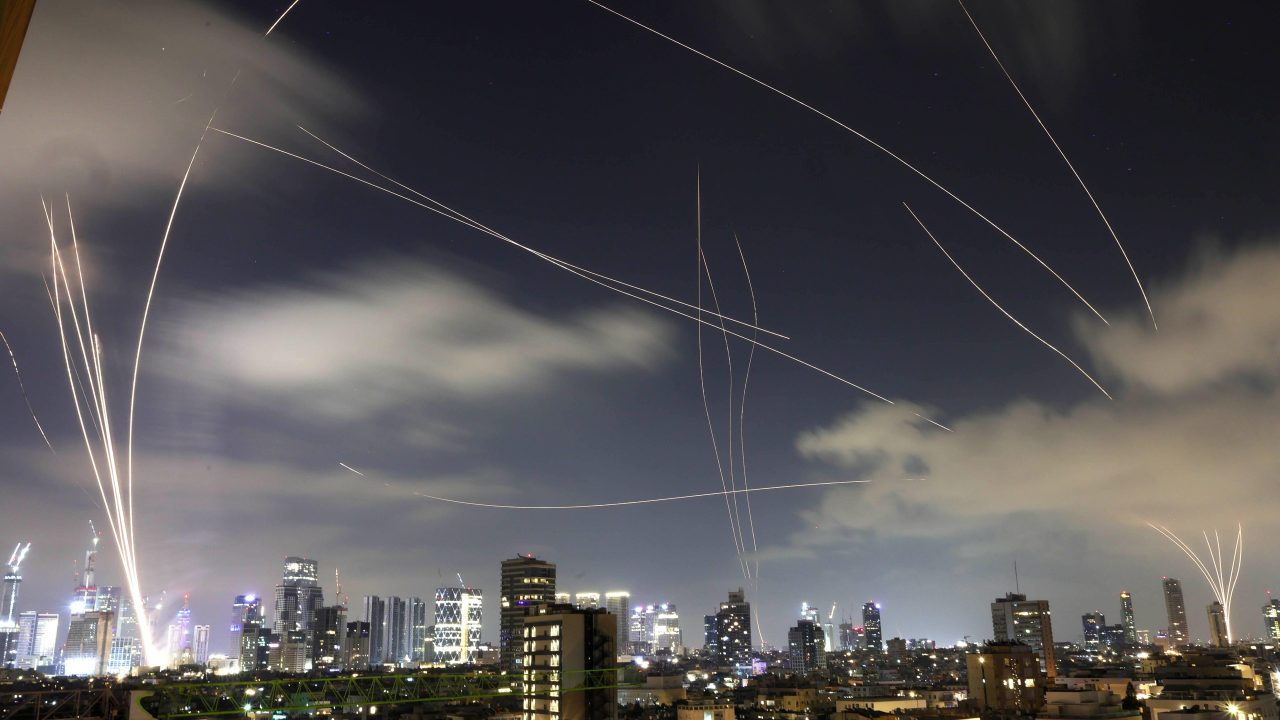
Caption: The Iron Dome, the Israeli air defense system, intercepts missiles fired from Iran, over Tel Aviv, Israel, 17 June 2025. Israel and Iran have been exchanging fire since Israel attacked Iran on 13 June 2025 as part of operation “Rising Lion”. EPA/ABIR SULTAN
Updated: June 19, 2025 - 05:34