 Edit
Vučić’s 15-day robot army: Chinese machines, Serbian guns, Western alarm
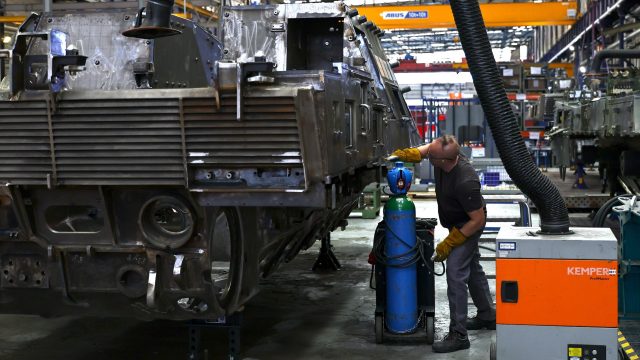
The Šabac plant is presented as Europe’s first facility for mass production of humanoid robots, with plans to produce more than 5,000 units annually
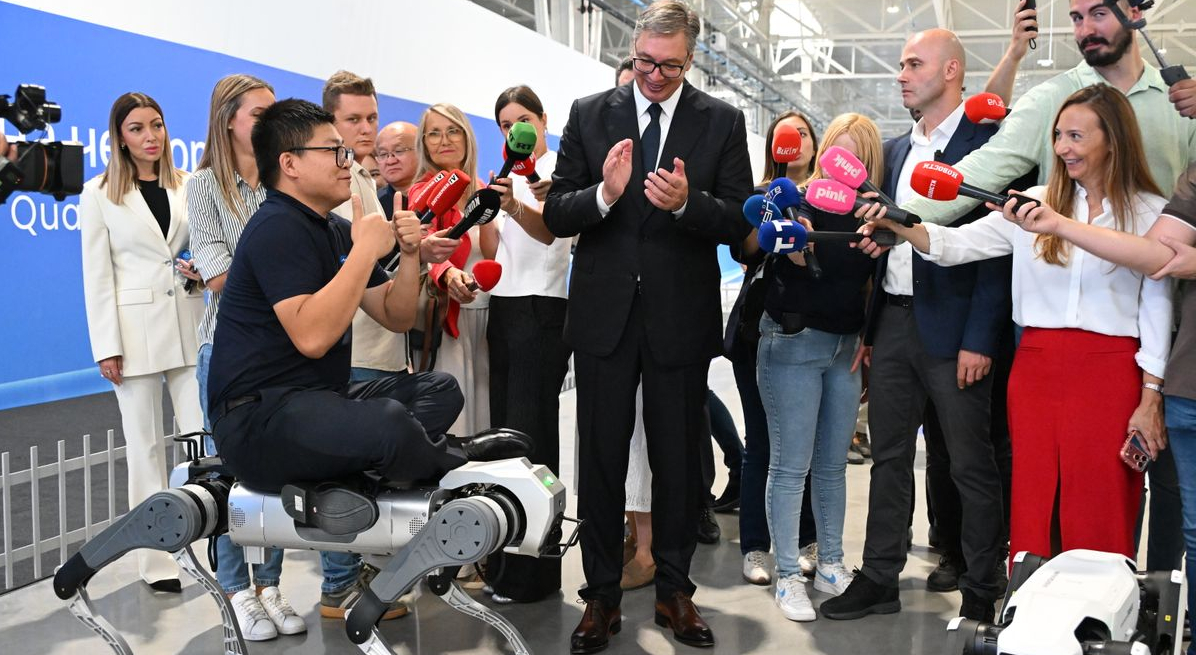
Serbian President Aleksandar Vučić announced on Saturday that the country has purchased quadruped “robo-dogs” from Chinese firm Minth and will demonstrate them in a Serbian Army exercise within 15 days, where they will operate “very serious weapons.”
Speaking at the opening of a new factory in Šabac operated by Minth Group and partner AGIBOT, Vučić said Serbian experts had integrated software allowing remote control of weapons from a great distance capable of significant strikes on enemy forces and personnel. The robots must complete at least 100 hours of movement testing before entering military units.
The Šabac plant is presented as Europe’s first facility for mass production of humanoid robots, with an initial €20 million investment and plans to assemble and later produce more than 5,000 units annually, scaling toward 20,000 including robotic dogs. Officials described the output as destined for European and global markets under a “Made in Serbia” label, with applications in industry, healthcare, agriculture and now defence. A larger robotics industrial park in Inđija with up to €200 million in planned investment was also previewed.
The announcement came roughly one month after the U.S. Federal Communications Commission banned new imports of foreign-made humanoid and quadruped robots, citing cybersecurity vulnerabilities, data-collection risks that could enable surveillance, and the possibility that devices could be remotely commandeered. China dominates global humanoid robot production. Serbian officials framed the factory as a technological leap that will create jobs and position the country as a European pioneer.
Western security analysts have raised parallel concerns about dual-use technology and dependence on Chinese partners.
Chinese companies operate under Beijing’s military-civil fusion policies, which can require firms to support national security objectives. Integrating Chinese-origin robots and software into a national military raises questions about supply-chain control, potential hidden access points, and long-term maintenance dependence. Serbia already fields Chinese drones and air-defence systems and has expanded Huawei-linked surveillance networks under the “Safe City” program, including cameras and data infrastructure. Similar debates over Huawei equipment have prompted U.S. and EU restrictions elsewhere because of espionage and data-security fears.
Producing robots in Serbia may allow some circumvention of direct import bans through local assembly and labelling, yet core hardware, software and training data remain tied to Chinese developers. For an EU-candidate country that also maintains close political and economic ties with China, the military application adds a layer of friction with Washington and Brussels at a time when both have sought to limit sensitive Chinese technology in allied or partner states. Serbian leaders present the project as economic modernization; critics view the combination of armed platforms, remote-control software and existing Chinese infrastructure as a potential vector for influence or disruption. The 15-day demonstration will test both the hardware and the political reaction.
Serbia launched the humanoid robot production in cooperation with Chinese companies Agibot and Minth..
The US should stop cooperating with the Serbian regime in technology… it’s a security threat.
Also pay attention to Huawei and the latest deals in Serbia… https://t.co/UL5N72cRbV
— Ivana Stradner (@ivanastradner) August 29, 2026
The article by EUalive’s partner Beta can be found here.
Caption: Vučić applauds Chinese “robo-dogs” [Website of the President of Serbia]
Updated: August 30, 2026 - 09:11