 Edit
EditEastern flank see EU mutual defence clause as vital NATO complement
Rising hybrid threats prompt eastern members to explore Article 42.7 while insisting it must strengthen, not replace, the Atlantic Alliance
European leaders are quietly breathing new life into one of the EU’s most ambitious yet underused security provisions. At an informal summit in Cyprus in April, Article 42.7 of the Treaty on European Union appeared on the agenda for the first time in years, says an analysis by EUalive’s partner media Update-eu.cz.
The clause requires member states to provide “assistance and support by all the means at its disposal” if another member faces armed aggression. For countries on the EU’s eastern flank, long accustomed to viewing NATO as their ultimate security umbrella, this renewed interest marks a subtle but significant shift.
Although the provision has been invoked only once, by France after the 2015 Paris terrorist attacks, with limited practical effect, geopolitical realities are forcing a fresh look. Russian aggression in Ukraine, hybrid campaigns across the continent, and uncertainty about future U.S. commitment have pushed eastern capitals to examine how European solidarity might function alongside, rather than instead of, NATO.
In early May, EU ambassadors conducted a closed-door “table-top exercise” in the Political and Security Committee to simulate various crisis scenarios. The goal was to clarify coordination procedures, available instruments (military, economic, diplomatic, or humanitarian), and existing gaps. While details remain classified, the exercise signals Brussels’ determination to move from abstract treaty language toward operational readiness, including the planned publication of a practical handbook.
Diverse perspectives across the Eastern flank
Public and political attention to Article 42.7 varies sharply across the region. In Slovakia and the Czech Republic, the topic has barely registered in mainstream debate, appearing only in passing media references. Poland stands out as more engaged, largely due to Prime Minister Donald Tusk’s public calls for the EU to develop genuine operational capacity, especially for protecting the eastern border.
Hungary remains largely silent. According to Tamás Csiki Varga of the János Lukács Institute, this reflects the Orbán government’s long-standing portrayal of the EU as an adversary rather than a partner. Shared European responsibility has stayed outside mainstream discourse. Romania shows similar restraint. Even President Nicușor Dan has downplayed the issue, describing discussions as only beginning and offering general support for security cooperation.
Bulgaria is starting to reconsider the clause in light of hybrid incidents, though discussions remain cautious and low-profile. The Baltic states display greater engagement. In Latvia, foreign policy experts and diplomats increasingly view Article 42.7 as a practical tool, though it has not yet entered broad domestic politics. Lithuania has taken the most proactive stance. President Gitanas Nausėda confirmed active participation in simulation exercises, describing the spring of 2026 as a turning point.
Finland’s position is shaped by its earlier advocacy. During the 2000s and under President Sauli Niinistö, Helsinki pushed for stronger EU defence capabilities and clearer interpretation of Article 42.7. Since joining NATO in 2023, public debate has quieted, but experts continue to monitor its potential.
Hybrid threats test the boundaries of “armed aggression”
A central question remains unresolved: what exactly constitutes an “armed aggression” sufficient to trigger the clause? Eastern members are particularly interested in whether hybrid and cyber operations could qualify.
Czech officials describe Article 42.7 as a valuable complementary instrument, especially for hybrid and cyber threats, where it could improve coordination among member states. Latvian Foreign Minister Baiba Braže advocates preserving maximum flexibility to address both conventional attacks and sophisticated hybrid campaigns, including large-scale cyberattacks, GPS jamming, undersea cable sabotage, and hostile drone activity.
Lithuanian security experts see the clause as ideal for filling “grey zones.” They envision invoking it in response to systemic hybrid assaults on critical infrastructure or state institutions, where EU support could mean rapid technical assistance, alternative energy supplies, or coordinated counter-disinformation efforts.
Polish perspectives appear more cautious. The Foreign Ministry links the interpretation of “armed aggression” to Article 51 of the UN Charter, suggesting a focus on serious military actions rather than isolated hybrid incidents. However, researcher Beata Górka-Winter notes that major cyberattacks causing significant damage or loss of life, comparable in effect to kinetic attacks, could potentially cross the threshold.
Experts like Matúš Halás in Prague argue against setting overly precise criteria. Ambiguity, they suggest, keeps adversaries uncertain. Yet credibility concerns persist. Several officials, particularly in Bulgaria, point out that unlike NATO’s Article 5, the EU clause lacks robust command structures, detailed procedures, and clear decision-making mechanisms. Finnish analyst Tuomas Iso-Markku emphasizes that activation remains ultimately a political decision.
Recent incidents in the region – Baltic Sea cable damage, GPS disruptions, cyber intrusions, and border instrumentalization, have not yet prompted formal discussion of Article 42.7. However, the development of an EU handbook could change this calculus.
Throughout these conversations, one principle remains consistent: Article 42.7 must complement NATO, never compete with it. Latvian officials stress that any strengthening of the EU clause should develop “hand in hand” with the Alliance and must not signal reduced reliance on the United States. Similar positions emerge from Prague, Vilnius, Bucharest, and Warsaw.
Even Polish Prime Minister Tusk, who has questioned the reliability of NATO’s Article 5 in current conditions, insists that European efforts should not undermine transatlantic unity. Finnish experts note that the treaty text itself requires consistency with NATO obligations, making any American withdrawal on the basis of EU mechanisms politically questionable.
Bulgaria and Hungary continue to view NATO as the sole fully functional collective defence framework, with the EU serving as a secondary option at best.
The EU’s effort to operationalize Article 42.7 reflects a broader strategic reality. Eastern members recognize the growing importance of European resilience against hybrid threats while remaining deeply conscious of NATO’s irreplaceable role. As simulations continue and the handbook takes shape, the challenge will be to build credible European capacity without creating the very transatlantic doubts some fear. For now, the eastern flank’s message is clear: more European solidarity is welcome, but only if it reinforces the ultimate guarantee provided by the North Atlantic Alliance.
The original analysis in Czech by EUalive’s partner Update-eu.cz in Czech can be found here.
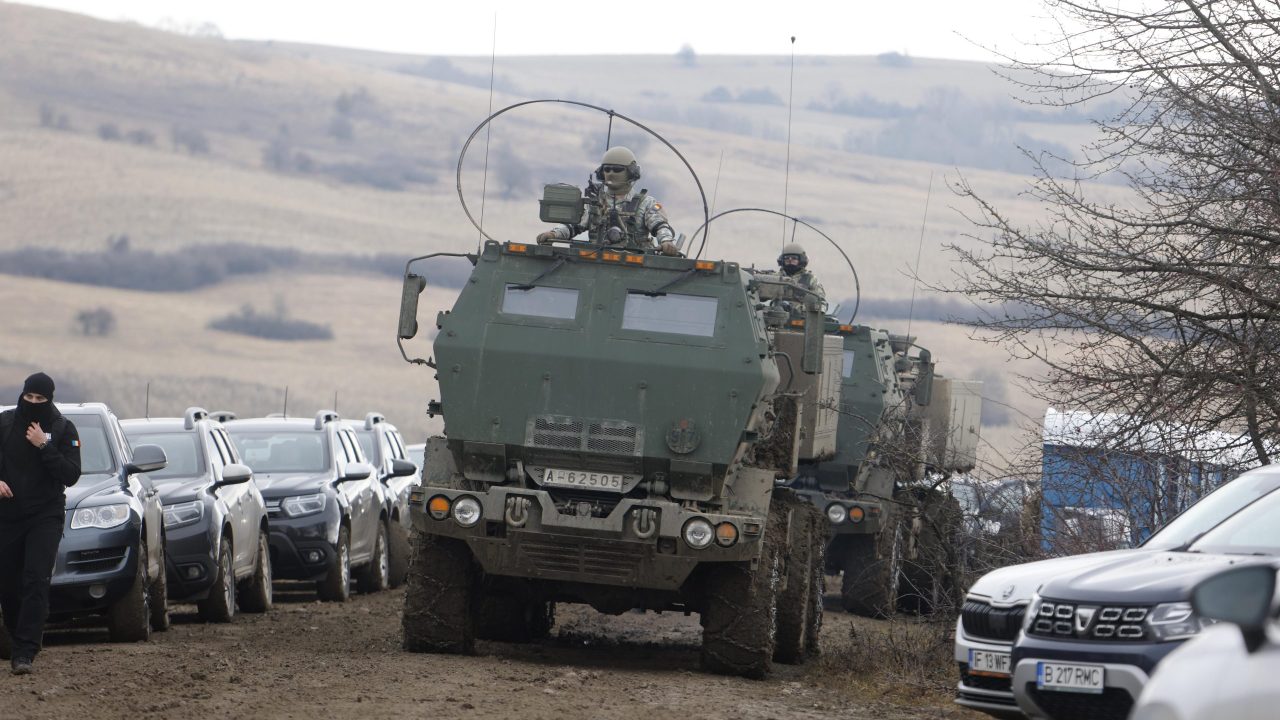
Caption: Romanian Himars rocket launchers make their way during the Dynamic Front 26 military exercise at the Cincu Range near Fagaras, Romania, 9 February 2026. The US Army-led artillery interoperability exercise in Europe is taking place from 26 January to 13 February 2026, involving 5,500 personnel from 28 nations and featuring live-fire demonstrations aimed at strengthening NATO’s Eastern Flank through multi-domain operations. EPA/BOGDAN CRISTEL
Updated: May 26, 2026 - 10:13