 Edit
EditEU launches €28bn plan to fortify Eastern flank through economic power
Brussels ties security to development, targeting border regions from the Baltics to the Black Sea with infrastructure, energy and military-mobility funding
The European Commission is preparing to channel nearly €28 billion through the new EastInvest platform to bolster prosperity in regions bordering Russia, in what Brussels describes as a strategic shift linking economic development directly to security.
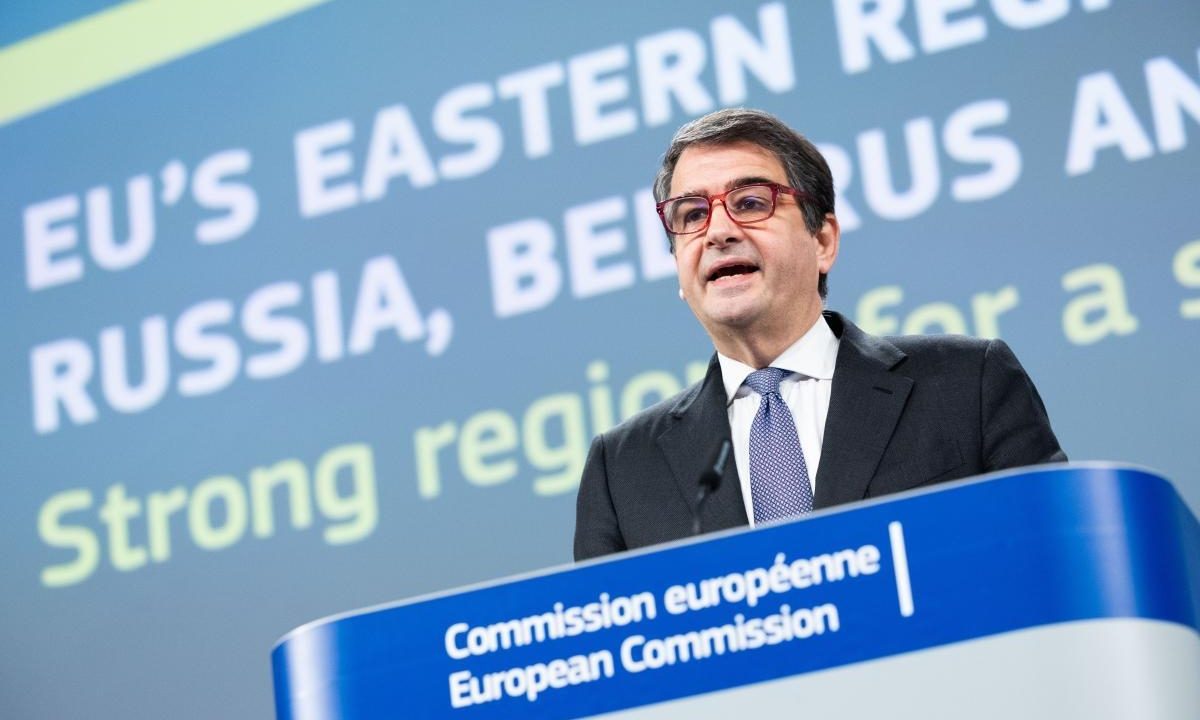
Under the flagship plan, titled “Strong Regions for a Secure Europe”, nine eastern member states are set to receive substantial funding for infrastructure and energy projects, alongside a significant increase in resources earmarked for military mobility.
The initiative comes as a direct response to the economic and political fallout from Russia’s full-scale invasion of Ukraine, as well as to mounting concerns over Russian disinformation campaigns. For the first time, Brussels formally acknowledges that the security of the entire EU depends on the resilience and development of its border regions.
Funding will target border regions in nine member states – Finland, Estonia, Latvia, Lithuania, Poland, Slovakia, Hungary, Romania and Bulgaria. They are considered particularly exposed to hybrid threats, the weaponisation of migration, economic strain and demographic decline.
Welcome @EU_Commission's strategy to boost security, resilience & economic growth of the EU Eastern regions, affected by Russia's war on Ukraine. These regions are where 🇪🇺 starts. They keep 🇪🇺safe. Their strength & well-doing is in all 🇪🇺's best interest. https://t.co/AzpNpZuauQ pic.twitter.com/rWxauQlajk
— Latvia in EU 🇱🇻🇪🇺 (@LVinEU) February 18, 2026
From periphery to frontline
In the Balkans, Bulgaria and Romania are increasingly viewed not as peripheral member states but as key players in the strategic Black Sea region. This redefinition opens the door to large-scale investment in poorer areas of northern Romania, near the Moldovan border, and in eastern Bulgaria, which remains significantly less developed than the western part of the country around Sofia.
The EU has more than 3,500 kilometres of land borders with Russia and Belarus, nearly 1,500 kilometres with Ukraine, and a further 600 kilometres along the maritime Black Sea basin shared with Ukraine and Russia.
“For these regions, more than anywhere else in Europe, there is a clear before and after 24 February 2022. Since the start of Russia’s war of aggression, places that were once built for normal daily life – for cross-border shopping and tourism – are now used for security, dual-use activities, logistics, drones and emergency support,” the European Commission said in a statement.
It acknowledged that trade patterns have shifted, growth has slowed, inflation has risen and depopulation pressures have intensified in many of the affected areas.
“Many communities face a combination of higher insecurity, weaker economic activity and demographic decline. Supporting these regions is therefore not only technical, but a political responsibility,” the Commission added.
Inflation in Bulgaria and Romania remains above the EU average, while investors often bypass the region due to perceptions of heightened geopolitical risk. The Baltic states have similarly reported difficulties in attracting investment amid the persistent threat from Russia.
Protection through development
To address these challenges, the Commission proposes a new model of “protection through development”, arguing that the more prosperous and interconnected border regions become, the more resilient they will be to external threats.
The plan foresees the construction of modern road and rail links along the Baltic–Black–Aegean corridor. These routes would serve citizens and businesses in peacetime while allowing for the rapid deployment of defence equipment if necessary.
Brussels is also prepared to support the creation of a new EU Black Sea Security Hub aimed at strengthening regional resilience.
In addition, the Commission is proposing a tenfold increase in funding for military mobility in the next long-term EU budget for 2028–2034. Member states are encouraged to consider establishing new special economic zones and tax incentives to attract investors to border areas.
European leaders are expected in the coming months to give final approval to the rules governing the new EastInvest mechanism.
Each participating country will be required to draw up a list of priority infrastructure and energy projects, with the aim of enabling the first funds to be disbursed at the beginning of 2026.
Caption: On 18 February 2026, Raffaele Fitto, Executive Vice-President of the European Commission for Cohesion and Reforms, gives a press conference on the Strategy for Eastern Border Regions, following the weekly meeting of the von der Leyen Commission in Brussels, Belgium [Europe by Satellite]
Updated: February 20, 2026 - 06:52