 Edit
Russia is building the capacity to pressure Europe long after Ukraine, experts warn
Russia's current pace in producing missiles exceeds its Ukraine war needs and strongly suggests stockpiling for future contingencies
As Russia’s full-scale invasion of Ukraine grinds on, Moscow is steadily expanding the scope of its military pressure on Europe. Russian drones, manned aircraft and naval vessels are increasingly testing European airspace and waters, in what analysts describe not as isolated incidents or navigational errors, but as deliberate attempts to normalise intrusion and probe NATO’s responses.
Behind these actions stands a retooled and increasingly efficient Russian military-industrial base, according to an analysis published by Foreign Policy. The piece is authored by Jacob Parakilas, a research leader in the defence, security and justice research group at Rand Europe, and Pavlo Shkurenko, a sanctions research fellow at the Kyiv School of Economics Institute.
Their assessment points to three alarming trends in Russia’s naval and missile sectors that matter most for Europe: rapid expansion of production facilities, clear prioritisation of strategic platforms, and sustained investment aimed at long-term operational endurance rather than a short-term wartime surge.
Despite heavy losses inflicted by Ukrainian maritime drones and long-range strikes, Russia has not downgraded naval shipbuilding. The Black Sea Fleet has been badly damaged and cannot be easily replenished, partly because Turkey has closed the Bosporus to belligerent warships under the Montreux Convention since 2022. If Moscow were focused solely on Ukraine, one might expect resources to shift towards land systems and aircraft. Instead, Russian shipyards are pivoting towards platforms that directly threaten Europe.
Order books are now dominated by ice-capable vessels, nuclear service ships and diesel-electric submarines – systems designed not for blue-water competition with the U.S. Navy, but for operations close to Europe’s shores, particularly in Northern waters. These platforms are optimised to carry cruise missiles and electronic warfare systems into NATO’s most vulnerable maritime corridors.
The turnaround at Baltic Shipyard in St. Petersburg illustrates the scale of state support. After posting losses of around $264 million in 2023, the yard swung to a $41 million profit within a year after securing a wave of state naval contracts. Steel consumption at the yard jumped by 98% in a single year, while usage at Vyborg Shipyard rose by 93% since 2022. Together with the United Shipbuilding Corporation and city authorities, Russia is also pursuing a $2.6 billion plan to consolidate five St. Petersburg shipyards into a single modernised cluster.
The output is already visible. Admiralty Shipyards continues serial production of non-nuclear submarines, including the Project 636.3 “Yakutsk”, launched in October 2024, and the redesigned Lada-class “Kronstadt”, which entered service earlier that year. While less capable than nuclear-powered submarines in open oceans, such vessels are highly effective in confined seas such as the Baltic, North Sea or Mediterranean.
At the same time, Russia is accelerating missile production well beyond immediate battlefield needs. Ukrainian intelligence estimates that Moscow is now producing 115-130 long-range missile systems per month. Given Russia’s relatively restrained use of cruise and ballistic missiles in Ukraine – favouring large numbers of cheaper drones instead, this pace strongly suggests stockpiling for future contingencies.
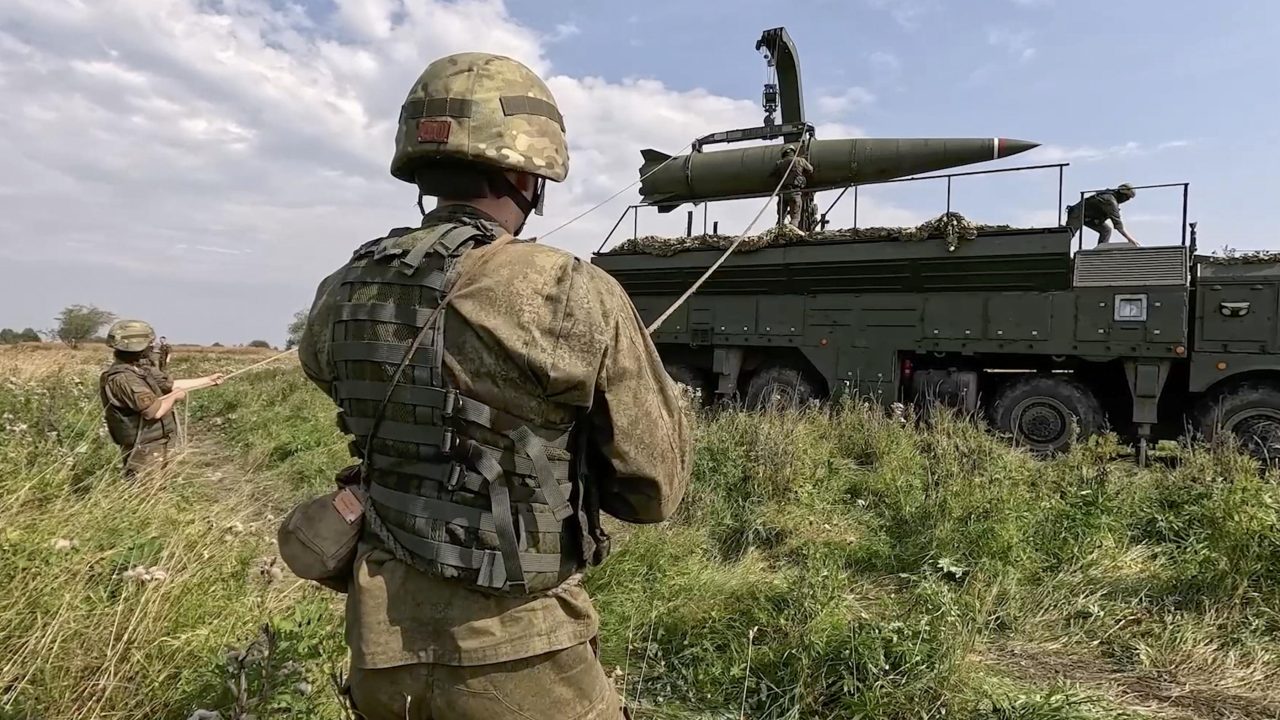
Kalibr cruise missiles, Kh-101/102 air-launched weapons and Iskander ballistic missiles all place European capitals and NATO bases within range. The expansion of production at the Votkinsk Machine-Building Plant, including thousands of new machines and workers since 2022, underscores this trend. Other facilities, such as the Biysk Oleum Plant and the Sverdlov explosives plant, are scaling up output critical for missile warheads, while MKB Novator has shifted to round-the-clock missile production.
From drones to bomb shelters: Poland beefs up security on its eastern frontier
These capabilities enable Moscow to exert pressure on NATO from multiple directions. Russian warships armed with Kalibr missiles regularly operate within striking distance of European capitals in both the Baltic and Mediterranean seas. Strategic bombers, increasingly forward-deployed to refurbished bases such as Severomorsk-2 on the Kola Peninsula, conduct regular flights over the Barents and Norwegian Seas, treating NATO’s northern approaches as routine training space.
According to the authors, this industrial expansion reveals a strategy designed to make sustained pressure on Europe cheap, repeatable and operationally feasible. Limited responses – air policing, statements of concern, or temporary airspace closures, risk encouraging further escalation.
Parakilas and Shkurenko argue that NATO must move from reactive measures to credible deterrence. Red lines should be operational rules, not rhetorical warnings, with predictable consequences for violations. Deterrence must also combine air and missile defence with credible offensive options, while sustained support for Ukraine’s drone innovation is essential.
Ukraine, they conclude, now functions as Europe’s forward defence laboratory. Failing to absorb and support that innovation risks leaving NATO unprepared as Russia continues shaping Europe’s security environment – and writing the script of confrontation.
Eastern NATO allies ramp up coordination on borders, air defense, and drone threats
Caption: A still image taken from handout video provided 15 September 2025 by the Russian Defence ministry press-service shows Iskander-M missile system crews of the Baltic Fleet missile unit practice delivering group strikes on critically important objects in Kaliningrad region taking part in the Zapad-2025 (West-2025) joint military drills of the Russian and Belarus armed forces at an undisclosed location in Russia. EPA/RUSSIAN DEFENCE MINISTRY PRESS SERVICE/HANDOUT
Updated: January 8, 2026 - 18:55