Edit
From drones to bomb shelters: Poland beefs up security on its eastern frontier
Warsaw plans a layered anti-drone defence system along its border with Belarus while simultaneously rebuilding civil defence infrastructure
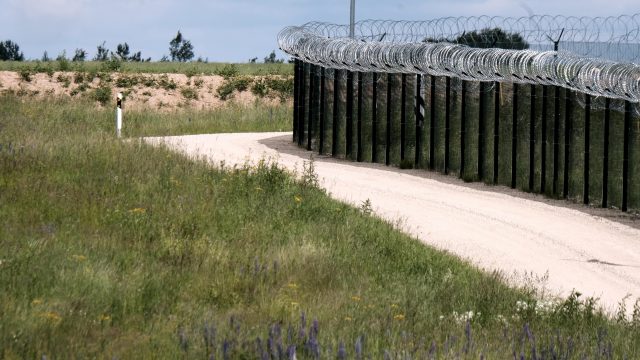
Poland is accelerating efforts to strengthen security along its eastern border, combining military fortifications aimed at countering hostile drones with a renewed focus on civilian protection, after a series of incidents underscored the changing nature of threats linked to Russia’s war against Ukraine.
The government plans to complete the construction of a comprehensive system of anti-drone fortifications along the eastern frontier within two years, Deputy Minister of National Defence Cezary Tomczyk said in an interview cited by European Pravda. The decision followed a violation of Polish airspace by Russian drones in September, which raised alarms in Warsaw about the country’s vulnerability to aerial provocations and sabotage.
According to Tomczyk, the first elements of the new system should become operational within around six months, with full deployment expected within 24 months. The new air defence infrastructure will be integrated into an older defensive line built roughly a decade ago, reflecting a shift from traditional border protection towards more technologically complex threats.
The system is designed as a multi-layered defence, combining machine guns, cannons, missiles and electronic warfare tools capable of jamming drones. Some of these capabilities, Tomczyk noted, are intended primarily for extreme situations or wartime. Multi-barrelled machine guns, for example, are difficult to operate under peacetime conditions, highlighting the balance Poland is trying to strike between readiness and escalation.
Beyond weapons systems, the plan includes the construction of dedicated logistics centres in each municipality along the border. These facilities will store equipment needed to rapidly block or secure border sections, with the aim of deploying it within hours if required. The approach reflects Polish concerns that future challenges are likely to come in the form of sudden provocations rather than open conflict.
“As long as Ukraine defends itself and fights Russia, Europe is not threatened by war in the traditional sense,” Tomczyk said. Instead, he warned, European countries should expect acts of sabotage and destabilisation. At the same time, he cautioned that a Russian victory in Ukraine could quickly shift the Kremlin’s focus towards Europe itself.
Initial steps are already under way. On 23 December, Poland confirmed that the first elements of the anti-drone system had been installed on the border with Belarus and would begin operating in January. Earlier in December, Warsaw also extended a buffer zone along the Belarusian border until March 2026, reinforcing restrictions in areas seen as particularly exposed.
Security concerns are not limited to the border. Following acts of sabotage on railway infrastructure, the Polish army has begun cooperating more closely with the national power system operator to protect critical transformer stations, including through information-sharing and joint exercises.
At the same time, Polish officials are increasingly vocal about another vulnerability: the country’s weak civil defence. Despite defence spending reaching around 5% of GDP, investment in protecting the civilian population has lagged behind, according to Slawomir Cienkiewicz, head of the National Security Bureau and a key adviser to President Karol Nawrocki, quoted by the Financial Times.
From 2026, Poland plans to require developers to include space for bomb shelters in most new buildings, as part of a broader effort to rebuild civil defence against the threat of Russian aggression. Many existing shelters date back to the communist era and are now in poor condition, a situation Cienkiewicz described as a “giant problem”.
“In recent years, Poland has focused on modernising the armed forces and forgotten about civilian resilience,” he said, arguing that both are essential in the current security environment.
The government of Prime Minister Donald Tusk has allocated 16 billion zloty (€3.8 billion) in this year’s budget for the construction and modernisation of shelter facilities. Local authorities are also contributing. In December, Warsaw Mayor Rafał Trzaskowski announced plans to adapt parts of the capital’s metro system into shelters capable of accommodating up to 100,000 people, equipped with folding beds, drinking water and blankets.
Poland’s renewed focus mirrors similar debates elsewhere in the region. Latvia has considered mobile bomb shelters, while Lithuania is testing bunker materials informed by Ukraine’s wartime experience.
Taken together, Poland’s military and civilian measures reflect a broader reassessment of security on NATO’s eastern flank, where hybrid threats, rather than conventional warfare, are increasingly shaping national defence planning.
Caption: Polish Deputy Defence Minister Cezary Tomczyk speaks during a signing ceremony for a preliminary agreement on the expansion of Polish fuel infrastructure to connect with NATO pipelines, at the Military Centre for Civic Education in Warsaw, Poland, 3 October 2025. The agreement also includes the construction of fuel storage facilities for the Alliance’s armed forces. EPA/PAWEL SUPERNAK
Updated: December 29, 2025 - 04:47