Edit
Edit21st sanctions push: EU tightens the screws on Putin’s war economy – but will It be enough?
Expected elements include expanding designations of war-supporting entities and individuals, potentially including Russian Orthodox Patriarch Kirill
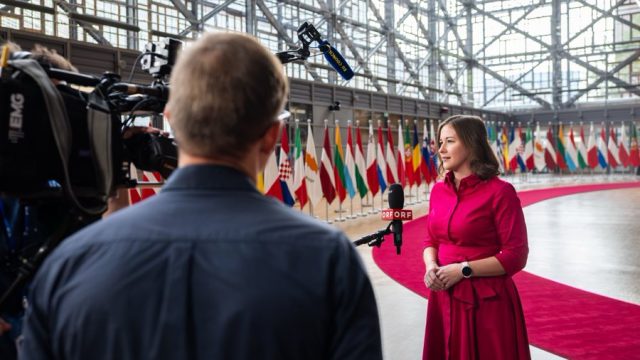
The European Commission is finalising its 21st package of sanctions against Russia this week and will submit it to member states for approval, according to Commission spokesperson Paula Pinho. The measures aim to intensify pressure on Russia’s war economy by targeting its military-industrial complex, shadow fleet oil exports, energy revenues, and circumvention networks.
Expected elements include locking in the G7 oil price cap mechanism (around $44-60 per barrel), blacklisting more shadow fleet tankers, expanding designations of war-supporting entities and individuals (potentially including Russian Orthodox Patriarch Kirill), and new curbs on crypto, trade, and financial channels. The package builds on the 20th round from April 2026 and reflects a “brick-by-brick” strategy, as described by EU High Representative Kaja Kallas.
Background: sanctions rollout since 2022
The EU first imposed sanctions on Russia in 2014 after the Crimea annexation, but the regime exploded in scale after the full-scale invasion of Ukraine in February 2022. The bloc has now adopted 21 successive packages in coordination with G7 allies. Major pillars include:
- Asset freezes and travel bans on hundreds of individuals and entities.
- Trade bans on energy imports (oil and coal phased out), dual-use goods, technology, and luxury items.
- Financial restrictions, including SWIFT bans for key banks and investment limits.
- Sectoral measures covering aviation, maritime transport, diamonds, and anti-circumvention tools targeting third-country enablers.
On paper, the impact has been significant: blocked exports and imports worth tens of billions of euros, sharp drops in Russia’s oil and gas revenues, and constrained access to advanced technology.
Limits and challenges of the sanctions regime
Adopting each new sanctions package remains difficult for the EU because it requires unanimous approval from all 27 member states, whose individual economic and energy interests often lead to protracted negotiations under the guiding principle that the measures should not harm Europe more than they harm Russia – a dynamic repeatedly exploited by Hungary under its former leader Viktor Orbán, who has frequently slowed or diluted packages to protect Budapest’s ties with Moscow.
Despite the volume, the sanctions regime faces clear constraints. Russia has adapted aggressively through parallel imports, a massive shadow fleet (hundreds of aging tankers using ship-to-ship transfers and non-Western buyers like India and China), alternative payment systems, and redirected trade. Enforcement remains uneven across EU states, and the unanimity rule allows individual members to water down proposals.
Analyses show mixed effectiveness: sanctions have raised costs for Russia’s military and slowed potential growth, but they have not stopped the war effort. Global energy price dynamics and non-Western markets have cushioned Moscow’s revenues. The incremental approach avoids major immediate shocks but also limits transformative impact in the short term.
Why maximum sanctions are unlikely
True “maximum sanctions” – sometimes discussed as a near-total economic blockade – would go far beyond the current incremental packages. They could include a complete ban on all remaining Russian energy imports (including LNG), full secondary sanctions on major buyers like India and China, a total SWIFT-style exclusion of the Russian financial system, bans on all dual-use and industrial goods, seizure of frozen Russian central bank assets for Ukraine reconstruction, and aggressive enforcement against the entire shadow fleet (potentially involving naval interdiction or port bans).
Such measures would aim to deliver a decisive blow to Russia’s war economy by slashing remaining revenue streams, starving its military-industrial base of technology and components, and forcing a rapid contraction in GDP and military spending.
However, maximum sanctions are highly unlikely for several structural reasons:
- Unanimity requirement: Every sanctions package needs approval from all 27 EU member states. Countries with lingering economic ties, energy dependencies (even reduced), or political reservations can veto or water down proposals.
- Self-harm principle: EU policy explicitly seeks to avoid measures that damage Europe more than Russia. A full energy embargo or aggressive secondary sanctions could spike global energy prices, trigger inflation, harm EU industries, and disrupt supply chains – costs that many governments are unwilling to impose on their voters.
- Diversification and adaptation: Maximum measures risk limited additional impact while accelerating global economic fragmentation and pushing Russia closer to China and other autocracies.
- Geopolitical caution: Escalatory steps (e.g., asset seizures or maritime enforcement) could provoke Russian retaliation, legal challenges, or broader international backlash, including from Global South countries concerned about food and energy security spillovers.
This is why the EU has opted for a “brick-by-brick” approach: targeted, proportionate, and calibrated to maintain unity and minimize domestic blowback. This delivers sustained pressure but avoids the high-risk gamble of maximum escalation. As long as member-state interests diverge and the priority remains “not harming ourselves more than Russia,” truly comprehensive sanctions are likely to remain off the table.
The upcoming 21st package represents continued grinding pressure rather than a knockout blow. Its fate depends on swift unanimous approval (targeted around mid-July to align with oil cap reviews), strong enforcement, and sustained G7 unity. As Russia’s aggression continues, the EU positions these sanctions as a long-term tool to support Ukraine and weaken Moscow’s capabilities.
While Brussels spends months haggling over its 21st package of painstakingly calibrated paper sanctions, Ukraine has been cheerfully waging its own far more direct “long-range sanctions” — raining drones and missiles on Russian oil refineries, fuel depots, and military factories hundreds of kilometres inside Russia.
Caption: Russian President Vladimir Putin (L) congratulates Patriarch Kirill of Moscow and All Russia on his Name Day during a meeting in Moscow, Russia, 24 May 2026. In the Orthodox Church, the feast day of Saints Cyril and Methodius is celebrated on 24 May. EPA/VYACHESLAV PROKOFYEV/KREMLIN / POOL
Updated: June 9, 2026 - 14:53