 Edit
Syria’s fragile ceasefire with Kurdish forces extended amid fears of civilian abuses
Senior U.S. and French officials have pressed Damascus not to advance troops into remaining Kurdish-held areas
In post-Assad Syria, a tense standoff between the new central government under President Ahmed al-Sharaa and Kurdish-led forces in the northeast has prompted urgent international calls for restraint.
Senior U.S. and French officials have pressed Damascus not to advance troops into remaining Kurdish-held areas, warning that renewed fighting could lead to widespread abuses against Kurdish civilians and derail fragile stability efforts.
In Rojava, a de facto autonomous region in northeastern Syria, established in 2012 amid the Syrian civil war, Kurdish-led forces, alongside Arab, Assyrian, and other minority groups, have built a self-governing system based on democratic confederalism, gender equality, secular governance, and multi-ethnic cooperation – often celebrated by supporters as a progressive experiment in grassroots democracy and criticized by opponents, particularly Turkey, as an extension of PKK-linked separatism.
The latest development came on 24 January, when Syria’s Defence Ministry announced a 15-day extension of the ceasefire with the Kurdish-led Syrian Democratic Forces (SDF). The truce, which took effect at 20:00 GMT, aims to facilitate the transfer of Islamic State (IS)-linked detainees from SDF-controlled prisons and camps to Iraqi custody, averting potential security breakdowns. This follows a sweeping 18 January agreement, brokered in part by U.S. mediation, that includes integrating SDF fighters into the national army, appointing an SDF-affiliated deputy defence minister, and handing over key detention facilities.
Among the prisoners held by SDF in northeast Syria are hundreds of so-called “foreign fighters”- nationals from Western countries, including several EU member states – who joined Islamic State as terrorists and who continue to pose a significant security threat if released or if they escape and return to their home countries in Europe.
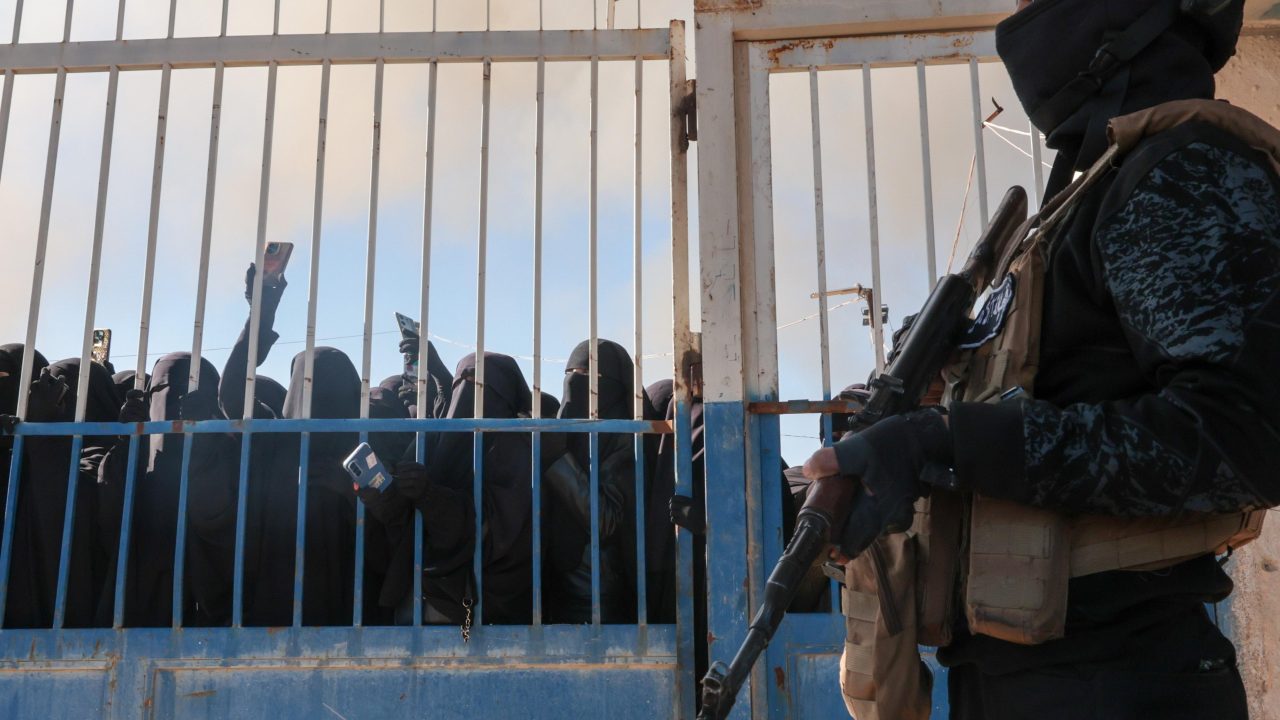
By 23 January, Syrian forces had taken control of al-Aqtan prison in Raqqa and the massive al-Hol camp – home to tens of thousands of suspected IS affiliates and their families. The SDF, long backed by the U.S. in the fight against IS and governing a de facto autonomous region in northeast Syria, has framed these concessions as necessary to prevent chaos, while stressing its commitment to protecting Kurdish “achievements” in self-governance, secularism, and women’s rights. SDF commander Mazloum Abdi has accused Damascus of provocative military build-ups near key Kurdish cities like Hasakah, Qamishli, and Kobani, heightening fears of escalation.
The agreement came after a rapid government offensive in early January 2026, which seized Arab-majority areas, oil fields, and strategic infrastructure, forcing SDF retreats and reshaping Syria’s territorial map. Diplomatic sources indicate that U.S. and French envoys have emphasized privately that further incursions risk triggering mass civilian abuses – echoing recent sectarian violence against Alawites and Druze minorities, where hundreds or thousands were killed in reprisals. Concerns center on HTS’s Islamist roots (al-Sharaa was formerly Abu Mohammad al-Jolani of al-Qaeda-linked groups) and the potential for targeted repression in Kurdish-populated zones.
Al-Sharaa’s approach to minorities has drawn mixed reactions. On 16 January, he issued Decree No. 13, granting full citizenship to Kurdish Syrians, recognizing Kurdish as a “national language,” and criminalizing discrimination – steps presented as ending long-standing marginalization under the Assad regime. The move has been welcomed by some as a pragmatic overture to integrate Kurds (about 10% of the population) into the new Syria. Al-Sharaa has also promised protections for Christians and other groups, allowing churches to reopen in HTS-controlled areas. However, critics view these gestures as tactical amid ongoing clashes, with reports of sectarian tensions and property issues in minority regions raising doubts about long-term safeguards.
The European Union has expressed concerns but remains relatively distant. EU Foreign Policy Chief Kaja Kallas called for an “immediate ceasefire” on 19 January, stressing the need for “full protection of Kurdish rights” and an inclusive political transition. Brussels has reiterated goals for dialogue and civilian protection, but some observers criticize the EU for not condemning the offensive more forcefully, amid priorities like migration control and counter-terrorism cooperation. Earlier EU statements urged mutual consultation and de-escalation.
Turkey plays a pivotal role in post-Assad Syria, actively supporting the new government while pursuing its long-standing national security agenda to suppress Kurdish autonomy and prevent the emergence of any self-governing Kurdish entity near its border – viewing SDF and its core YPG component as an extension of the PKK terrorist group that threatens Turkey’s territorial integrity. This which explains Ankara’s celebration of the SDF’s territorial setbacks, military integration into Damascus structures, and the erosion of Rojava’s de facto autonomy as a strategic victory that advances the goal of President Recep Tayyip Erdoğan of dismantling Kurdish self-rule in northern Syria.
Tehran’s turmoil: Turkey advances anti-Kurdish agenda in post-Assad Syria
As the extended truce holds – for now – analysts warn that unresolved issues could reignite conflict, undermining counter-IS efforts and exacerbating humanitarian crises in camps like al-Hol. The situation tests al-Sharaa’s ability to balance Islamist supporters with minority inclusion, while international pressure aims to prevent a return to widespread violence in Syria’s complex ethnic mosaic.
With agencies.
Caption: Members of the Syrian security stand in front of the gate of the Al-Hol camp, which houses families of suspected Islamic State (IS) group fighters, after the Syrian government took control of the area, in Hasakeh province, Syria, 21 January 2026. According to the Syrian Interior Ministry, security forces have entered al-Hol camp in Hasakah province to maintain stability following the withdrawal of Kurdish-led Syrian Democratic Forces (SDF) units and the temporary lack of guard presence. EPA/MOHAMMED AL-RIFAI
Updated: January 26, 2026 - 06:15


