 Edit
Squaring the circle of Ukraine’s exports to the EU
The terms of trade between Ukraine and the EU are set to change soon.
The terms of trade between Ukraine and the EU are set to change soon. Veronika Movchan from the Institute for Economic Research and Policy Consulting provides insight what might come next.
In 2022, amid full-scale Russian aggression, the European Union took several decisions that ensured a rapid, but mostly temporary, deepening of Ukraine’s economic integration with the EU.
The most important was the extension to Ukraine of the Temporary Protection Directive, which still ensures employment and access to social services and protection for millions of Ukrainians who left for the EU.
In effect, Ukraine temporarily gained the benefits of one of the EU’s four freedoms – the free movement of labour.
Other decisions were less ambitious, but also very important. In particular, autonomous trade measures (ATMs) were introduced in trade in goods, temporarily lifting the remaining tariff restrictions that continued to operate within the framework of the Deep and Comprehensive Free Trade Area (DCFTA) with the EU.
However, these were temporary solutions, which has already raised the question of their replacement. The autonomous trade measures expire in June 2025. The European Commission does not plan to extend them, but instead plans to offer Ukraine some kind of replacement.
How will this affect Ukraine’s exporuts to the EU? What are the possible scenarios? And in particular, if bilateral trade returns to the quotas that were in effect until 2022?
Temporary, but without restrictions
First of all, it is worth understanding what changed for Ukraine with the introduction of autonomous trade measures.
Introduced in June 2022, the ATMs abolished four groups of tariff restrictions that affected the access of Ukrainian goods to the EU market. These were:
- Import duties on goods for which the transitional periods had not yet ended by the beginning of 2022. For most agricultural and industrial goods, duty-free trade with the EU began back in 2014. But for some, such as fertilizers, aluminium products, cars, transitional periods were still in effect, which were just due to end in 2022. Thanks to the ATMs, the transitional periods of the DCFTA ended half a year earlier.
- Tariff quotas, which were introduced by the DCFTA as a tool for partial market opening. The quota volume in the EU market was subject to zero duty, and beyond this volume, the standard most-favoured nation (MFN) duty was applied. For some goods, it is quite high.
The tariff quotas in the DCFTA applied to 36 categories of goods, mainly agricultural and food products. For some goods, such as wheat or sugar, out-of-quota duties were actually prohibitive. This did not apply for corn, for which the out-of-quota duty is zero.
- Import prices. The DCFTA provided for partial elimination of import duties on several agricultural products. The ad valorem part was abolished, while the special duty, which is collected if the goods are supplied at a price lower than that established within the duty, remained.
- Special and anti-dumping measures. The DCFTA did not prohibit partners from mutually applying trade defense measures. In particular, the EU had special protective measures in place for ferrous metals and products made from them, introduced against the backdrop of a reaction to the protectionist policy during the first term of US President Donald Trump. A number of anti-dumping restrictions were also in place.
All of these measures, which together affected almost a fifth of Ukrainian exports to the EU, were bypassed thank to the ATMs.
Although temporary, access to the EU market became duty-free for all goods without exception.
And it soon became a political problem for Ukraine.
An increasingly toxic issue
This EU decision, reinforced by the forced change in logistics due to the occupation or blockade of seaports, led to a rapid reorientation of export flows to the EU, in particular to the markets of Ukraine’s neighboring countries.
The EU’s share in Ukraine’s exports jumped from 39% in 2021 to 63% in 2022, and the share of goods subject to tariff restrictions after the introduction of ATMs increased to 26%, primarily due to an increase in exports of goods previously subject to tariff quotas.
If in 2021 the export of such goods accounted for 9% of total exports to the EU, then in 2022 their share reached 20%.
The reason was not only the abolition of duties on supplies above the duty-free quota.
The entire system of logistical assistance to Ukraine in the first year of the war was aimed primarily at exporting Ukrainian grain to help ensure global food security. This was one of the key goals of the Solidarity Lanes. The Black Sea Grain Initiative was built on this.
And grain itself, as one of the extremely sensitive goods for EU trade, was the object of tariff quotas that were abolished by the ATMs.
The rapid growth of exports to the EU quickly led to a reaction, which to some extent undermined the idea of duty-free trade laid down in the ATMs.
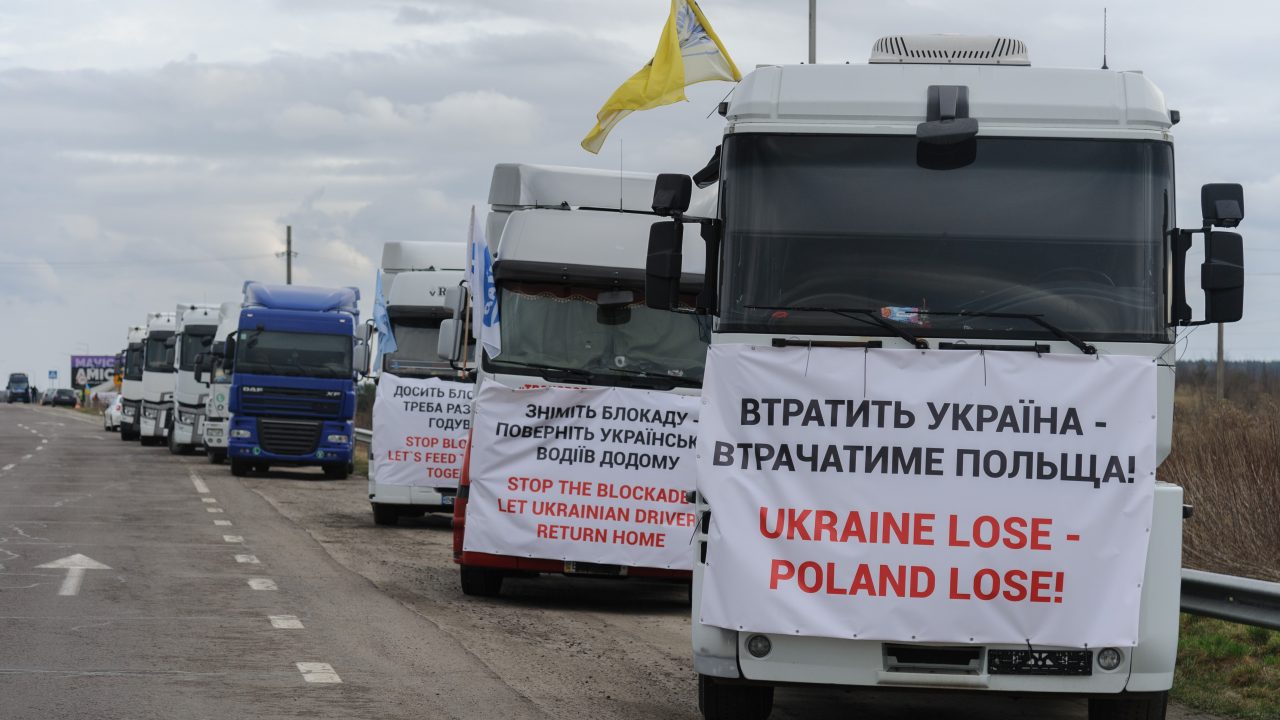
In April 2023, Poland, Hungary, Slovakia and Bulgaria banned the import of a wide range of agricultural goods from Ukraine to their markets. Moreover, this ban applied to some on which zero duty had been in effect for a long time, and for which ATMs did not apply.
This ban was short-lived, and within a few weeks was replaced by preventive safeguard measures from the European Commission, which banned the supply of four goods (wheat, corn, rapeseed and sunflower seeds) originating from Ukraine to these markets plus Romania.
After the end of these preventive measures, which were in effect from May to September 2023, the individual bans of the member states returned. And they are still in effect. Moreover, each country has its own special list.
Plus, in the new version of the ATMs, which came into force in June 2024, an additional so-called emergency brake mechanism was introduced for seven goods (corn, poultry, eggs, sugar, honey, oats and barley groats), which was put into effect almost immediately for five of the seven goods; the restrictions did not affect corn and poultry.
This noticeably slowed down their exports, in some cases actually stopping them in the second half of 2024.
In addition, in several neighboring countries, the issue of Ukrainian exports has acquired a sharp political color, still remaining one of the topics in election debates.
The political battles over ATMs have been getting hotter every year.
And this makes their renewal almost toxic for Ukraine’s relations with the EU. Therefore, it is not surprising that the European Commission has announced their termination.
So the question is – what could replace ATMs?
Instead of the annual extension of trade preferences, it is possible to return to trade relations within the framework of the DCFTA.
However, if nothing is changed and the conditions that were in force before the introduction of ATMs are restored, it will be quite painful for Ukraine.
A joint study by this writer and Riccardo Giucci from Berlin Economics, dedicated to the tariff quotas that were in force before the introduction of ATMs, shows that returning to tariff quotas at the 2021 level will lead to a reduction in exports to the EU by $1.5 billion, which is almost 4% of Ukraine’s total exports.
Exports of wheat, sugar and poultry meat will suffer the most. Trade in wheat and sugar, as well as some other goods, could return to tariff quota levels.
Some exports could be redirected to other markets, but that also means additional costs and losses.
Another, much more attractive option, is to revise the tariff schedule within the framework of the DCFTA in accordance with Article 29 of the Association Agreement.
Consultations on this issue were initiated by Ukraine in 2021, five years after the start of the provisional application of the DCFTA. However, the war and the ATMs have upset this work.
But as the process of extending the ATMs and the individual protective reactions of the EU member states show, long-term – until EU membership – market access arrangements are better for sensitive goods.
And such, by definition, are goods for which the parties agreed to exclude from the free trade regime back in 2012.
Moreover, amending the annexes to the Association Agreement, which is required to revise the tariff quotas, does not require a parliamentary vote. That is, this process is one degree less political.
And both sides agree on this process.
Possible scenarios: losses and gains
The main question is what the new arrangements should be, and in particular, what could be the new level of tariff quotas, which are a key element of the negotiations under Article 29.
For Ukraine, of course, the ideal option would be the complete abolition of tariff quotas.
Since the ATMs have created conditions for duty-free access, with some small exceptions so far, the increase in exports in the event of a decision to completely abolish tariff quotas in the short term will not be significant, being estimated at around $290 million.
However, it is unfortunately unlikely to fully implement this option, given all the previous controversies, although even the abolition of tariff quotas for some of the 36 categories would be helpful. At the same time, a more likely scenario would be agreements on establishing new tariff quota levels for very sensitive goods.
According to the results of the aforementioned study, if the return to the basic level of the DCFTA occurs only for six sensitive groups of goods (wheat, corn, oats, poultry, honey and sugar), the losses of Ukrainian exports to the EU will amount to almost 1.2 billion – this is less than in the first scenario, but not by much.
A much better option seems to be the establishment of new tariff quotas at a level close to those formed in 2022-2024.
We calculated a scenario of establishing a new level of tariff quotas for sensitive goods at the 2024 level and their abolition for the rest. This slightly changes the current volume of exports, the increase being $77 million.
At the same time, this scenario allows maintaining the status quo in terms of support for Ukraine and establishes clear limits on duty-free exports before Ukraine’s membership in the EU restores full market access to it.
There is also, obviously, a whole range of other intermediate scenarios, all of which fall somewhere between a return to the basic DCFTA tariff quotas and a complete abandonment of tariff quotas.
And now the negotiations between Ukraine and the EU must determine what the outcome will be.
And finally, the scenario in which Kyiv sacrifices ATMs to soften the position of partners in the membership negotiations may not be so bad for Ukraine.
This analysis was first published in Ukrainian language by our partner media “European Pravda”.
Updated: July 1, 2025 - 08:46