 Edit
Russian ties and legal troubles: How Czech leaders are searching for a rival to President Pavel
Can the ruling Czech coalition, led by Prime Minister Andrej Babiš, find a candidate strong enough to defeat incumbent President Petr Pavel in the January 2028 election?
Although the vote is still 18 months away, the question has become central to Czech politics. This is especially true after Pavel openly clashed with the government over his participation in a NATO summit – a dispute he is widely expected to win in the Constitutional Court. The confrontation has sharpened the coalition’s determination to prevent Pavel’s re-election. Despite internal differences, the parties are preparing to field a single candidate against him.
Pavel has already confirmed he will seek a second term. Babiš, who lost to him in the 2023 runoff with 41.7% of the vote, insists he will not run again. He repeated this position in July. Yet his past behaviour offers little certainty: before the previous election he long denied any interest before announcing a late candidacy.
There is also a practical incentive. When Babiš became prime minister, two investigations against him – one in the Czech Republic and one in France – were effectively frozen by his high office. That protection would vanish quickly if he lost the premiership in a political crisis. The presidency would offer five years of stronger immunity, a tempting prospect.
Current polls give him little hope. An August NMS survey put him at 15% in the first round against Pavel’s 39%. In a hypothetical runoff the gap narrowed to 37%–44%. Public opinion can shift, and the government is working to portray Pavel as an opposition figure rather than a national leader. A second defeat for Babiš, however, would signal weakness ahead of the next parliamentary elections – another reason the coalition is already hunting for an alternative standard-bearer.
A Kremlin-friendly option
Former president Miloš Zeman recently declared that without a government candidate, Pavel would win easily. His preferred choice: Radek Vondráček, deputy leader of Babiš’s ANO party and a former speaker of the lower house of parliament.
Vondráček has left the door open, saying he still needs to “discuss it with himself.” Zeman’s endorsement carries weight among ANO voters. Yet Vondráček’s record raises serious questions. In October 2021, while speaker, he made a sudden visit to Moscow billed as a step toward restoring relations. No Czech journalists accompanied him; details emerged only from Russian media, which claimed he described resistance to Crimea-related sanctions as a priority of Czech diplomacy. He never fully denied the reports, and the then-opposition labelled him a “Russian lackey.”
His successor later auctioned souvenirs from that trip and donated the proceeds to Ukrainian forces. Last year’s parliamentary election results also showed that Czech voters largely reject politicians seen as close to Russia. For these reasons, many observers believe the coalition will look elsewhere—specifically, to a woman.
Looking for a female candidate
In January Babiš said the ideal candidate could be a respected figure from outside politics, “and yes, it could be a woman. A female president would certainly suit the Czech Republic.” At the time this was widely read as support for Finance Minister and Deputy Prime Minister Alena Schillerová. She is no longer seriously considered, but the idea of a woman candidate has not been abandoned.
Polls suggest a female contender could maximise chances against Pavel, partly because the country has never had a woman president. Attention has turned to Ivana Tykač, founder of the charity Women for Women, owner of two real-estate firms, and wife of billionaire Pavel Tykač. Forbes recently ranked her among the ten most influential Czech women. She has also joined a government advisory council on sport, prevention and health, and a team linked to Babiš is managing her public image.
Czech commentators increasingly view her as the likely coalition pick. Questions remain about her political independence and whose influence would dominate—Babiš’s or her husband’s. Pavel Tykač’s main assets are in the coal sector; he is a vocal critic of the EU Green Deal. He is also a major sponsor of the Václav Klaus Institute, a conservative, Eurosceptic think-tank that occasionally amplifies pro-Russian narratives. Klaus himself is widely regarded in Czechia as having become a Russian agent after 2010.
The final list of candidates will only emerge in 2027. Still, the potential risks for Ukraine are already clear if any candidate backed by the current coalition wins—whoever that person turns out to be.
A longer version in Ukrainian by Yuriy Panchenko, co-founder of EUalive’s partner European Pravda, can be found here.
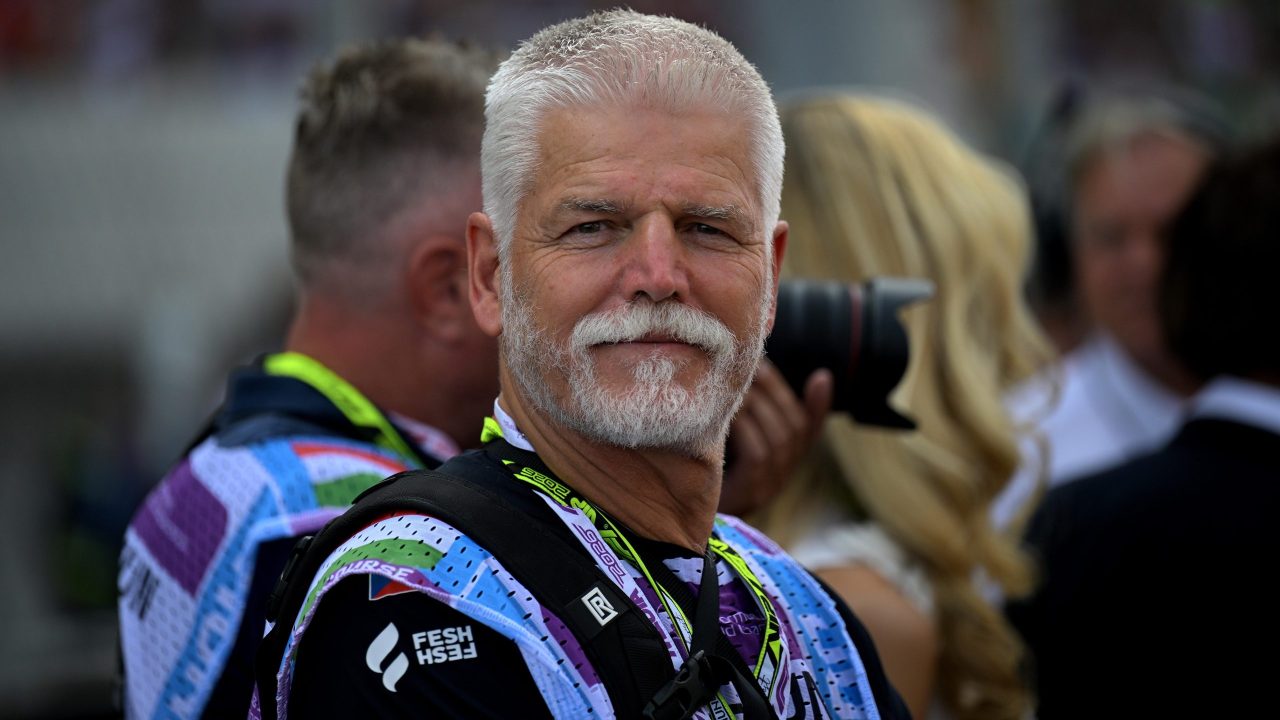
Caption: Czech President Petr Pavel looks on ahead of the Formula One Hungarian Grand Prix at the Hungaroring circuit in Mogyorod, Hungary, 26 July 2026. EPA/Zoltan Balogh
Updated: August 14, 2026 - 06:28