 Edit
Romania’s dilemma between Washington and Europe
In the hypothesis of an American withdrawal from NATO, the choice is clinging to U.S. protection outside the Alliance or seeking a more assertive European security framework
The prospect of the United States leaving NATO, once unthinkable, has moved into the realm of serious strategic debate. In Romania, the discussion has exposed political confusion, opportunism and a dangerous rush to please the strongest actor in the room, regardless of long-term consequences.
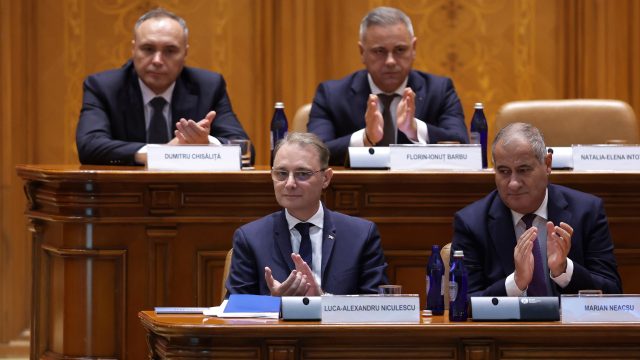
Invited to Donald Trump’s proposed “Peace Council”, Romania is hesitating. President Nicușor Dan has said the country needs to “deepen” its response, while PSD leader Sorin Grindeanu has argued for joining immediately. Meanwhile, AUR leader George Simion rushed to symbolically celebrate the idea, cutting a cake shaped like Greenland draped in the American flag.
Behind the theatrics lies a far more serious question: would Romania be endangered by Russia if it chose to align fully and unambiguously with Europe?
Scenario one: an orderly U.S. exit from NATO
In the first scenario, the United States withdraws from NATO in a legal and orderly manner, pulling its roughly 100,000 troops out of Europe. While such a move would be catastrophic primarily for Washington itself – wiping out decades of investment and dramatically reducing its global power projection – it could still involve a selective American military presence.
Under this model, the U.S. might retain bases in certain European countries, for a price, offering protection against Russia – a country Trump himself has proposed engaging through a Peace Board. These states would likely be governed by illiberal regimes hostile to liberal democracy and international cooperation, aligning with ideas promoted by figures such as Russia’s Alexander Dugin.
Romania, governed by parties that together command a majority of voter support, would likely accept such arrangement. The attraction is clear: protection without lectures on rule of law or anti-corruption. But the consequences would be severe. Romania would have to pay heavily to keep U.S. troops, while losing European funds increasingly tied to democratic standards. Exclusion from a more tightly integrated EU would become a real risk.
Economically, the position would be unsustainable. Around 72% of Romania’s exports go to the EU. Any perceived benefits – including fantasies of territorial expansion or influence over Moldova – would collapse under economic pressure.
By contrast, anchoring Romania fully within a European security and economic framework would require reforms, respect for the rule of law and serious diplomatic capacity. It would also mean investing European funds in European defence and military readiness – a politically unpopular, but strategically viable option.
Scenario two: a chaotic U.S. exit over Greenland
A second, far more destabilising scenario would involve a disorderly U.S. exit from NATO triggered by a military operation to seize Greenland. Until recently unimaginable, it can no longer be dismissed outright.
Such a move would create a logistical nightmare, potentially trapping U.S. forces in Europe and forcing European states into direct confrontation. Unlike Romanian populists, several European far-right leaders have already criticised Trump’s threats, while others would be forced to choose between economic survival and loyalty to Washington.
In this scenario, American bases would be lost without compensation. Europe would retaliate economically, including through the sale of U.S. bonds, undermining the dollar’s global dominance. Romania, if it sided with the U.S., would face immediate expulsion from the EU, the loss of two-thirds of its export markets and foreign investment, and the obligation to pay directly for American “protection”.
The result would be not gradual decline, but sudden collapse. Even dreams of union with Moldova would evaporate, as the region would quickly fall back into Russia’s sphere of influence.
Scenario three: NATO in name only
The most likely scenario, however, is a hybrid one. The U.S. remains formally in NATO, while withdrawing most of its troops from Europe, escalating a trade war with the EU and undermining European democracies – but without a formal exit.
This would still push major European powers to rapidly strengthen their own economic and military alliance. States attempting to hedge eastward would buy time to modernise their armed forces, but risk finding themselves stranded when tensions escalate further.
History suggests that regimes built on such personalised power dynamics rarely stop halfway.
Is Romania safe without the U.S.?
A direct Russian attack on Romania is unlikely. Russia’s strategic focus lies further north, where it could test NATO through limited operations in the Baltic states. Romania would become a secondary theatre, affected primarily by NATO’s response.
Europe’s rapid mobilisation could still raise the costs for Moscow high enough to deter such action. But if NATO without the U.S. failed to respond militarily, the Alliance would effectively dissolve, forcing Romania into an immediate choice between Europe and U.S. protection outside NATO.
In all scenarios, the conclusion is stark: Romania’s security cannot depend on submission to whichever power appears strongest at a given moment. It depends on how strategically valuable the country makes itself.
In a world of carnivores, remaining an herbivore is not an option. Romania’s leaders may debate positioning, but offering the country up as part of the menu would be the gravest mistake of all.
The full article in Romanian by the chief editor of EUalive’s partner PressOne and can be found here.
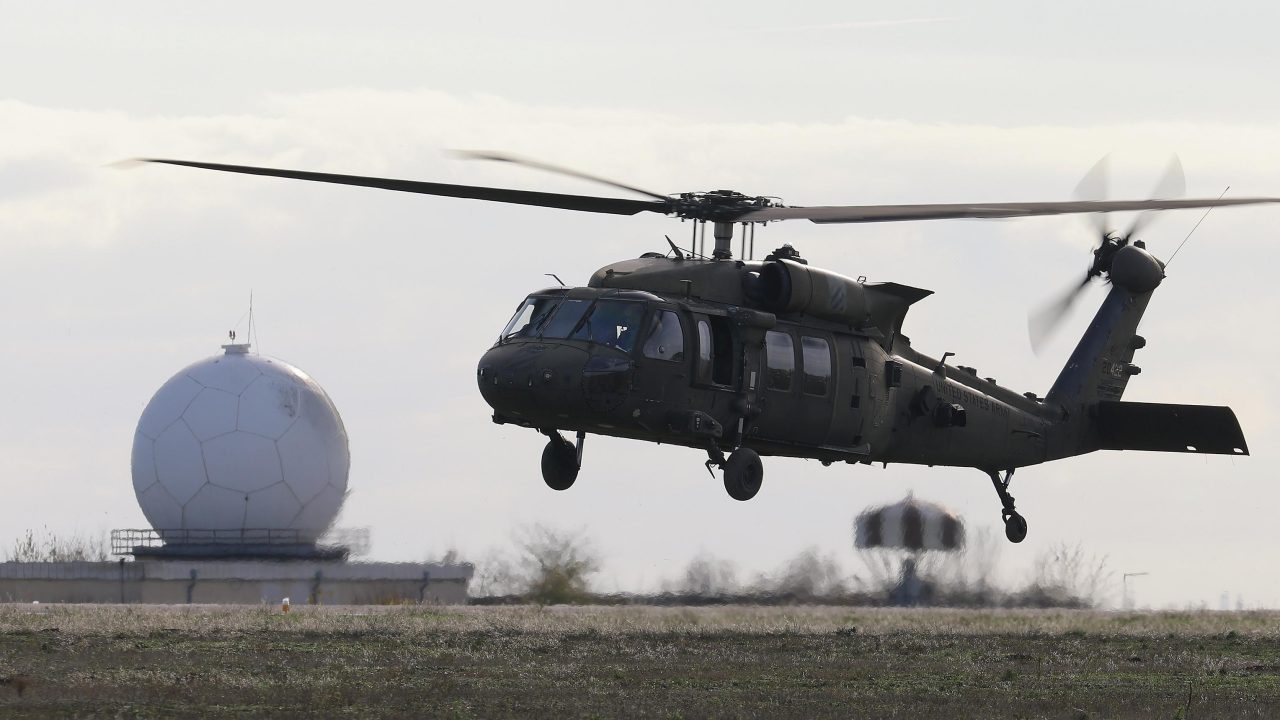
Caption: A US military Black Hawk helicopter makes the last check near the ground while preparing for the aerial base inspection of US Army Europe and Africa Commanding General Gen. Christopher Donahue (not pictured) at the US Army garrison Black Sea, at the 57-th military airbase Mihail Kogalniceanu, near Constanta city, Romania, 25 November 2025. EPA/ROBERT GHEMENT
Updated: January 23, 2026 - 06:02