 Edit
Orbán escalates ‘war or peace’ rhetoric as Hungary approaches critical election
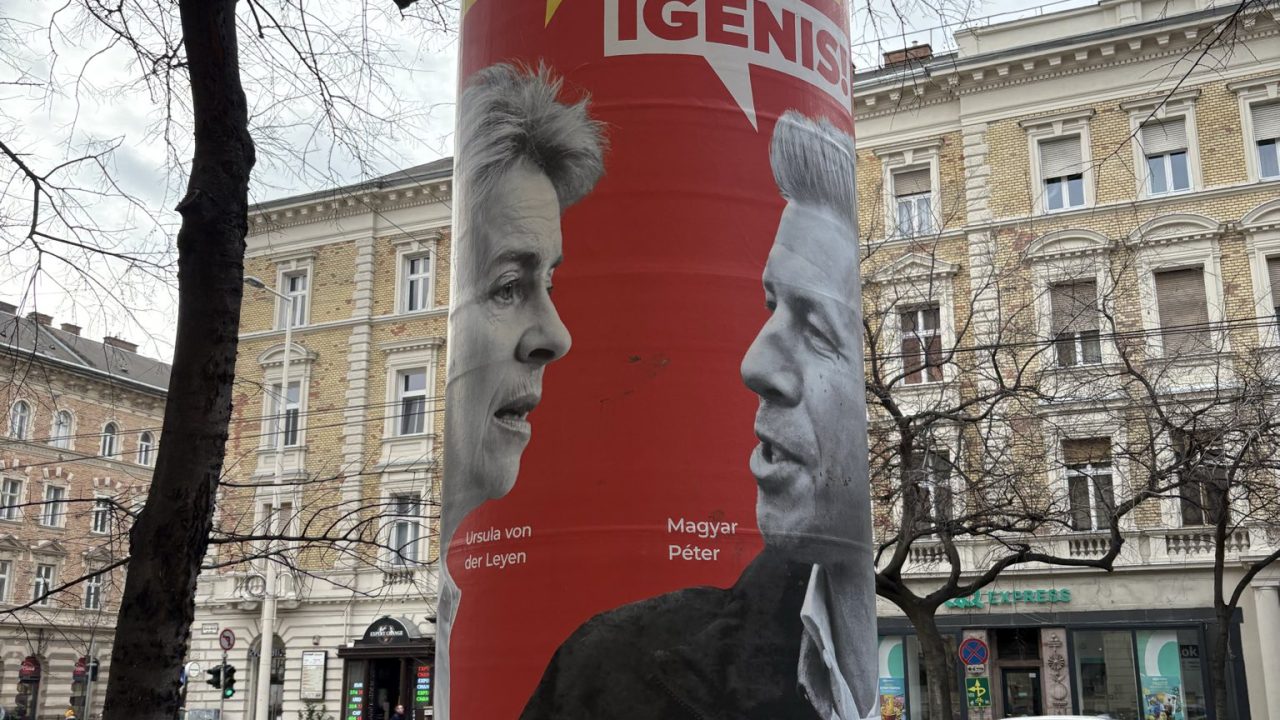
Billboards depict opposition leader Péter Magyar as a puppet of EU Commission President Ursula von der Leyen and Ukrainian President Volodymyr Zelenskyy
Hungarian Prime Minister Viktor Orbán has ramped up his “war or peace” narrative in the lead-up to the pivotal parliamentary election on 12 April, positioning his Fidesz party as the guarantor of stability amid economic woes and geopolitical tensions.
Facing the potential end of his 16-year dominance, Orbán frames the vote as a stark choice: continued peace under his leadership or escalation toward war if the opposition prevails. This strategy comes as Hungary grapples with a sluggish economy, exacerbated by inflation triggered by Russia’s 2022 invasion of Ukraine, which has eroded public confidence and boosted challenger Péter Magyar’s Tisza party in recent polls.
Orbán’s campaign has deployed a multifaceted offensive, including personalized letters to millions of voters urging them to sign a “national petition” rejecting EU financial aid to Ukraine. State television broadcasts have echoed this message, while billboards across the country depict Magyar as a puppet of EU Commission President Ursula von der Leyen and Ukrainian President Volodymyr Zelenskyy, with imagery showing demands for “money and weapons” for Ukraine.
Government billboards all over Budapest. Most of them are targeting opposition leader Peter Magyar and European Commission president, Ursula von der Leyen pic.twitter.com/1ROQP3nrBw
— Flora Garamvolgyi (@floragaramvolgy) February 11, 2026
Orbán accuses Magyar of following orders from Brussels and Kyiv, warning that opposition rule would drag Hungary into the conflict. “Taking part in the war is very similar to migration: no jumping in and out. Once you’re in, you’re in,” Orbán has stated, emphasizing the irreversible risks.
Hungary’s stance on Ukraine under Orbán has long been an outlier in the EU: maintaining close ties with Moscow, refusing to supply weapons to Kyiv, and opposing Ukraine’s EU membership bid. This position has strained relations with Brussels, leading to withheld EU funds over rule-of-law concerns. Public sentiment in Hungary has shifted accordingly; a December 2025 survey revealed 63% opposition to EU aid for Ukraine (up from 41% in 2023) and 64% against Kyiv’s EU accession, reflecting fatigue with the war’s economic fallout.
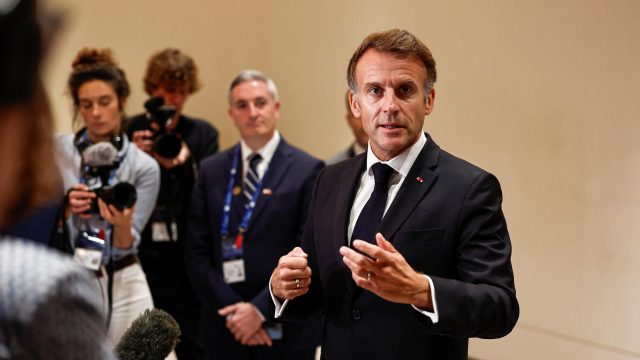
As a reminder of Orbán’s consistent messaging, at yesterday’s informal EU leaders’ retreat at Alden Biesen castle – focused on boosting the bloc’s competitiveness – he suggested that the EU should cease funding Ukraine to prioritize its own economic revival.
“First, stop the war. War is bad for the business. And look for the peace. Second: Don’t send your money to somebody else, if you need it for your competitiveness, so don’t send the money to Ukraine,” Orbán told reporters upon arrival.
Magyar’s Tisza party, which leads polls by 8-12 points, pledges to combat corruption, restore economic vitality, and mend ties with the EU to unlock frozen funds. While Magyar has criticized Orbán’s isolationist approach, he remains cautious on Ukraine, opposing fast-track EU membership and promising a binding referendum if elected.
Analysts suggest Orbán’s Ukraine fixation diverts attention from domestic issues like stagnant growth and public services, positioning him as a defender against external meddling.
Orbán has alleged interference by Kyiv and Brussels, claims denied by both; Ukraine even summoned Hungary’s ambassador in January 2026 over similar accusations.
The European Commission counters that peace requires pressure on Russia and Ukraine’s eventual EU integration once criteria are met.
Ukraine’s EU accession could be decided as part of the peace package mediated by U.S. President Donald Trump, with the proposed settlement potentially including a specific timeline or political commitment for Kyiv’s EU membership by 2027 as a key security and economic guarantee.
With Reuters, edited by g.g.
Caption: Government billboards all over Budapest target opposition leader Peter Magyar and European Commission president, Ursula von der Leyen. [@floragaramvolgy on X]
Updated: February 13, 2026 - 16:36