 Edit
Kallas in the Western Balkans: between strategic messaging and regional realities
In all three capitals - Belgrade, Pristina, and Skopje – the EU High Representative drew firm lines on values
With her ongoing tour of the Western Balkans, EU High Representative for Foreign Affairs and Security Policy Kaja Kallas has stepped directly into the region’s most politically charged terrain – navigating a complex landscape of stalled reforms, competing loyalties, and growing geopolitical influence from third actors, such as Russia and China.
Her message was clear: the EU path remains open, but only for those willing to walk it with real, measurable reforms.
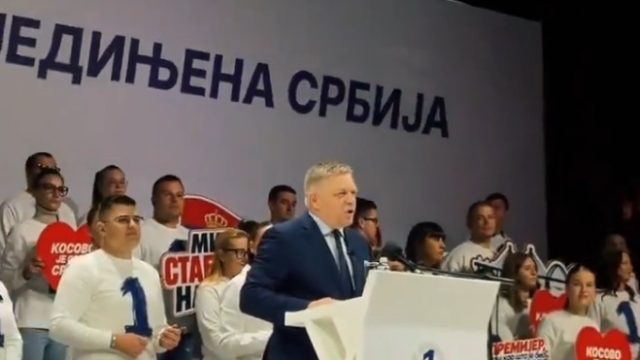
Serbia: a candid visit, a divided message
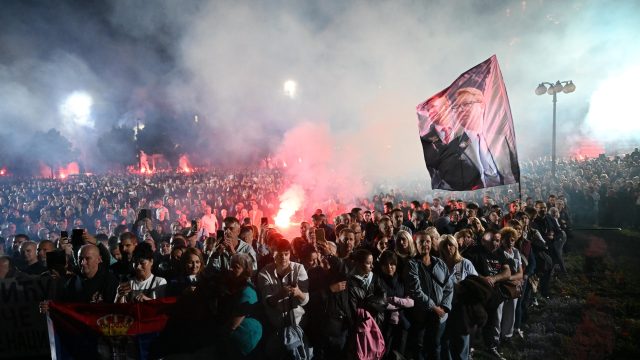
Kallas’s stop in Belgrade on 22 May brought the region’s ambiguity into focus. Her remarks were pointed – progress toward EU membership requires media freedom, electoral reform, and a genuine fight against corruption. And her meetings – held separately with government leaders, opposition figures, students and civil society – revealed a deep political divide.
Opposition voices emphasised the disconnect between state rhetoric and societal aspirations, warning that official interactions with Brussels are increasingly used as tools of internal political legitimization, not European alignment.
“Serbia wants it, but the regime does not,” the deputy president of the Freedom and Justice Party, Borko Stefanovic said at a news conference in the Assembly of Serbia, where the opposition met with Kallas. He stated that Serbia was not its regime, going on to say that the country was an EU candidate in which “top state officials ridicule the EU.”
“It is a good sign that Kallas did not allow to be part of the regime’s propaganda activities, in view of the absence of a joint news conference with Aleksandar Vučić, because, based on previous examples, I believe it to be quite clear that their meeting would have been presented by the regime in a way that depicted Europe as allegedly supporting this regime and not Serbia,” he stated, EUalive partner BETA reported.
The absence of a joint press conference with President Aleksandar Vučić was widely interpreted as a deliberate distancing – a signal that the EU will not lend political cover without corresponding democratic standards.
Kallas herself reiterated that “there are no shortcuts to membership,” and that reforms must be “real, not just ticking the box on paper.”
On the sensitive issue of Vučić’s 9 May visit to Moscow, Kallas struck a firm tone. “I do not understand why it is important to stand side by side with someone waging a horrible war,” she said, implicitly linking symbolic choices to foreign policy credibility. The EU expects candidates to align with its common foreign policy, a standard Serbia increasingly strains.
North Macedonia: nothing to report
Kallas’ meetings in North Macedonia brought no news. Prime Minister Hristijan Mickoski, from the right-wing VMRO-DPMNE party, said in advance that he was confident that solutions would be found to unblock his country’s accession talks and that the European Union would find mechanisms through which the country could win its deserved place in the Union.
Although Mickoski insists he is “a pragmatic politician” ready to build regional trust – including with Bulgaria – his refusal to accept what he frames as “ultimatums” continues to block constitutional amendments that would include Bulgarians as a recognised minority, a step which is now a requirement of the EU, not only of Sofia.
His language, while conciliatory in tone, signals a strategic stall: an attempt to shift responsibility onto the EU while preserving domestic political capital. For Brussels, the concern is clear – delaying compromises undermines both enlargement momentum and regional credibility.
Reports: Brussels losing patience with North Macedonia’s Mickoski
Kosovo: partial openings, conditional support
Before heading to Skopje, Kallas made an important announcement in Kosovo, where she confirmed the EU has begun gradually lifting punitive measures imposed in 2023 following tensions in the north.
While this may signal a thaw in EU-Kosovo relations, Kallas was explicit: full normalization must align with the Ohrid Agreement, and de-escalation in the north is non-negotiable. “We are ready to take steps,” she said, “but we really need to see de-escalation.”
However, details remain scarce – Kallas did not specify which measures have been lifted or when the process began. Her remarks suggest a calibrated encouragement, designed to reward progress without sacrificing EU conditionality.
Kosovo’s political stalemate persists: assembly formation fails for 18th time
Europe’s leverage tested
Kaja Kallas’s tour underlines the EU’s challenge in the Western Balkans: balancing strategic patience with principled pressure. While enlargement remains officially on the table, the credibility of that promise is being tested by regimes that talk Europe but act otherwise, and by publics that increasingly doubt Brussels’ resolve.
In all three capitals – Belgrade, Pristina, and Skopje – Kallas projected the EU’s soft power through diplomacy, but also drew firm lines on values. Her deliberate separation from state propaganda, insistence on genuine reform, and critique of ambiguous alignments reflect a shift in tone: less tolerance for performative compliance, more demand for transformative change.
If the EU still sees the Western Balkans as part of its strategic future, Kallas’s message is one it will need to repeat – not just with words, but with coherent policies that reward integrity and sanction obstruction.
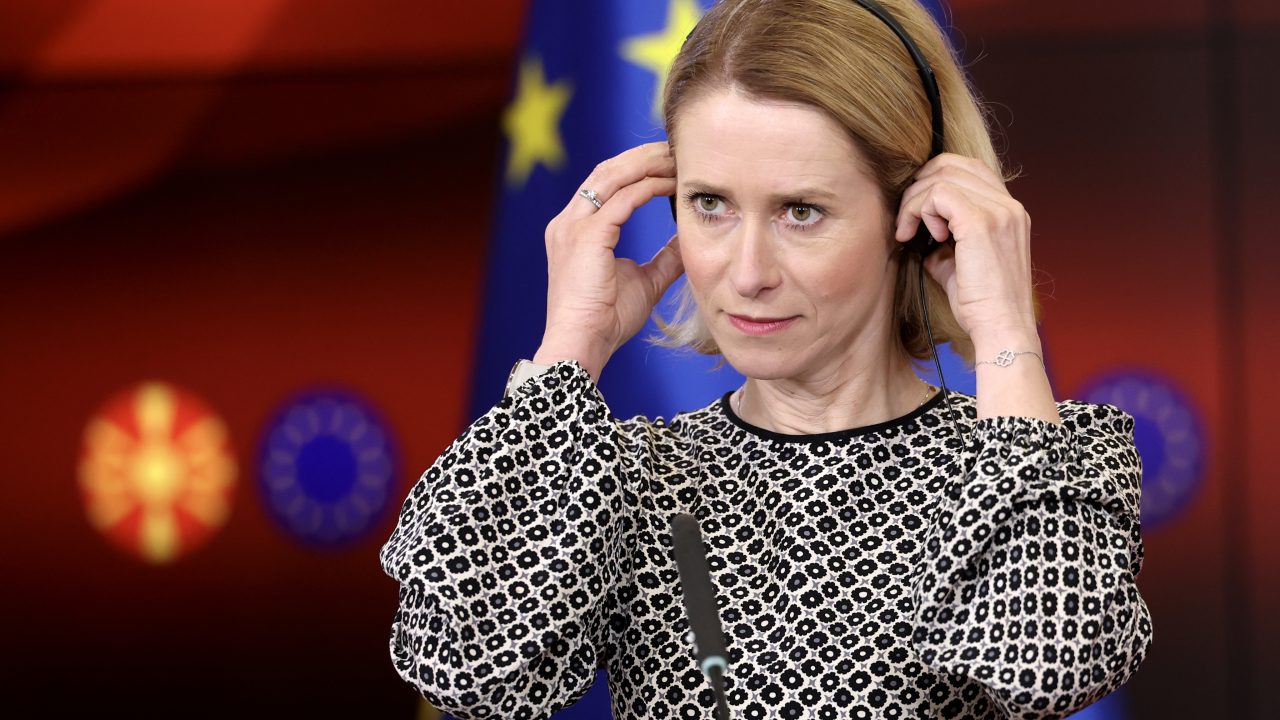
Caption: European Commission’s Vice-President and High Representative of the Union for Foreign Affairs and Security Policy, Kaja Kallas adjusts her headphones during a joint press conference with North Macedonia’s Prime Minister Hristijan Mickoski (not pictured) in Skopje, Republic of North Macedonia, 23 May 2025. [EPA-EFE/GEORGI LICOVSKI]
Updated: May 24, 2025 - 08:21