 Edit
If Moscow wants escalation, start with the money, not the missiles
The remaining hesitation in some EU capitals over Russia’s frozen assets is no longer sustainable
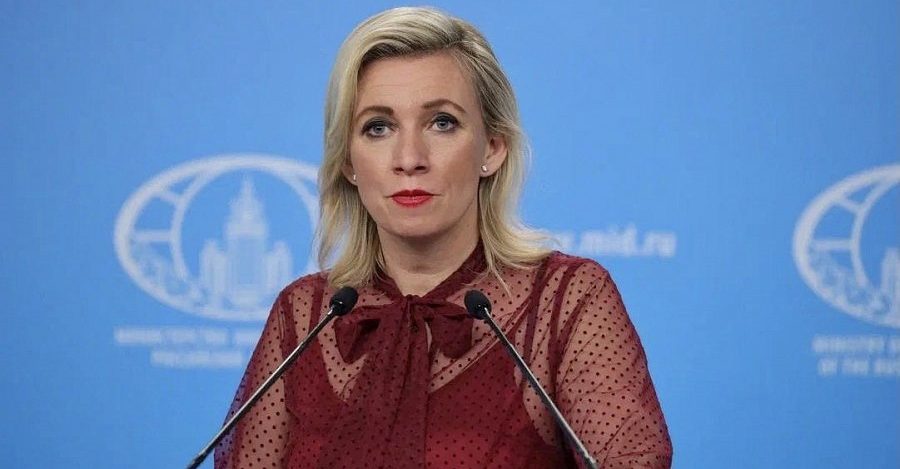
Maria Zakharova has now said the quiet part out loud. Britain, she warned, is “one step away” from becoming, in Moscow’s telling, a party to “terrorism,” and Russian forces could strike British military sites “in Ukraine and beyond its borders” if Ukrainian attacks using British weapons continue.
That is not a hybrid hint. It is an official threat against a NATO member, delivered from the Foreign Ministry podium.
Two days earlier the mask had already slipped. Andrei Fedorov, a Kremlin adviser and former deputy foreign minister, told the BBC that British factories producing drones and missile components for Ukraine “could be attacked, not by Russia, but… from unknown sources.” Cyber operations and “semi-military” action were left on the table. The deniability was theatrical. The meaning was not.
Russia threatens to strike British factories producing drones and missile components for Ukraine
Taken together, the two statements close a chapter the West has clung to for too long: the idea that this remains, for Europe and for NATO, a war that can be managed from a safe distance. Russia is already treating Western industrial capacity that supplies Ukraine as a legitimate target set. It is saying so in public. Continuing to pretend that London, Paris or Brussels can stay in a legal and political grey zone while Kyiv fights with Western weapons is no longer a policy. It is a comfort habit.
That is why the remaining hesitation in some EU capitals over Russia’s frozen assets is no longer sustainable.
The EU still holds around €210 billion of frozen Russian sovereign assets, most of them in Belgium. Extraordinary revenues have been used. A €90 billion support loan has been agreed. Four governments – Sweden, the Netherlands, Spain and Poland – have again pressed to unlock the principal itself so that Ukraine’s budget and defence needs are not hostage to the next European election cycle. The legal and financial arguments against confiscation are familiar: central-bank immunity, financial-stability risk, the precedent for other reserve currencies. They were never trivial. They are now secondary to a simpler fact.
Russia understands, better than some Western finance ministries appear to, what those assets would do if they were turned into Ukrainian guns, interceptors and production lines. That is precisely why Moscow treats every new Western industrial commitment – Storm Shadow blueprints, domestic missile assembly, drone factories – as an act of war. Money that becomes munitions is, in the Kremlin’s own logic, a strategic weapon. The West has spent four years arguing about the legal packaging of that weapon while Russia spent the same years striking Ukrainian cities, probing NATO’s eastern flank and threatening British plants.
Using the frozen assets would be a hard blow to Russia. It would also be something Russia cannot honestly call a military strike. No British factory would have to burn. No NATO aircraft would have to cross a border. No Article 5 threshold would have to be tested in the dark. The blow would land where Russia is most exposed and least entitled to complain: on capital it parked in Europe and then used to underwrite a war of conquest.
If Moscow is looking for escalation, that should be the first answer it receives.
The alternative is worse. Leave the assets frozen in a permanent half-life, fund Ukraine in dribs and loans that must be refinanced under political weather, and answer factory threats with another round of “we stand shoulder to shoulder.” Russia will read that as what it is: a preference for process over power. It will keep widening the target list – first “unknown sources,” then “military objects beyond Ukraine’s borders” – because the cost of talking has been lower than the cost of being believed.
There is a distinction worth keeping. Hardening British and European defence plants, improving attribution, and treating sabotage as state-linked aggression rather than isolated crime are necessary. Matching Zakharova’s language with NATO military theatre would be a different choice, and not the first one. The first choice is the one that hurts Russia’s war machine without firing a shot from Western soil: convert the frozen reserves into the industrial and military capacity Ukraine needs before the next winter, and before the next “unknown source” finds a factory gate.
The West is already in this war. Russia has said so. The remaining question is whether Europe will keep answering a declared enemy with accounting memos, or with the one instrument that is both lawful enough to defend and large enough to matter.
Why the EU could not agree to use the frozen Russian assets for Ukraine
Caption: Spokesperson of the Russian Foreign Ministry Maria Zakharova, 18 May 2022. [Russian Foreign Ministry]
Updated: August 28, 2026 - 07:38