 Edit
Germany offers Kyiv data on Ukrainian fighting-age male refugees
A Bundestag reply using the Central Register of Foreigners put 328,363 Ukrainian men aged 18–60 in Germany as of 31 October 2025
German Foreign Minister Johann Wadephul said Berlin could share registration, residency and social-benefit data so Ukraine can contact men of military age living in Germany and call them up – without coercion.
The remark lands amid Ukraine’s manpower shortage and a visible rise in the number of fighting-age Ukrainian men who have settled in the EU.
How many men in Germany?
Official German figures vary by exact age band and whether they include pre-2022 residents:
As of 30 May 2026, Germany hosted about 1.35 million people who fled the war in Ukraine, including roughly 356,000 men aged 18–63. That group had grown by more than 50,000 in the previous 16 months; about 60 percent of new arrivals since early 2025 have been men of military age after Kyiv eased exit rules for 18- to 22-year-olds.
A Bundestag reply using the Central Register of Foreigners put 328,363 Ukrainian men aged 18–60 in Germany as of 31 October 2025 (including those already living there before the full-scale invasion). Breakdown: 87,000 aged 18–24, 168,000 aged 25–45, 73,000 aged 46–60.
Narrower “fighting-age” snapshots (often 23–60) cited in later German reporting hover around 190,000–266,000.
These men are a minority of the overall Ukrainian community in Germany, which remains majority women and children, but the male share has risen steadily.
How many across Europe?
Eurostat and related EU data put the total under temporary protection at roughly 4.3–4.4 million people in mid-2026. Adult men account for about 27 percent of beneficiaries. That implies on the order of 1.0–1.17 million adult Ukrainian men (commonly counted as 18–64) holding protection status across the EU. Germany, Poland and Czechia host the largest shares. One compilation of Eurostat figures listed more than 1 million men aged 18–64 under temporary protection as of February 2026, with Germany the single largest host.
Numbers are not identical across sources because of differing age cut-offs (18–60 vs 18–63 vs 23–60), inclusion of pre-war residents, and whether they cover only temporary-protection holders or all registered Ukrainians.
How Kyiv views men who left
President Volodymyr Zelenskyy has called the return of conscription-age men “a matter of fairness.” He has said soldiers at the front need rotations and that those who left – some in breach of Ukrainian law – should come back; the relevant authorities in both countries should address it. Ukrainian officials frame service as a constitutional duty rather than optional.
At the same time, Kyiv faces a severe domestic recruitment crisis. Former defence minister Mykhailo Fedorov has cited roughly two million men wanted as draft evaders inside Ukraine and another 200,000 listed as absent without leave. Videos of street-level conscription clashes have circulated widely, and the government has announced reforms aimed at reducing coercion and improving contracts.
With Russian officials reported to be discussing a fresh wave of mobilisation after the September State Duma elections – a prospect Zelenskyy has also publicly warned about – Ukraine has little choice but to look to its own fighting-age citizens already living in the EU.
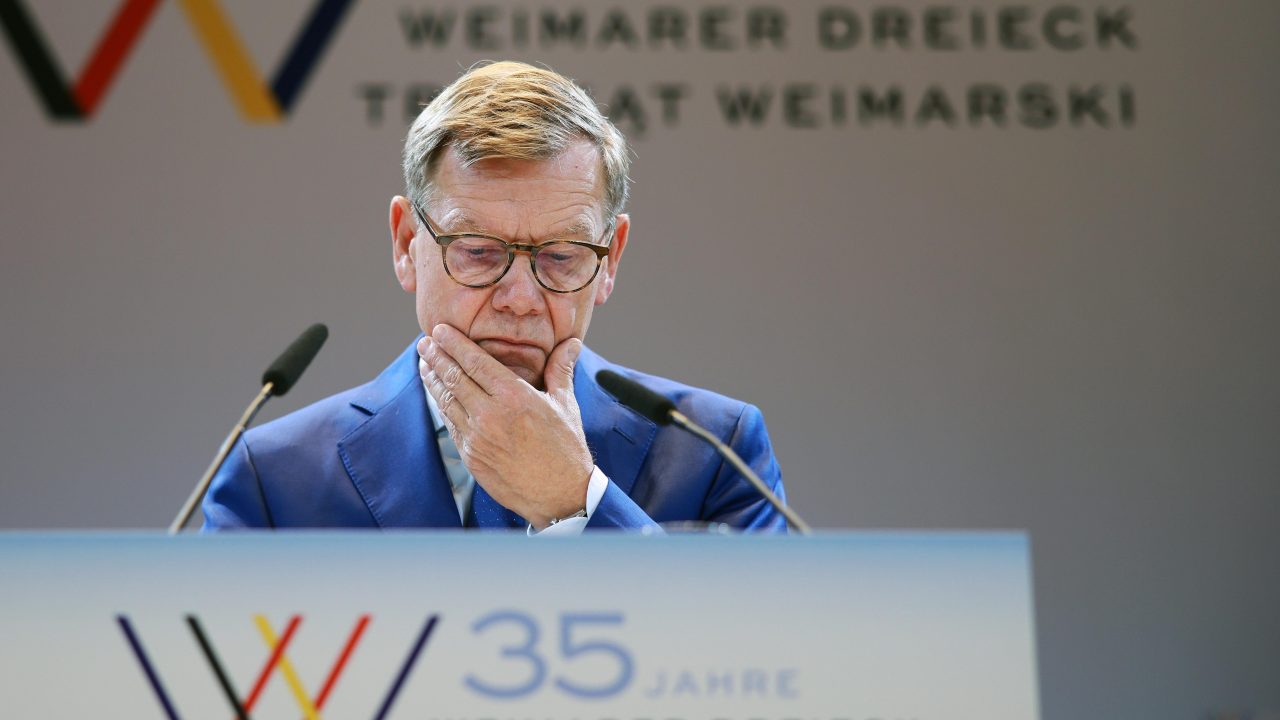
Caption: German Foreign Minister Johann Wadephul reacts during a joint press conference after a foreign ministers’ meeting, in Weimar, Germany, 3 September 2026. EPA/CLEMENS BILAN
Updated: September 9, 2026 - 13:23


