 Edit
EU eases multiple-entry Schengen visa access for Turkish citizens
Over the past 15 years, Turkish citizens have spent approximately €775 million on Schengen visa application fees
The European Commission introduced on 15 July a streamlined framework to ease the issuance of multiple-entry Schengen visas for Turkish citizens residing in Turkey with a proven record of lawful travel to the European Union.
This initiative marks a new step in EU-Turkey relations, aiming to reduce bureaucratic hurdles, reward compliant travelers, and foster mobility for tourism, business, and family purposes.
Turkey, an EU membership candidate since 1999 with frozen accession negotiations, faces a complex path to integration. The EU and Turkey have collaborated for decades on trade and security, but relations have deteriorated due to Turkey’s crackdowns on journalists and opposition figures, alongside growing concerns in European capitals about the rule of law and democracy.
Nevertheless, the EU relies on Turkey to curb large-scale migration to Europe. In March 2016, they signed an agreement to address the migrant crisis, significantly reducing illegal crossings of the EU’s external borders in exchange for financial aid.
Economic and bureaucratic challenges
Over the past 15 years, Turkish citizens have spent approximately €775 million on Schengen visa application fees, a figure reported by the Economic Development Foundation (IKV). This sum excludes additional costs such as notarised translations, bank statements, VIP processing fees, or travel expenses for application submissions. These financial and logistical burdens have disproportionately affected business professionals, students, and tourists, creating a cumbersome system that tests both patience and resources.
For instance, businesspeople attending EU trade fairs or meetings often face months-long planning, requiring invitation letters and navigating limited appointment slots. Similarly, students accepted into European universities or programs like Erasmus frequently encounter visa denials, jeopardizing academic opportunities.
Visa lberalization efforts
In 2013, Turkey and the EU launched a visa liberalisation dialogue, outlining 72 criteria for visa-free travel. Turkey has fulfilled 66 of these, with six pending reforms related to anti-corruption measures, judicial cooperation, Europol agreements, readmission protocols, and aligning anti-terror laws with European human rights standards. While full visa liberalisation remains elusive, the new framework offers a pragmatic step forward.
The updated policy targets Turkish citizens residing in Turkey with a history of Schengen visa compliance, excluding professional truck drivers and applicants from high-risk third countries. Eligible travelers can now obtain longer-term multiple-entry visas based on their travel history. The Commission points out that these travelers include those with a prior six-month Schengen visa, applying within one year of its expiration, which qualify for a one-year multiple-entry visa. Subsequent compliance may lead to a three-year visa, followed by a five-year visa.
Visa validity cannot exceed the passport’s validity and must expire at least three months before the passport does.
This framework applies across all Schengen countries: Austria, Belgium, Bulgaria, Croatia, Cyprus, Czech Republic, Estonia, Finland, France, Germany, Greece, Hungary, Italy, Latvia, Lithuania, Luxembourg, Malta, Netherlands, Poland, Portugal, Romania, Slovakia, Slovenia, Spain, and Sweden.
Consular authorities retain discretion to limit visa validity in specific cases for security or other serious reasons.
Implementation and impact
Set to take effect in summer, the initiative will be supported by extensive outreach from Turkish authorities and European consulates to clarify procedures and documentation.
While not a visa waiver, this policy signals cooperation, rewarding compliant travelers and strengthening business, tourism, and family ties.
It aligns with broader EU efforts to de-escalate tensions with Turkey, a key partner in migration, counter-terrorism, public health, climate, and regional issues, despite stalled accession talks noted by the Council in June 2018.
The EU’s March 2021 commitment to engage with Turkey in a “gradual, proportionate, and reversible” manner underscores the delicate balance in bilateral relations. Critics argue that visa restrictions on a Customs Union partner contradict the spirit of integration, especially when newer EU associates enjoy visa-free access. For example, Kosovo recently achieved visa liberalization despite its unique challenges, highlighting Turkey’s outlier status.
This reform offers a practical step toward easing travel barriers, fostering trust, and reinforcing Turkey’s role as a vital EU partner regarding migration.
By simplifying access for low-risk travelers, the EU and Turkey aim to build stronger interpersonal and economic connections, paving the way for future cooperation.
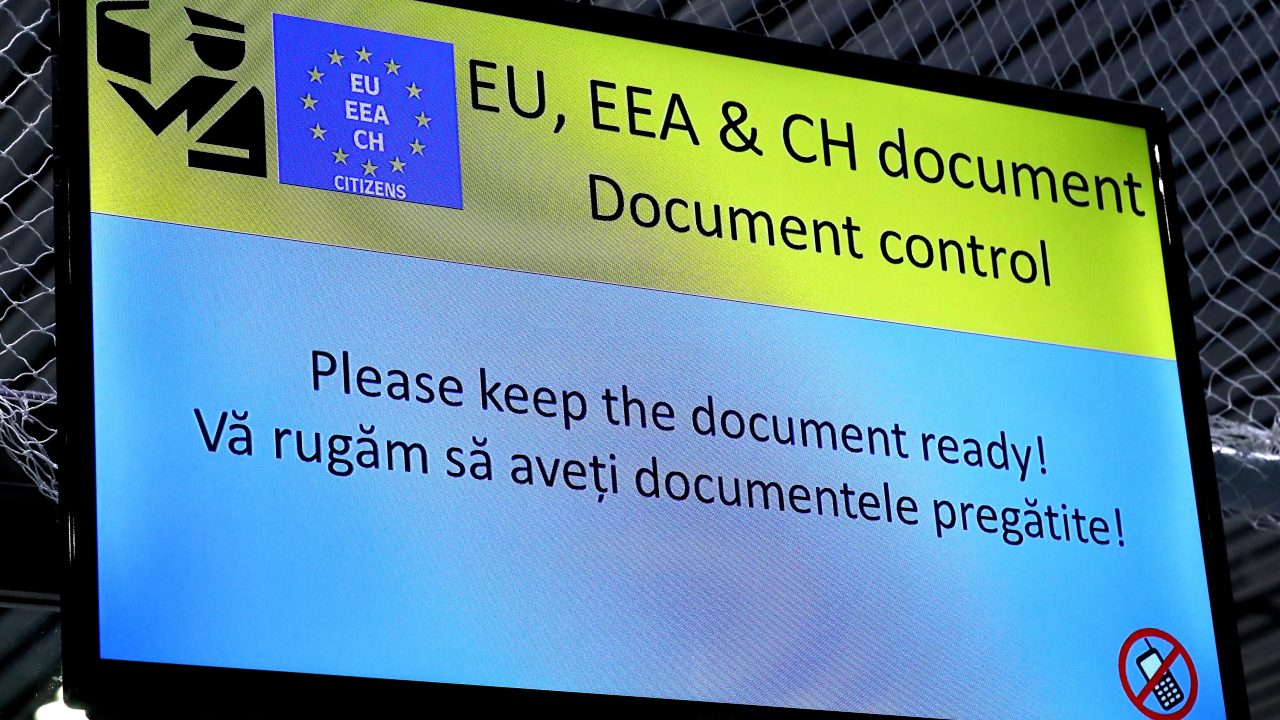
Caption: A display that indicates a document control booth for the EU passengers inside the departures terminal at Bucharest Henri Coanda International Airport, in Otopeni city, 20 km north of Bucharest, Romania, 28 March 2024. EPA/ROBERT GHEMENT
Updated: July 18, 2025 - 13:44