 Edit
EditControversy halts Trump son-in-law’s $500M Belgrade real estate project
Jared Kushner’s involvement teeters on the edge of a conflict-of-interest scandal
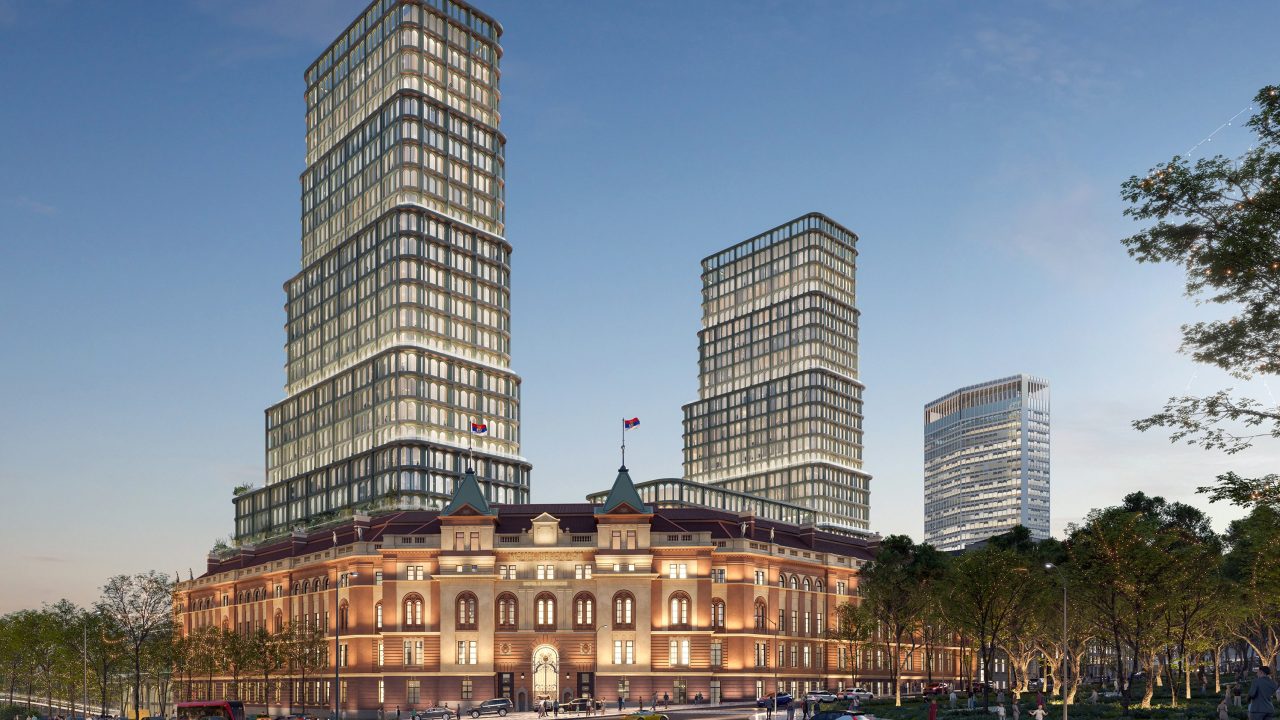
A high-stakes real estate venture in Serbia, spearheaded by Jared Kushner, son-in-law of U.S. President Donald Trump, has skidded to a halt amid a scandal involving forged documents, cultural heritage disputes, and geopolitical firestorms. The ambitious $500-million Trump International Hotel and residential complex, planned for the heart of Belgrade, has ignited fierce debate, with accusations of betrayal, corruption, and even Russian meddling swirling around the project.
At the center of the controversy is the site of the former Yugoslav Ministry of Defense and General Staff, a pair of modernist buildings designed by architect Nikola Dobrovic and ravaged by NATO airstrikes in 1999 during the Kosovo War. These structures, classified as protected cultural monuments in 2005 for their historical significance – commemorating the 1943 Partisan victory at the Sutjeska River – were stripped of their protected status in November 2024 to pave the way for Kushner’s Affinity Partners, backed by Saudi Arabia’s sovereign wealth fund, to secure a 99-year lease for the site.
The plan? Demolish the war-scarred ruins to erect a glitzy Trump-branded hotel and luxury apartments, a move that has sparked outrage among Serbians still haunted by the trauma of the NATO bombings.
The project’s unraveling began when Goran Vasic, the former acting director of Serbia’s Republic Institute for the Protection of Cultural Monuments, confessed to forging a critical document. Vasic admitted to fabricating an expert opinion to justify stripping the site of its cultural heritage status, a decision that prosecutors say caused “irreparable damage” to Serbia’s heritage.
The Belgrade High Court recently rejected an appeal to detain Vasic, who pleaded guilty to charges of “abuse of official position” and forgery, further complicating the project’s future. The Serbian Organized Crime Prosecutor’s Office revealed that Vasic’s falsified proposal bypassed expert input, misleading the government into approving the site’s declassification.
Serbian President Aleksandar Vucic, speaking from a European Political Community summit in Tirana, dismissed the allegations of forgery as routine noise, insisting there are “no obstacles” to the project’s progress. Yet, the backlash has been fierce. On March 24, 2025, marking the 26th anniversary of the NATO bombings, protests erupted in Belgrade, with citizens and opposition leaders decrying the plan as a desecration of a national wound. Critics argue that turning a site symbolic of Serbia’s suffering into a Trump-branded luxury complex is not just insensitive but a potential power play by Vucic’s government to curry favor with a resurgent Donald Trump, who returned to the White House in 2025.
Adding fuel to the fire, the contract with Affinity Partners includes a contentious clause requiring the construction of a monument to “victims of NATO aggression.” This provision has drawn sharp criticism from retired U.S. General Wesley Clark, NATO’s commander during the 1999 bombings. In an interview with Spytalk, Clark called the monument “revisionist” and a “betrayal” of U.S. policy, accusing it of whitewashing Serbian war crimes during the Kosovo conflict and serving Russian interests to undermine NATO.
“This is part of a broader counterintelligence effort by Russian intelligence to divide, discredit, and weaken NATO,” Clark warned, pointing to Vucic’s past as a minister under Slobodan Milosevic and his perceived pro-Russian leanings. Clark’s blunt assessment: “Should Kushner be involved in this? Of course not!”
The project’s geopolitical ripples extend further. Posts on social media have fueled speculation, with some users alleging the deal reflects corrupt motives or a Kremlin-backed plot to destabilize NATO amid its ongoing support for Ukraine. While these claims lack hard evidence, they underscore the deep mistrust surrounding the project. Affinity Partners, caught off guard by the forgery scandal, issued a statement to The New York Times, calling it an “unpleasant complication” and noting they were unaware of Vasic’s actions. The firm, partnered with Dubai-based developer Mohamed Alabbar, is now reassessing its next steps.
Kushner’s involvement raises additional red flags. As a key sponsor of Trump’s 2024 campaign and with Trump back in power, the project teeters on the edge of a conflict-of-interest scandal. Serbian opposition leaders have seized on this, warning that the deal could entangle U.S. foreign policy in a web of personal gain. Meanwhile, Kushner’s planned appearance at an investment summit in Tirana on Saturday, 24 May, has only heightened scrutiny.
As legal battles, public protests, and international criticism mount, the fate of Kushner’s Belgrade venture hangs in the balance. Will it rise as a glittering Trump tower, or crumble under the weight of Serbia’s past and present tensions? For now, the scars of 1999 loom large, casting a long shadow over this contentious project.
Excited to share some early design images for development projects we have been creating for the Albanian coast and downtown Belgrade. @nytimes @business pic.twitter.com/o0HIYLkZWV
— Jared Kushner (@jaredkushner) March 15, 2024
Image: Artist view of the Belgrade real estate project of Jared Kushner
Updated: May 24, 2025 - 06:12