 Edit
Commission denies support to Serbian protests, students regret EU passivity
Vučić accused Brussels of orchestrating a "color revolution" in an attempt to destabilise his government
The European Commission has strongly denied any involvement in fomenting the ongoing student protests in Serbia, which continue unabated since the tragic collapse of the canopy at the Novi Sad train station last November, resulting in 16 fatalities.
The reaction came after Serbian President Aleksandar Vučić accused Brussels of orchestrating a “color revolution” in an attempt to destabilise his government.
Meanwhile, student activists criticised the European Union for its perceived passivity, arguing that it has failed to exert pressure on Vučić or take a clear stance on the situation.
EU clarifies its position
The European Commission firmly dismissed any links to the protests, which the Serbian authorities have labeled as an attempt at another “color revolution.”
Commission spokesperson Paula Pinho stated during a Monday press briefing: “We fully deny any encouragement of anti-government protests anywhere in the world, including Serbia. We respect the democratic electoral process, and it’s important to make that very clear.”
However, following inquiries from journalists, the Commission issued a clarification on Wednesday. When asked to comment on Vučić’s claims of a “color revolution” and reports suggesting Western involvement, the Commission issued a stern warning: “Spreading disinformation and hostile political rhetoric, including accusations against the EU and its citizens, has no place on Serbia’s path toward EU integration.”
Protests and political tensions in Serbia
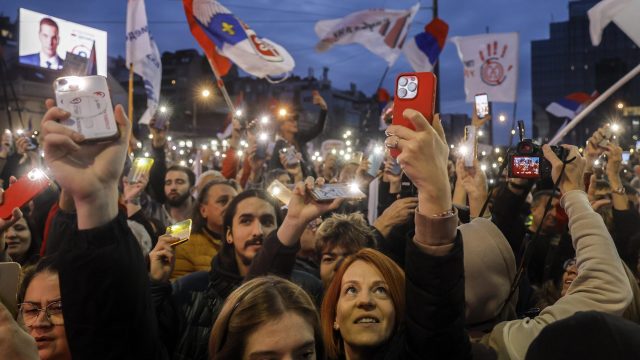
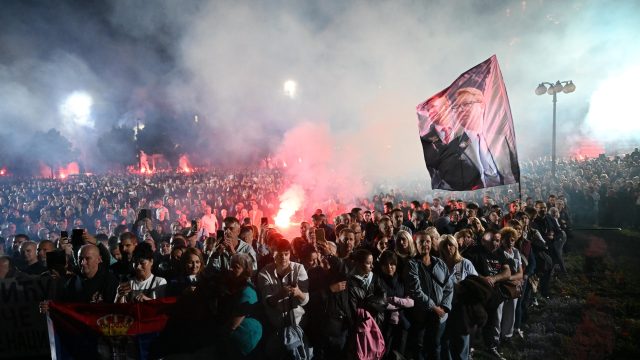
The student protests, which have persisted for over seven months, peaked in late June. Demonstrators gathered at Belgrade’s Slavija Square, with organizers claiming approximately 140,000 participants, a figure significantly higher than the official police estimate of around 36,000. During the rally, a student speaker condemned what they described as years of neglect, corruption, and state-sponsored cronyism, linking the recent train station tragedy to systemic failures.
The rally held on 28 June under the slogan “See You on St. Vitus Day (Vidovdan),” demonstrated the resilience and strength of the protest movement. The same square saw similar large protests earlier after the train station tragedy. The ability of the movement to mobilise such numbers over months underscores its reslience in the face of power, which has made many attempts to undremine the rebellion.
While students initially sought support from European officials in Strasbourg and Brussels, the 28 June rally was characterized by a nationalist narrative, partly because it coincided with St. Vitus Day, a religious holiday linked to the historic Battle of Kosovo, a central element of Serbian national identity. Nonetheless, nationalist sentiments remain prevalent among many students, and messages of this nature resonate within the broader protest movement.
The protesters declared that their movement has evolved beyond student concerns to a broader civil protest. “As of this moment, this is no longer just a student protest; we are here as citizens,” a speaker announced.
Their latest declaration warns that if Vučić refuses to call new elections, a wave of civil disobedience will follow. “We will stand before institutions, before ministries, and television stations seeking to silence us. We will not hinder any citizen, but we will confront lies, injustice, and corruption,” they declared.
Political reactions and EU clarifications
Democratic Party deputy leader Nebojsa Novakovic criticized Vučić on 2 July for having said he had a “productive discussion” with EU Commission President Ursula von der Leyen.
Novakovic dismissed these claims, asserting Vučić’s influence is waning: “He is increasingly isolated and politically undesirable. The EU does not trust him, and Serbia’s European path is not shaped by staged meetings or superficial dialogues.”
Vučić had previously claimed that he had a “long conversation” with von der Leyen during an international conference in Seville on 30 June. However, the European Commission refuted this, clarifying that the interaction was a brief, a casual exchange and cerainly not an official bilateral meeting.
Commission spokesman Stefan de Keersmaecker explained, “President von der Leyen had a chance to exchange a few words with many leaders, including President Vučić, but it was not an official bilateral meeting.”
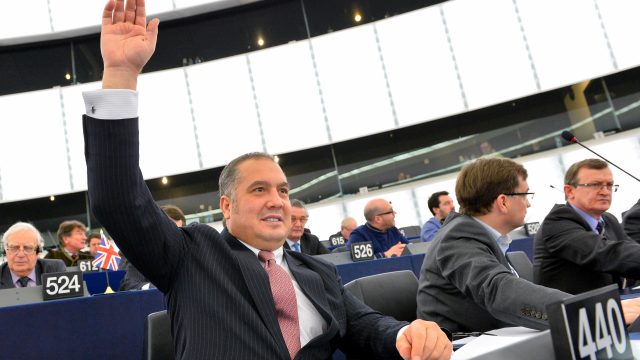
At the same time MEP Gordan Bosanac expressed frustration over what he perceives as EU institutions’ silence and reluctance to support protesters against Vučić’s regime, especially following recent violence at the Vidovdan protest in Belgrade.
He criticized Brussels for prioritising regional stability over democratic principles, suggesting that the EU’s response to authoritarian tendencies in Serbia has been tepid.
Bosanac warned that protests could intensify and potentially escalate into violence. He called for stronger EU measures to apply pressure on the Serbian government, such as limiting financial support.
Lack of political alternative
Analysts suggest that Brussels’ delayed or cautious response stems from scepticism regarding Serbia’s political landscape. In the EU perspective, Serbia lacks a political alternative committed to European values, which hampers more decisive positioning.
Aleksandra Joksimović, director of the Foreign Policy Center, explained that the EU’s primary goal remains regional stability and preventing external influence. She emphasized that Serbia currently lacks strong political entities advocating for European integration.
However, Joksimović warned that without clearer support for civil society and democratic movements, Serbia’s accession process could face significant obstacles.
Edited by a.k.
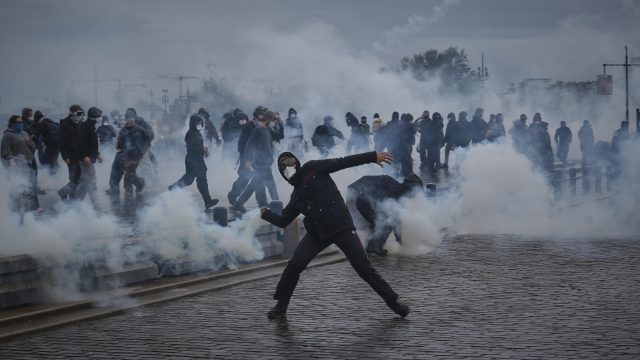
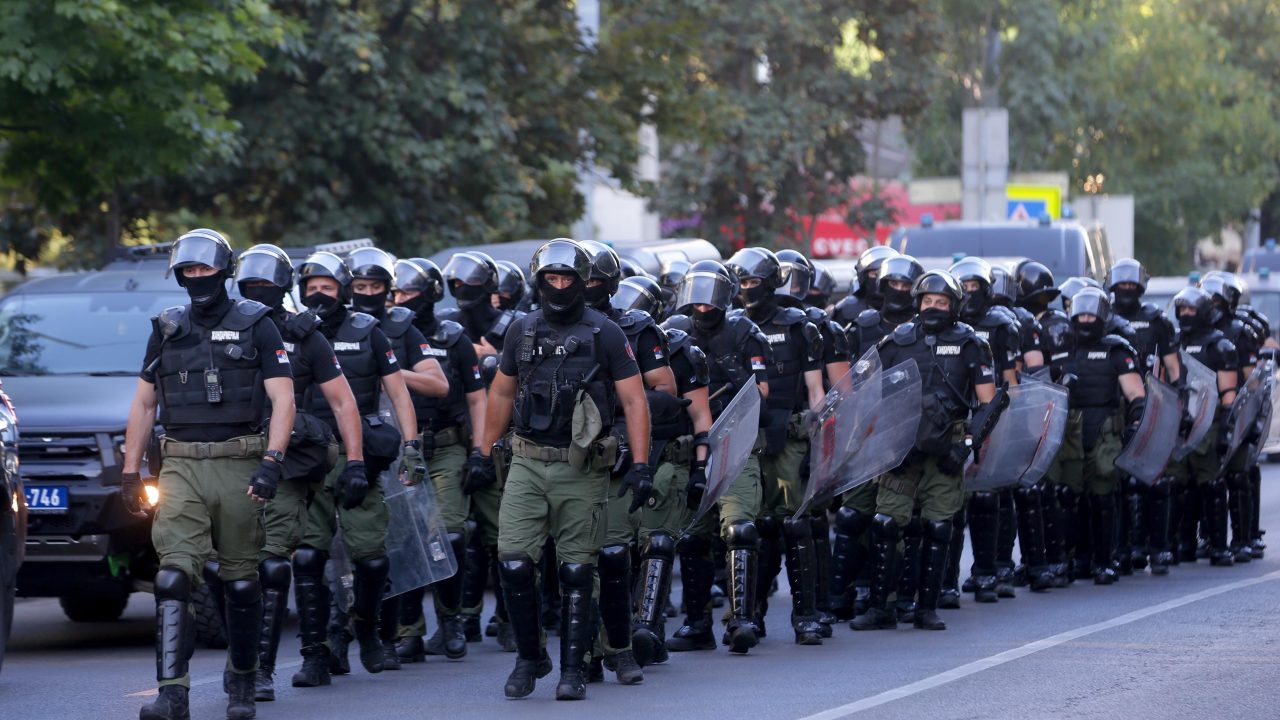
Caption: Riot police officers take positions after removing a road blockade organized by students and anti-government demonstrators in Belgrade, Serbia, 1 July 2025. University students and anti-government protestors are demanding snap elections and release of detained protesters. EPA/ANDREJ CUKIC
Updated: July 3, 2025 - 12:07