 Edit
Bulgaria’s Trans-Balkan Pipeline lies idle: a strategic gift to Russia at Ukraine’s expense
Ukraine’s biggest import route today is Hungary, via TurkStream, the country being fed exclusively by Russian gas
The recent Greece–Ukraine LNG agreements have put a spotlight on the Vertical Gas Corridor and the dormant Bulgarian section of the old Trans-Balkan Pipeline (TBG). Yet, despite optimistic headlines, not one cubic metre of non-Russian gas is flowing north through Bulgaria’s two dedicated transit lines, writes Ilian Vassilev.
Ilian Vassilev is a former Bulgarian ambassador to Moscow, now a media publisher and commentator. His website Altanalyses is a content partner of EUalive.
This is not a technical oversight — it is the deliberate outcome of four years of obstruction by the state operator Bulgartransgaz (BTG) and the pro-TurkStream lobby that still controls key levers of Bulgaria’s energy policy.
The hard facts
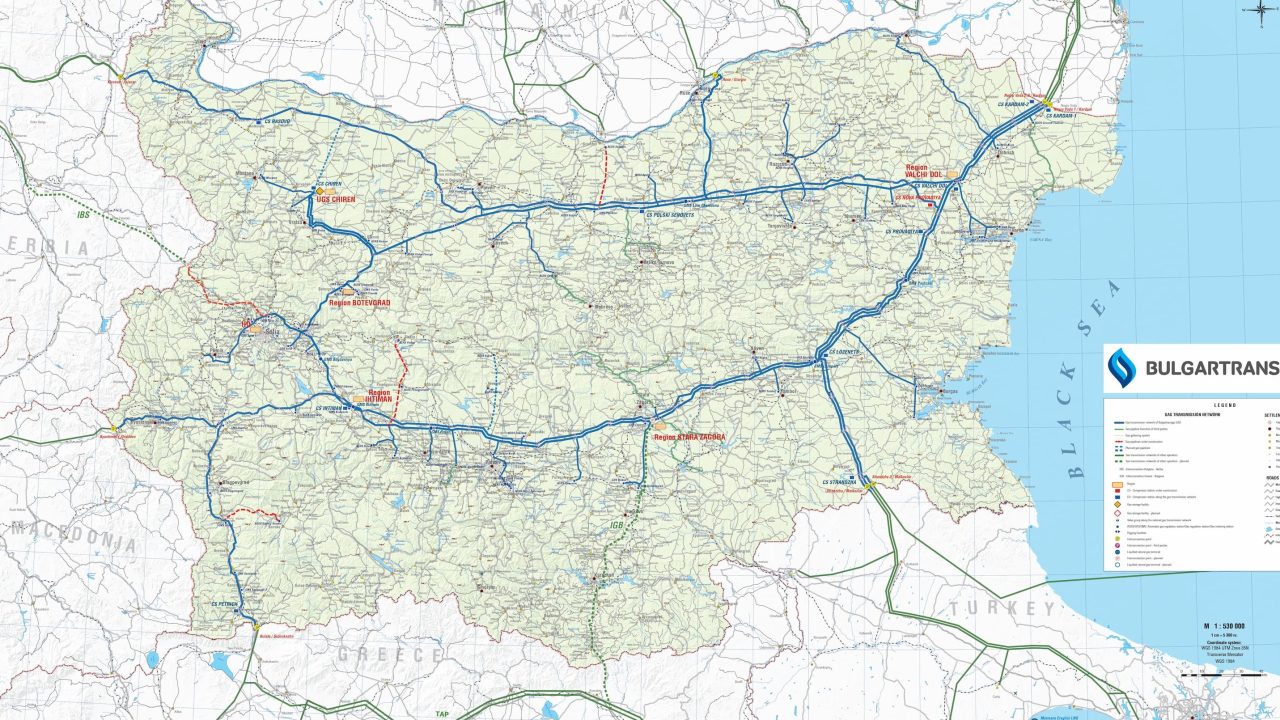
The classic Trans-Balkan Pipeline consists of two high-pressure transit lines that cross Bulgaria from north to south and historically connected Romania to Turkey.
Today these lines carry zero gas in either direction.
Reverse flow does exist, but only on the former Kardam–Negru Vodă 1 line, which was quietly transferred to Bulgaria’s domestic network years ago. It has no physical link to the TBG transit system and therefore cannot move gas to Romania or Ukraine via the original route.
The missing link
To restore genuine northbound transit capacity, Bulgaria needed to build a 63-km looping section between Rupcha and Vetrino after the Lozenets–Provadia segment was irreversibly repurposed for TurkStream in 2020. Four years later, construction has not even started; the latest official target is the end of 2026.Instead of fixing this strategic bottleneck, BTG has poured money into:
- expanding the underused Sidirokastro–Kulata entry point (still dominated by Gazprom bookings);
- domestic loops that primarily serve private oligarchic interests.
Two entry points, one real bottleneck
U.S. and other LNG reaching Greek terminals can enter Bulgaria in only two places:
– The Greece–Bulgaria Interconnector (IGB) at Stara Zagora (3 bcm/y, expandable to 5 bcm/y);
– The older Sidirokastro–Kulata point (2.3 bcm/y, planned 3.3 bcm/y).
The IGB has slashed its winter tariffs by 46 % to stimulate northbound flows, yet volumes remain modest. The reason is simple: without the Rupcha–Vetrino loop, gas entering via the IGB cannot reach the Romanian border at full capacity. The true chokepoint is not at the Greek border — it is inside Bulgaria.
Geopolitical consequences
The idle 17 bcm/y of Bulgarian transit capacity is the largest unused gas artery in Central and Eastern Europe. Restoring it would:
- give Ukraine a realistic, large-scale alternative to Russian molecules delivered via TurkStream and Hungary;
- dramatically reduce Moscow’s leverage over both Kyiv and Budapest.
Instead, Ukraine’s biggest import route today is Hungary (≈10 mcm/d), fed exclusively by TurkStream — i.e. 100 % Russian gas.
Russia never bombs the Hungarian entry points, but repeatedly targets the Orlovka metering station on the Romania–Ukraine border — the very route that would carry Azeri gas and LNG transiting Bulgaria.
The battle for the IGB
Because the IGB is the only viable engine of the Vertical Gas Corridor, it has become the primary target of the TurkStream coalition. Multiple attempts have been made to place it under BTG control or to limit its expansion. With the prospect of a more Russia-friendly U.S. administration after January 2025, these actors appear convinced that their window of opportunity is reopening.
Bottom line
Until the Rupcha–Vetrino loop is built and the old TBG transit lines are brought back into service, Bulgaria will remain a willing choke point in Europe’s effort to free Ukraine from Russian gas dependence. The infrastructure exists, the LNG is arriving in Greece, and the commercial deals are signed. What is missing is political will in Sofia — and that is the most expensive gas of all.
A longer version of this analysis can be found here.
Caption: Gas infrastructure of Bulgaria [Bulgartransgaz]
Updated: November 24, 2025 - 17:39






