 Edit
EditEastern NATO allies ramp up coordination on borders, air defense, and drone threats
the leaders of Finland, Sweden, Poland, Estonia, Latvia, Lithuania, Romania and Bulgaria will gather in Helsinki ahead of the December EU summit
Leaders from a group of EU countries on NATO’s eastern flank will gather in Helsinki on 16 December to coordinate positions on strengthening Europe’s defence capabilities and securing the bloc’s eastern borders against what they describe as a long-term Russian threat.
The meeting, hosted by Finland, will bring together the leaders of Finland, Sweden, Poland, Estonia, Latvia, Lithuania, Romania and Bulgaria. According to Finnish Prime Minister Petteri Orpo, the summit is aimed at agreeing on concrete measures and sending “a clear signal to Brussels” ahead of discussions on the EU’s next multiannual budget, and the EU summit on 17-18 December, EUalive’s partner Suspilne writes.
“Russia is a threat today, tomorrow and in the long future. The greatest pressure is on the eastern outskirts of Europe,” Orpo said, as quoted by Bloomberg. He added that the participating countries intend to push for significantly higher EU funding for defence-related projects, particularly in areas such as border security, air defence, counter-drone capabilities and the development of land forces.
So far, around €1.5 billion has been allocated to pilot defence projects. However, Orpo noted that eastern flank countries are looking to secure much larger sums in the next EU budget framework starting in 2027, where a future defence fund could reach up to €135 billion.
The Helsinki summit comes against the backdrop of a series of security incidents involving Russia along NATO’s eastern border in September, underlining the urgency felt by frontline states. On the night of 10 September, Russian drones violated Polish airspace. Polish forces shot down around four of the nineteen drones involved, Prime Minister Donald Tusk said, while one drone damaged a house and a car in the Lublin Voivodeship and debris was found in several villages. Poland subsequently activated Article 4 of the NATO Treaty to consult allies on the situation.
While Russia’s defence ministry acknowledged that drones targeting Ukraine may have crossed into Polish territory and expressed readiness for consultations, the Kremlin itself did not comment on the incident.
Two days later, NATO Secretary General Mark Rutte announced the launch of Operation Eastern Sentinel, a new initiative aimed at addressing specific threats related to drone use along the Alliance’s eastern flank, with operations planned in Poland and Romania. This was followed on 14 September by a Polish presidential resolution authorising the presence of allied NATO forces on Polish territory as part of Operation Eastern Guard.
Romania also experienced heightened tensions. On 13 September, air raid alerts were declared in the country’s northern regions due to the threat of attack drones. Romanian F-16 fighter jets intercepted a Russian Shahed drone over the Danube, with the defence ministry stressing that it did not pose a direct threat to civilians. Ukrainian President Volodymyr Zelenskyy later stated that the drone had remained over Romanian territory for around 50 minutes.
In the Baltic region, Estonia reported that three Russian fighter jets violated its airspace for 12 minutes on 19 September. Foreign Minister Margus Tsahkna described the incident as a breach of territorial integrity and the principles of the UN Charter. The violation prompted both an emergency meeting of the UN Security Council on 22 September and consultations under NATO’s Article 4 the following day, during which allies condemned Russia’s actions.
Until recently, the eastern flank of NATO was most commonly associated with the so-called Bucharest Nine (B9), a format established to reinforce the Alliance’s eastern wing in response to Russian aggression. The B9 brings together Bulgaria, Poland, Romania, the three Baltic states, as well as the Czech Republic, Slovakia and Hungary. The group last met in June in Vilnius.
Against this background, the absence of Slovakia, Hungary and the Czech Republic from the Helsinki meeting has drawn attention. A likely explanation lies in the more narrowly defined focus of the summit. Unlike the broader B9 format, the Helsinki gathering brings together countries that are geographically closest to Russia or directly exposed to recent airspace violations, drone incursions and hybrid threats along the EU and NATO’s eastern edge.
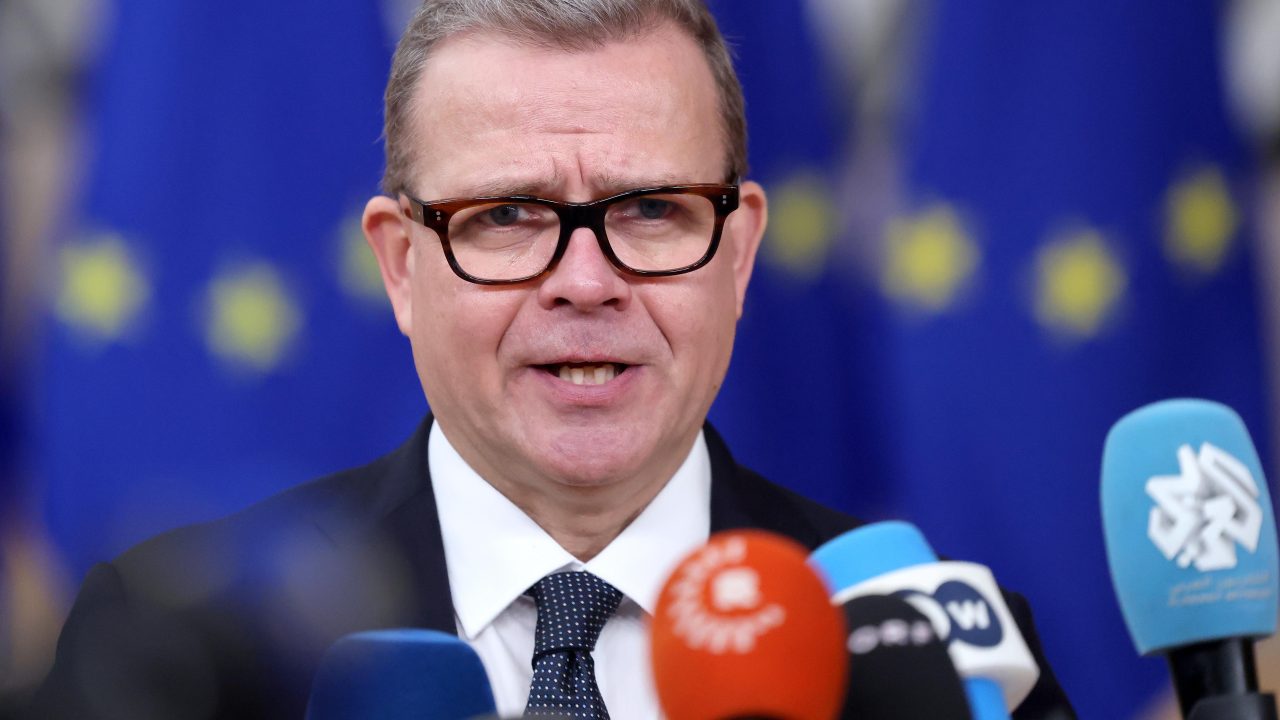
Caption: Finnish Prime Minister Petteri Orpo arrives for the Euro Summit in Brussels, Belgium, 23 October 2025. EU leaders convene in Brussels to discuss the situation Ukraine, European defence, developments in the Middle East, competitiveness, housing and migration. EPA/OLIVIER MATTHYS
Updated: December 17, 2025 - 07:40