 Edit
Catholic-backed campaign stops Slovenia’s euthanasia law
The law was enacted in July, but conservative activists collected sufficient signatures to force a referendum that ultimately rejected it
In a closely fought and emotionally charged referendum, Slovenian voters rejected on 23 November the Act on assisted voluntary ending of life, blocking the country’s attempt to become one of the leading European nations to legalise euthanasia for terminally ill adults.
With 99.8 % of ballots counted, 53.43 % voted against the law, while 46.57 % supported it. Turnout reached 40.2 %. As opponents cleared the required rejection quorum (at least 20 % of all eligible voters casting a “No” vote), the law passed by parliament four months ago cannot enter into force.
The result marks a rare and significant defeat for the centre-left coalition government led by Prime Minister Robert Golob.
The road to Sunday’s vote began in June 2024, when a consultative referendum held alongside European Parliament elections revealed majority public willingness to explore regulated assisted dying. Encouraged by that signal, the ruling coalition of Gibanje Svoboda, the Social Democrats (SD), and Levica drafted and adopted the law in July 2025. Within weeks, conservative activists backed by the Catholic Church and led by prominent anti-euthanasia campaigner Aleš Primc gathered more than 40,000 signatures to force a new, binding referendum.
There are approximately 1.5 million to 1.6 million Catholics in Slovenia, representing about 71% to 74% of the total population.
Although the referendum is formally consultative, the clear rejection and the fulfilment of the quorum effectively freeze the issue for at least twelve months, after which parliament may table a new bill.
In a measured but resolute response, Prime Minister Robert Golob acknowledged the outcome while insisting the broader question remains unresolved. “No one should be forced into unbearable, prolonged suffering, and no one should be forced to end their life,” he wrote. “As a free and compassionate society we must ensure both. This is a question of dignity, human rights and individual choice. That fight will not stop.”
Supporters of the law expressed disappointment but vowed to continue. Andrej Pleterski of the Srebrna nit association, which advocates for the right to die with dignity, declared: “Today will not be a historic day for anyone. This law will certainly be adopted in this country one day. I can confirm this as a historian who understands historical processes.”
Levica MP Nataša Sukič accused conservative circles and the Catholic Church of prevailing “with lies, deceptions and interpretations that this is a law that allows abuses and erodes ethical norms,” yet insisted the debate has opened public space that will not close. SD MP Mojca Šetinc Pašek described the opposing campaign as one of intimidation heavily backed by the Church, but added that Slovenia would eventually join “the democratic, progressive countries that already offer this choice.”
Opponents, including Catholic organisations and civil initiatives such as “Za življenje” (For Life), celebrated the result as a defence of the sanctity of life and a rejection of what they called a dangerous slippery slope toward the devaluation of vulnerable patients.
Slovenia would have become the sixth EU member state – after Belgium, the Netherlands, Luxembourg, Spain, and Portugal, to fully legalise euthanasia, and the tenth European jurisdiction when including Switzerland, Austria, Italy, and Germany, which permit various forms of assisted dying under strict conditions.
For the moment, assisted dying remains prohibited in Slovenia, and terminally ill patients who wish to end their lives continue to travel to clinics in Switzerland or other permissive jurisdictions. Yet both sides agree the issue is far from settled, and the intense national debate that has divided families, parishes, and political parties is almost certain to return to parliament and the public square in the years ahead.
Sources: Siol.net, Reuters, BGNES
Slovenia edges closer to holding referendum to reject euthanasia
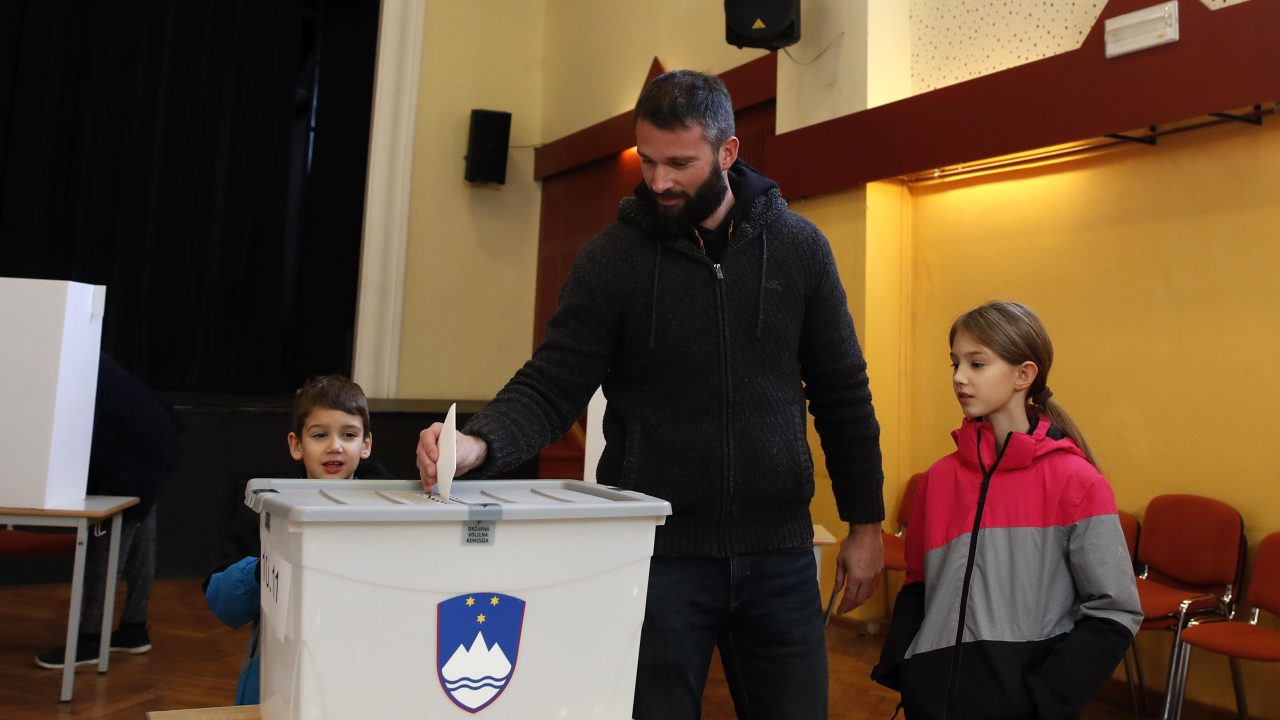
Caption: A man casts the ballot during a referendum on a law legalizing assisted dying in Ljubljana, Slovenia, 23 November 2025. Slovenia is holding a binding referendum to decide the fate of a law previously approved by parliament and supported in a 2024 referendum; a new vote was triggered after a conservative campaign gathered enough signatures to force a repeat. EPA/ANTONIO BAT
Updated: November 24, 2025 - 11:45