 Edit
Serbia downgraded as internet freedom declines across Europe
Authorities detained individuals who spoke out in support of the protests online and employed Israeli technology to search the phones of journalists and activists
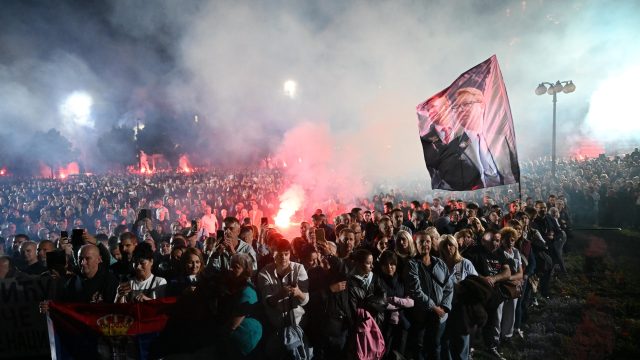
Serbia’s online environment suffered a major blow this year, as Freedom House downgraded the country’s internet freedom status from “Free” to “Partly Free.” The shift, recorded in the organisation’s “Freedom on the Net 2025” report, came after the government’s harsh response to student-led protests in late 2024.
“The Serbian government’s response to student-led protests caused that country’s internet freedom status to change from Free to Partly Free,” the report states. Demonstrations erupted nationwide in November 2024, after the deadly collapse of a train station canopy in Novi Sad. According to Freedom House, “when people took to the streets across the country to call for justice and transparency following the deadly collapse of a train station canopy in Novi Sad in November 2024, authorities detained individuals who spoke out in support of the protests online and employed Cellebrite technology to search the phones of journalists and activists”.
(Cellebrite DI Ltd. is a digital forensics company headquartered in Petah Tikva, Israel, that provides tools for law enforcement agencies as well as enterprise companies and service providers to collect, review, analyse and manage digital data. Their flagship product series is the Cellebrite UFED.)
The downgrade makes Serbia one of the most notable cases of democratic backsliding in Europe this year. Its shift coincides with what Freedom House describes as “the 15th consecutive year of decline in global internet freedom.” Of the 72 countries assessed, conditions deteriorated in 27 and improved in only 17. “People in at least 57 of the 72 countries covered by Freedom on the Net 2025 were arrested or imprisoned for online expression on social, political, or religious topics during the coverage period – a record high”, the report states.
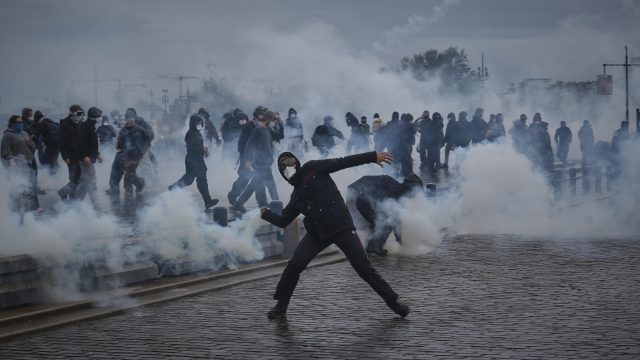
It highlights that repression during protests has become a defining feature of this decline. “Protests and large-scale uprisings drove some of the year’s most significant developments, as governments engaged in digital repression to thwart communication about acts of dissent,” the authors write. Kenya, Venezuela and Georgia also recorded steep declines, all linked to the authorities’ use of censorship, arrests and shutdowns to stifle opposition movements.
In Serbia’s case, Freedom House identifies a worrying trend of digital surveillance and intimidation against journalists and activists. The mention of Cellebrite technology – software used to extract data from mobile phones, underlines growing concerns about invasive investigative methods being deployed to identify or intimidate dissenters.
Elsewhere in Europe, the report notes that even countries with traditionally strong protections are not immune to pressure. “Half of the 18 countries with an internet freedom status of Free suffered score declines during the coverage period,” it says. Georgia recorded one of the most severe decline among free countries, after the ruling Georgian Dream party enforced a new law on “transparency of foreign influence” that targeted civil society and online media outlets.
Freedom House also reports that Germany and the United States, while remaining “Free”, saw declines linked to restrictions on civic space and online expression. In Germany, “authorities pursued criminal prosecutions against people who criticized politicians,” while in the United States, “growing restrictions on civic space threatened to stifle digital activism.”
Overall, Freedom House concludes that “control over online information has become an essential tool for authoritarian leaders seeking to entrench their regimes.” The report warns that both authoritarian and democratic governments increasingly manipulate online spaces, sometimes “without overt censorship,” to promote preferred narratives or silence criticism.
The authors note that internet freedom worldwide is now at its lowest level since the project began. China and Myanmar remain the world’s worst environments for online freedom, while Iceland continues to rank as the freest. “The internet is more controlled and more manipulated today than ever before,” the report summarises.
In its section on the future of human rights online, Freedom House cautions that emerging technologies – from artificial intelligence to identity verification systems, pose new threats to privacy and free expression. “Online anonymity, an essential enabler for freedom of expression, is entering a period of crisis,” the report warns, as governments increasingly require users to verify their identity to access social media or certain websites.
The findings serve as a warning for countries like Serbia, where political pressure and technological surveillance are converging. Freedom House concludes that reversing the global trend “will require coordinated action by like-minded allies from government, the private sector, and civil society.” As the report puts it, “Fifteen consecutive years of decline should stir alarm among supporters of internet freedom and galvanize remedial efforts in the years to come.”
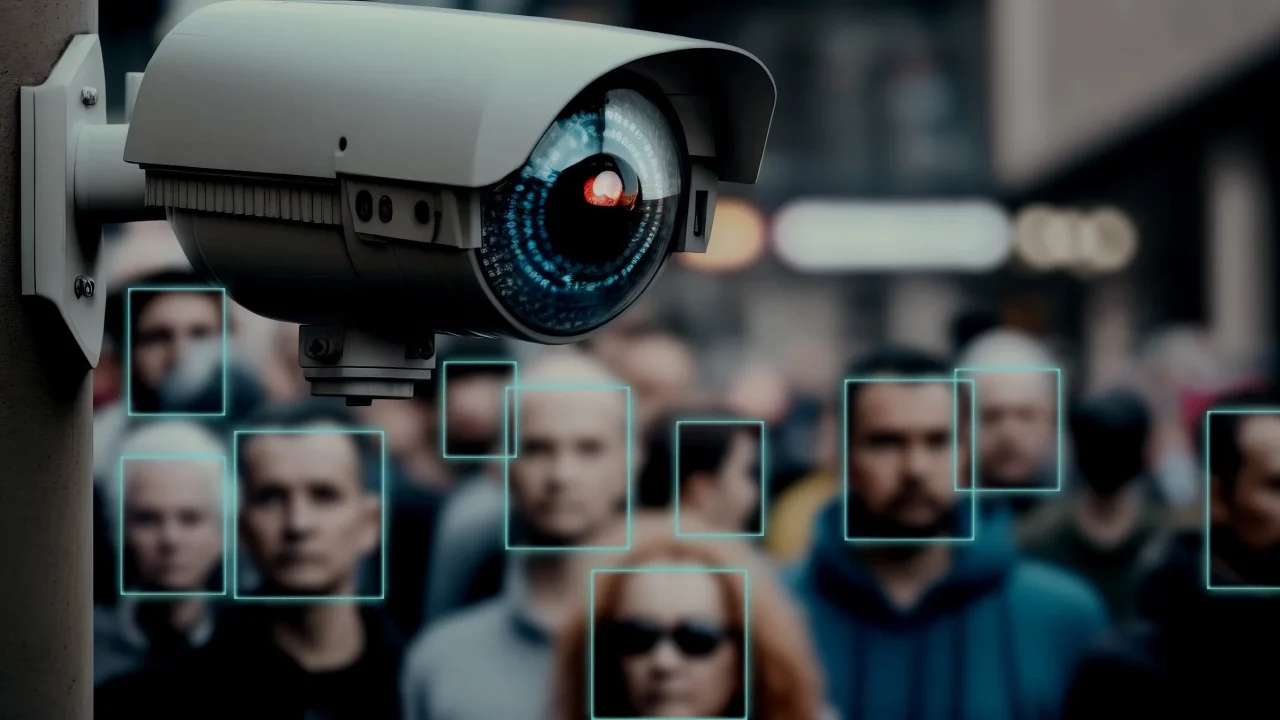
Caption: AI-generated illustrative picture of a facial recognition camera used in urban area [Policingproject.org].
Updated: November 13, 2025 - 16:58