 Edit
China’s Balkan express: Orbán’s destructive role in a fractured Europe
Documentary warns the EU and NATO that unchecked Chinese influence risks fracturing Europe’s unity and security
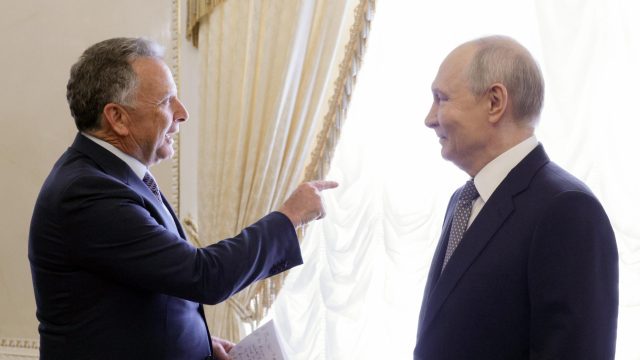
The Chinese economic invasion in the Western Balkans is increasingly overshadowing the European integration process and undermining European unity. Beijing’s influence is expanding aggressively, often through authoritarian regimes in Hungary, Serbia, and North Macedonia, and, regrettably, also in Greece, Bulgarian journalist Dimitar Ruskov from our partner media BGNES said in an interview with EUalive.
Ruskov talked about his documentary, “The Chinese train in the Balkans: the door to a divided Europe”, released in September 2025. The documentary offers a chilling exposé of China’s expanding influence in Southeast Europe through its Belt and Road Initiative (BRI).
Through the voices of politicians, analysts, and journalists, Ruskov portrays Viktor Orbán as a central figure in Beijing’s strategy, leveraging Chinese support to offset EU sanctions and entrench his power.
The film meticulously documents how Beijing’s strategic loans, infrastructure projects, and surveillance technologies are reshaping the Balkans, undermining European unity, and bolstering authoritarian regimes in Hungary, Serbia, North Macedonia.
China’s еconomic invasion: undermining European unity
“The Chinese economic invasion practically replaces the European integration process,” Ruskov asserts, arguing that Beijing’s aggressive expansion through authoritarian regimes in Hungary, Serbia, and North Macedonia – and to a lesser extent, Greece, directly challenges the EU’s cohesion.
According to Ruskov, unlike EU grants, which come with stringent oversight, Chinese loans are often shrouded in secrecy, creating dependencies that bind nations to Beijing’s political agenda. These investments are not altruistic but strategic, enabling China to gain leverage over vulnerable Balkan states.
A stark example is Montenegro’s near-bankruptcy in the early 2020s, triggered by a Chinese-funded highway project connecting Serbia to the Adriatic Sea. The €1 billion loan, equivalent to nearly a fifth of Montenegro’s GDP, pushed the country to the brink of a debt trap, requiring European banks to intervene.
Similarly, Greece’s reliance on Chinese investments, particularly in the Port of Piraeus – where China’s logistic giant COSCO holds a 67% stake since 2009, has transformed the port into Beijing’s Mediterranean logistics hub, granting China significant geopolitical leverage.
The Budapest–Belgrade railway: a symbol of China’s ambitions
At the core of Ruskov’s investigation is the Budapest–Belgrade high-speed railway, a flagship BRI project. Financed by €3 billion loans from Chinese institutions like the Bank of China to Hungary and Serbia, the railway is presented as a symbol of modernisation but is riddled with flaws.
Hungarian opposition leader Márton Tompos criticizes its inflated costs and limited utility, noting that it bypasses major Hungarian cities. “We’ll be paying off this debt for generations,” he warns. Budapest’s 9th District mayor, Krisztina Baranyi, highlights the project’s opaque terms, which leave Hungary vulnerable to Beijing’s influence.
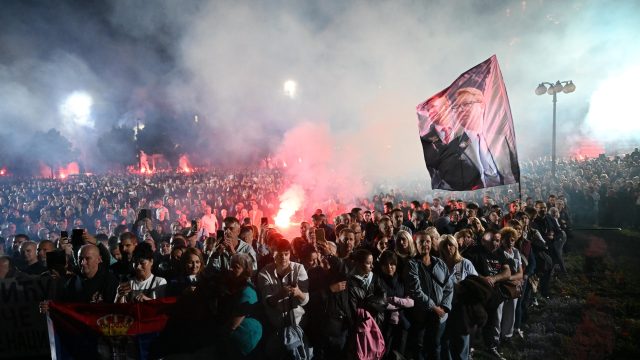
Ruskov uncovers further irregularities: the railway, designed for speeds of 168 km/h, uses outdated Soviet-era rails from 1980, and Chinese workers and equipment dominate its construction. In Serbia, the 2024 collapse of the Novi Sad station, renovated under BRI, sparked unrelenting protests against President Aleksandar Vučić’s regime, reflecting public frustration with these secretive deals.
Surveillance and political control: China’s broader strategy
Beyond infrastructure, China’s influence extends to surveillance and political manipulation. In Hungary, Prime Minister Viktor Orbán has embraced Chinese facial-recognition systems and cameras to monitor protesters and political opponents, mirroring tactics used in China.
The documentary exposes illegal Chinese “police stations” and espionage hubs in Budapest, alongside a failed plan to establish a Fudan University campus – widely seen as a conduit for state espionage, halted by public protests.
In Serbia, Vučić uses Chinese financing to consolidate power, while in North Macedonia, former counterintelligence chief Goran Mitevski warns of a coordinated campaign by Beijing, Budapest, and Belgrade to control media and politics. Projects like the “Serbian World” initiative, a modern iteration of Greater Serbia, are financed with Chinese funds, pulling Skopje closer to Belgrade’s orbit. Mitevski urges Macedonian security services to counter this interference, warning that it undermines the EU’s Berlin Process and enlargement goals.
Is North Macedonia pushed toward ‘Serbian world’ instead of pursuing EU integration?
Greece: a strategic foothold in the Mediterranean
Greece’s role in China’s strategy is pivotal. Since COSCO’s acquisition of the Port of Piraeus, Chinese investments have poured into Greek infrastructure, giving Beijing a strategic foothold in the Mediterranean. This leverage extends beyond economics, as Chinese technology and investments increasingly shape Greece’s geopolitical alignment.
Ruskov’s film argues that China’s strategy – combining mega-investments, debt entrapment, and technological dominance, creates a spiral of dependency across the Balkans.
Strategic transport corridors, such as Corridor 10, are repurposed to serve Beijing’s interests, potentially compromising NATO’s military mobility. Political analyst Tamás Matura describes Orbán’s alliances with China and Russia as a deliberate effort to weaken the EU from within. Hungarian MP Ákos Hadházy argues that Orbán’s “Eastern strategy” prioritizes personal power, while journalist József Makai warns of the unprecedented scale of state surveillance enabled by Chinese technology.
Ruskov emphasizes Bulgaria’s critical role in countering China’s influence. As a NATO and EU member, Bulgaria must highlight the dangers of Chinese-funded projects to its allies.
According to Ruskov EU must reassess its approach to leaders like Orbán, Vučić, and North Macedonia’s Hristijan Mickoski, who obstruct genuine reforms while aligning with Beijing. Не calls for greater transparency, oversight, and resistance to protect the region’s sovereignty and democratic values.
The documentary urges the EU and NATO to confront this growing threat, warning that unchecked Chinese influence risks fracturing Europe’s unity and security.
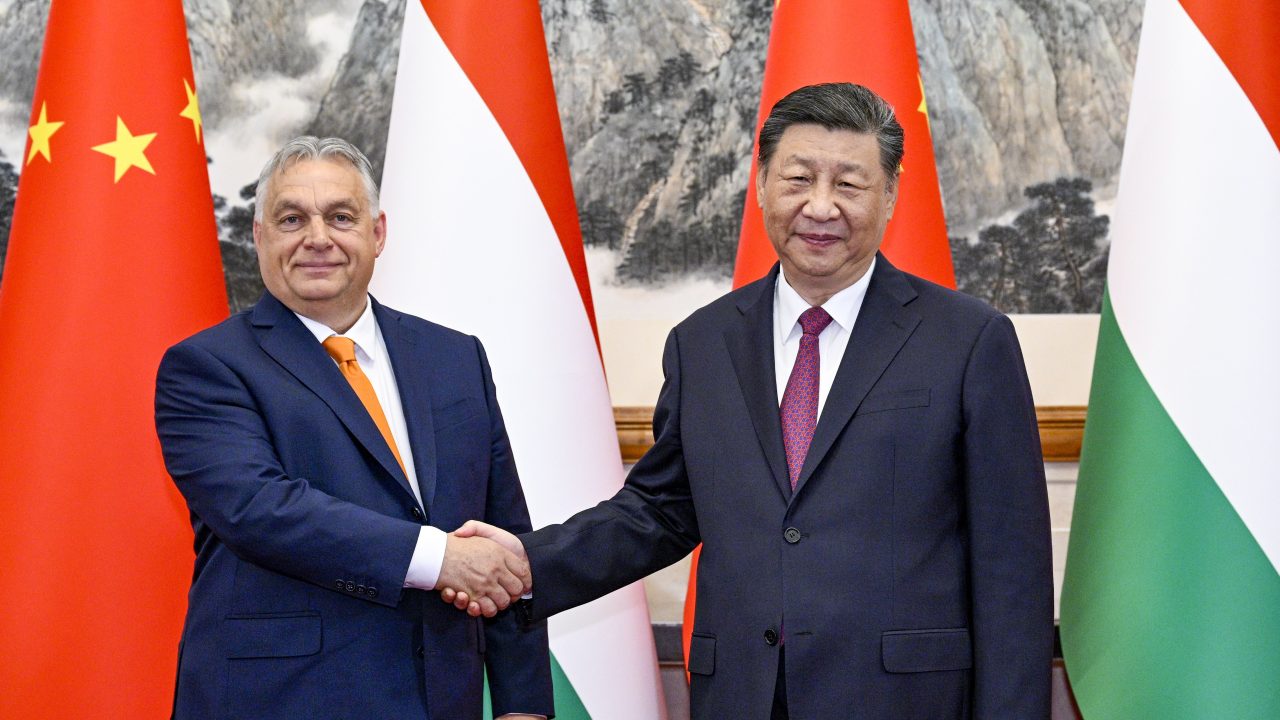
Caption: Chinese President Xi Jinping (R) meets with Hungary’s Prime Minister Viktor Orban at the Diaoyutai State Guesthouse in Beijing, China, 08 July 2024. EPA/XINHUA / Li Xueren
Updated: September 30, 2025 - 15:49