 Edit
Vučić’s economic gambit: a populist ploy amid Serbia’s deepening crisis
Failed fixes in Romania and Hungary cast doubt on the “miraculous” inflation measures announced by the Serbian President
Serbian President, Aleksandar Vučić, has for a week now been advertising “miraculous” economic measures which will better the lives of millions of Serbian citizens. But most worrying is the fact that the core problems of the Serbian economy: endemic corruption, clientelism, uncontrolled and dodgy foreign investments and a total lack of transparency in the public procurement process are left aside, writes Nenad Sebek.
Nenad Sebek worked as a journalist for 26 years, 16 of them with the BBC World Service, including two years as Moscow and four as Balkans Correspondent. He covered the region through the tumultuous 1990s. Nenad started his journalistic career in Radio Belgrade and joined the BBC World Service in 1986. Currently he is a freelance international consultant for media and civil society.
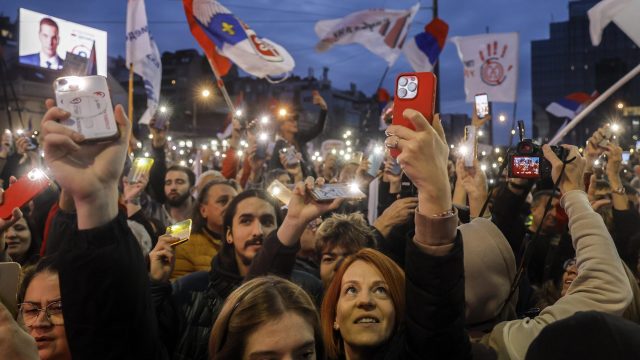
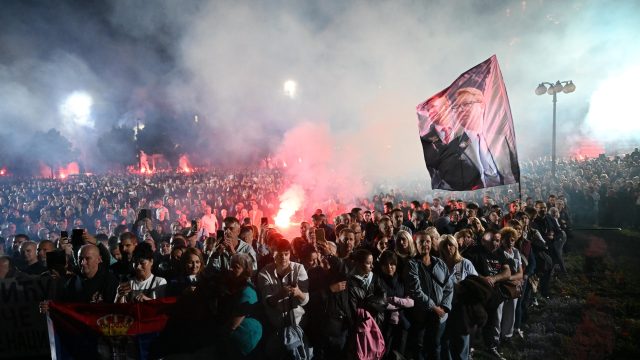
Embattled by almost nine months of street protests against his regime, Serbian President, Aleksandar Vučić, has for a week now been advertising “miraculous” economic measures which will better the lives of millions of Serbian citizens. Now that the measures have been revealed and are feted across all the government controlled media, a cold hard look at what they bring is anything but miraculous and everything about yet another populist measure in the hope that it will help the president’s falling ratings.
Economists, including ones critical of the government, agree that if the measures are implemented well, they will certainly bring the prices down, maybe as much as 15% as (president) Vučić promised. But they also point out to the fact that these are short term measures, not enshrined into a law and that they have a six month lifespan. If not extended, and they are not likely to be, both the major retailers and banks will then do their best to compensate for the profit lost during that half year period and the ordinary citizen will be back to square one.
Secondly, the measures do not address any of the root causes of Serbia’s high inflation rates and prices which in supermarkets tend to be higher then in the neighbouring Western Balkan countries and even many EU member states. High prices are especially a problem when it comes to food and basic necessities like hygiene and toiletry products. In most of the EU states, up to 15% of a family’s income is spent on food, in Serbia that percentage reaches almost up to 50%.
Critics also point out that similar economic measures to combat inflation were introduced in Romania and Hungary a couple of years ago and that those two countries nevertheless have some of EU’s highest inflation rates. But most worrying is the fact that the core problems of the Serbian economy: endemic corruption, clientelism, uncontrolled and dodgy foreign investments and a total lack of transparency in the public procurement process are left aside.
Economics commentator Aleksandar Milosevic points out that the full burden of these measures has been passed on to retailers and banks, the state has not even considered lowering the excise duties on, for example petrol (more expensive than anywhere else in the Western Balkans) or any other product nor has it bothered with lowering VAT. Both retailers and banks are well known for being very imaginative when it comes to passing the costs onto their clients either by repackaging or rebranding products and then launching them as “new” and therefore more expensive.
So, while the consumers in Serbia are likely to breathe a sigh of relief, even if a temporary one, the same cannot be said for the Serbian president. The bulwark of the nine month long anti-government protests, the students, immediately dismissed the measures saying the president is yet again usurping his position since the constitution does not allow for him to meddle in economic issues and that the measures should have been presented by the Prime Minister or the Minister for Economy.
The students are right in saying that, but Serbia has long since become a country in which only one man makes the decisions and only one man has the dubious privilege of announcing them. Vučić’s well shaken popularity is highly unlikely to get anything but a tiny and short-lived boost since the autumn is just round the corner and will bring new price hikes. Electricity will go up by at least 7%, very likely much more since the threshold for cheaper electricity is going to be lowered from 1,600 kWh to 1,200 kWh per household. More expensive electricity inevitably results with prices rising in just about anything so whatever savings are made by these latest measures are likely to evaporate pretty soon.
More importantly, the beginning of the new school year at universities and the return of people from their summer holidays is bound to result in a fresh wave of protests, very likely even more massive ones than we saw during the spring. It will indeed take a miracle, not a populist measure to save not just President Vučić’s ratings, but the very survival of his regime.
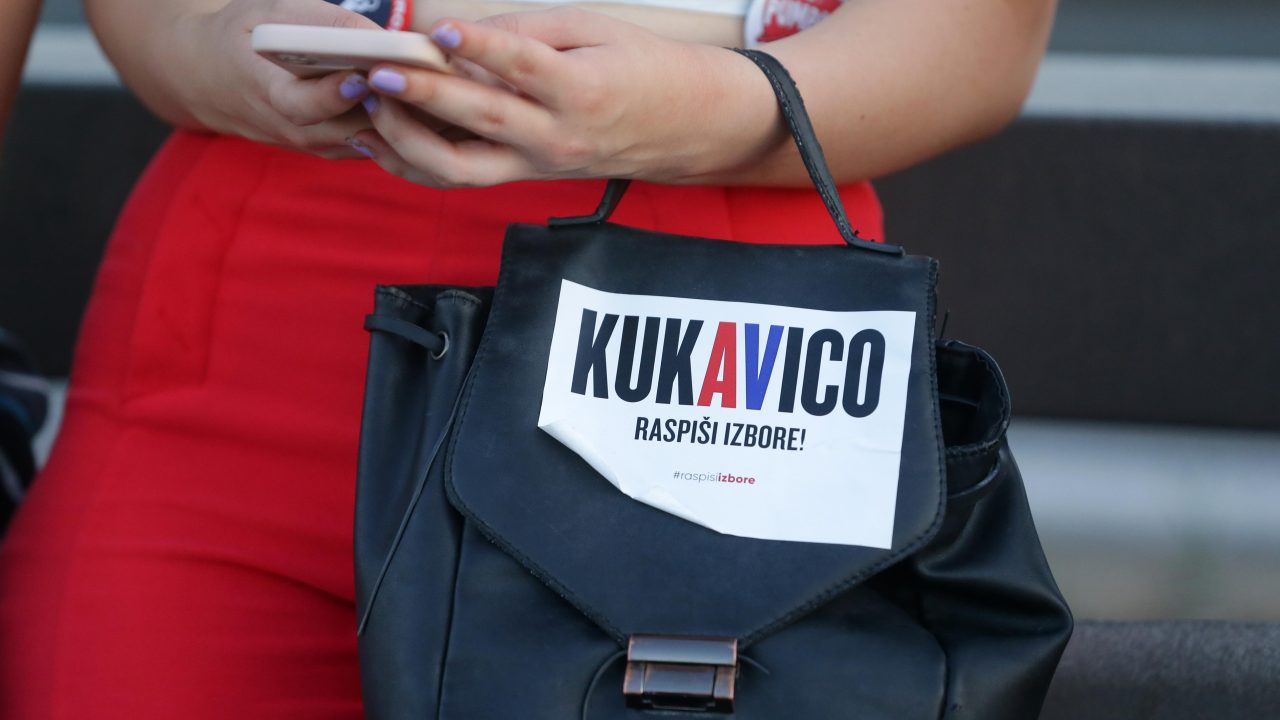
Caption: A female protestor wearing a handbag with a sticker reading ‘Coward, Call the elections’ blocks the traffic at the ‘Gazela’ bridge in Belgrade, Serbia, 19 July 2025. The letters AV designate the country’s President, Aleksandar Vučić. Protesters are demanding equal justice, release of those detained during protests and called for early elections. EPA/ANDREJ CUKIC
Updated: August 26, 2025 - 06:45