 Edit
Hungary’s parliament lifts immunity of PM Magyar and two former Orbán ministers
The vote clears the way for separate criminal investigations as Magyar’s government steps up scrutiny of alleged corruption under Viktor Orbán
This article was updated with the news of the arrest of former ministers Balázs Hankó and Miklós Seszták
Hungary’s parliament voted on Monday to lift the immunity of Prime Minister Péter Magyar and two former ministers from Viktor Orbán’s government, clearing the way for criminal investigations into allegations ranging from a nightclub incident to the alleged misuse of millions of euros in public funds.
The vote passed 139-0, with lawmakers from Orbán’s Fidesz and its coalition partner, the Christian Democratic People’s Party (KDNP), not taking part. None of the three lawmakers has been indicted.
The cases come as Magyar’s centre-right Tisza party, which defeated Orbán in April after 16 years of Fidesz rule, moves to investigate alleged corruption and abuses of power under the former government.
Magyar, who is also a member of Hungary’s parliament, is protected by parliamentary immunity under Hungarian law, meaning prosecutors need the legislature’s consent to pursue criminal proceedings against him while that immunity remains in place.
Magyar had himself called for his parliamentary immunity to be lifted. He is being investigated over an incident at a Budapest nightclub in June 2024. Prosecutors allege that he took a man’s mobile phone after the man had been filming him and threw it in the Danube.
Magyar denies that his actions amounted to theft and has described the case as politically motivated. Before Monday’s vote, he told parliament that he had not committed a crime but was prepared to take responsibility for his actions.
“Anyone who has nothing to hide comes forward openly,” he said.
Magyar has also questioned the decision to seek the lifting of his immunity at the same time as that of two former Orbán-era ministers facing much more serious allegations involving public money and alleged bribery.
The former ministers
One of the two former ministers is Balázs Hankó, who served as culture and innovation minister under Orbán and is now a Fidesz lawmaker.
Prosecutors allege that around 17.3 billion forints (€44.5 million) from Hungary’s National Cultural Fund was improperly used in more than 1,000 cases. According to the allegations, public money intended for cultural projects was awarded on political grounds, including to cover campaign-related costs for Orbán’s Fidesz party ahead of the April election.
Hankó has rejected the allegations.
Parliament also lifted the immunity of Miklós Seszták, a former national development minister and current KDNP lawmaker. He is being investigated over allegations that he accepted more than 12 billion forints (€31 million) in bribes and kickbacks linked to vehicle procurement involving the state-owned bus company Volánbusz and to public construction projects.
Seszták served as national development minister between 2014 and 2018.
The cases against the two former ministers form part of a broader effort by Magyar’s government to examine alleged misuse of public funds during the Orbán era. The new government has made the investigation of corruption and the accountability of the previous administration central elements of its political programme.
Fidesz rejects the allegations
Fidesz and KDNP lawmakers stayed away from Monday’s vote, describing the proceedings against their former government colleagues as political persecution.
The former ruling camp has rejected accusations that its officials were involved in corruption, while the individuals under investigation have not been convicted of any offence.
Immunity déjà vu
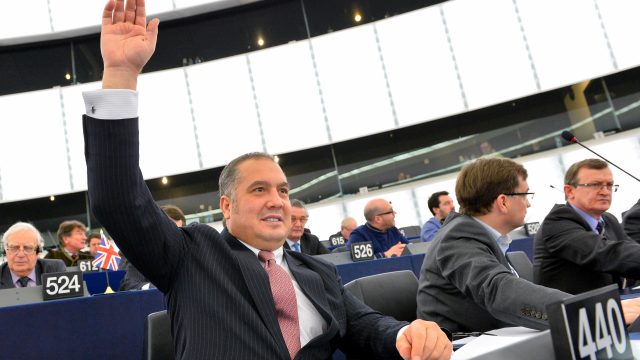
Under Orbán, when Magyar himself twice was the target of efforts to have his immunity removed while he was serving as a member of the European Parliament. The European Parliament repeatedly refused to lift his immunity.
In September 2024, Hungary’s Prosecutor General asked the European Parliament to waive his immunity over the alleged theft of the mobile phone. The Parliament refused, concluding that there was “concrete evidence” of fumus persecutionis – that the proceedings could have been intended to undermine Magyar’s political activity, particularly his work as an MEP. The Parliament cited inconsistencies in the police investigation, questions over the proportionality of the authorities’ actions and a lack of clarity over the legal classification of the alleged offence.
A second request followed in March 2025, this time from the Central District Court of Pest, over a separate criminal defamation case brought by a private prosecutor. The Parliament again refused to waive his immunity in October 2025, pointing to the fact that the complainant was a political rival and that Hungarian law allowed the allegations to be pursued through civil proceedings, raising doubts over why a criminal case had been chosen. It again concluded that fumus persecutionis could be assumed, with “concrete evidence” that the proceedings were intended to undermine Magyar’s political activity.
The principle of parliamentary immunity is intended to protect lawmakers from politically motivated prosecution and allow them to perform their duties without undue pressure from the government. Lifting immunity does not establish guilt, but allows prosecutors to proceed with investigations.
Magyar built Tisza’s campaign around promises to tackle corruption, strengthen accountability and investigate alleged abuses of power under Orbán. His victory in April ended 16 years of Fidesz rule and brought a new political force to power.
Monday’s parliamentary vote gives prosecutors greater room to pursue cases involving both the new prime minister and former senior government officials.
After the publication of this article and hours after parliament lifted their immunity, former ministers Balázs Hankó and Miklós Seszták were detained on Monday as the corruption investigation into Viktor Orbán’s 16 years in power widened. Tisza leader Péter Magyar described the arrests as the first major development in what he called “Operation Purgatory”, referring to the day as “an unworthy game of hide-and-seek” and mocking Orbán’s latest Facebook live broadcast.
Hungary creates powerful anti-corruption agency to recover assets from Orbán era
This article draws on reporting by Euronews, DW, AP, BGNES
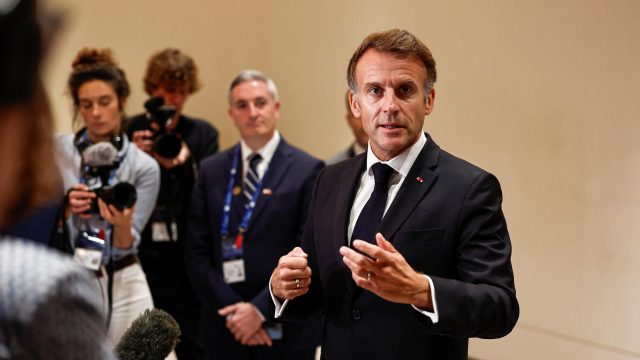
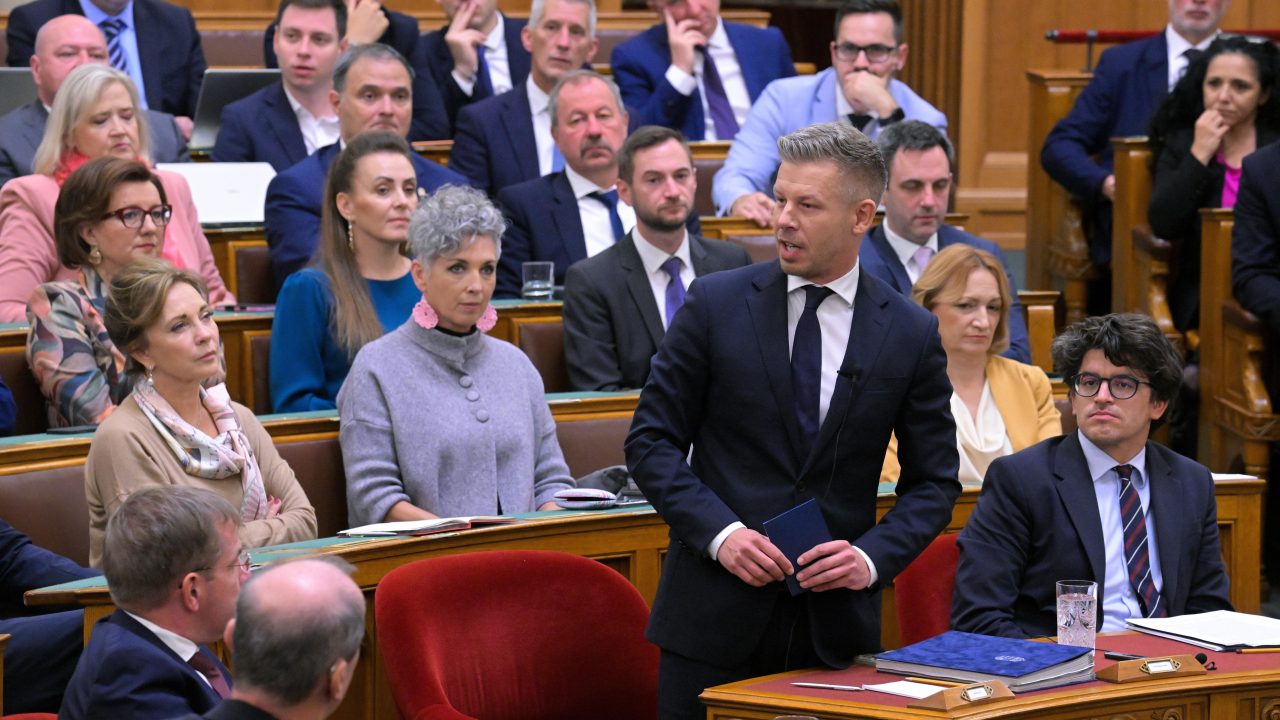
Caption: Hungary’s Prime Minister Peter Magyar (C) speaks at an extraordinary session of the National Assembly, during which deputies voted to suspend Magyar’s immunity, in Budapest, Hungary, 28 September 2026. The Chief Public Prosecutor’s Office requested the suspension on 22 September following the reopening of an investigation after the end of Magyar’s term as a member of the European Parliament. EPA/ZSOLT SZIGETVARY
Updated: September 29, 2026 - 10:30