 Edit
Ending the EU foreign-policy veto remains a mirage in the desert
Constructive abstention is not a substitute for the right of a sovereign government to refuse a common position it considers contrary to a vital interest
Euronews first reported on 1 September that eleven member states have written to High Representative Kaja Kallas calling for an end to what they term “obstructive” vetoes in the Common Foreign and Security Policy. The letter, seen by the outlet and signed by Austria, Belgium, Denmark, Finland, France, Germany, Luxembourg, the Netherlands, Romania, Spain and Sweden, argues that consensus must no longer be allowed to prevent action.
The signatories say the Union’s external action now faces strategic competition, instability and attempts to undermine the rules-based order, and that the EU must be able to mobilise its political, economic and diplomatic weight quickly. Under current rules, foreign policy still requires unanimity: one government can block the other 26. The letter cites the pattern associated with Viktor Orbán’s long premiership, including his earlier block on a €90 billion loan for Ukraine over an unrelated pipeline dispute.
The eleven governments list five principles they say already exist in the legal framework: sincere cooperation and mutual solidarity; greater use of constructive abstention instead of a veto; a ban on linking foreign-policy decisions to “substantially unrelated” issues; exploration of treaty options to move from unanimity to qualified majority voting; and a requirement that any attempt to block that move be justified by “substantiated vital reasons.” The mechanism they have in mind is the passerelle clause in Article 31 of the Treaty on European Union, which could in theory allow a switch to qualified majority on a case-by-case basis. Germany has been among the most persistent advocates of such a change. The Baltic states did not sign. Opponents, especially smaller members, still treat the veto as a last-resort defence against larger capitals.
That is the factual core of the story Euronews broke. The wording of the letter is carefully modest: “explore options,” “strive for consensus wherever possible,” “meaningful consultations.” The destination, however, is unchanged. The passerelle itself can be activated only by unanimity. A national parliament that objects can stop it. The governments that benefit most from the veto have no incentive to surrender it, and the governments that want it gone cannot impose the change without the very consent they say they can no longer wait for. That is not a drafting problem. It is the architecture of the treaties.
Softer language does not dissolve that contradiction. Greater use of constructive abstention, a pledge not to attach unrelated conditions, and an appeal to sincere cooperation are useful diplomatic hygiene. They are not a substitute for the right of a sovereign government to refuse a common position it considers contrary to a vital interest. As long as that right remains in the treaties, and as long as using the passerelle requires the same unanimity the reformers wish to escape, abandoning the veto in foreign policy stays a mirage: visible on the horizon, receding with every step toward it.
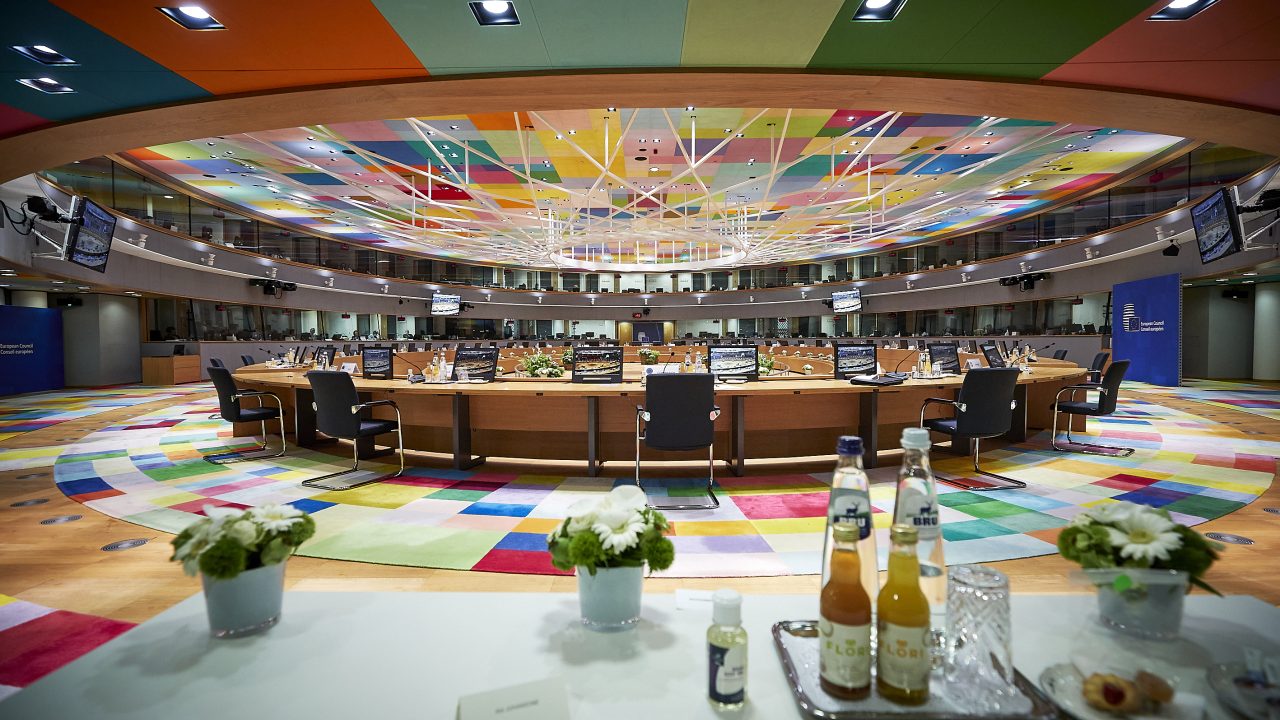
Caption: Council round table, archive photo [Council Newsroom]
Updated: September 1, 2026 - 14:05