 Edit
Record-low rivers and scorching heat squeeze EU electricity supply
Energy Commissioner Dan Jørgensen says the situation remains stable for now but will stay tight through the coming weeks
Persistent heat and critically low rivers are tightening the squeeze on Europe’s power system, with the European Union’s energy chief warning that the situation is likely to stay tense for weeks even though no immediate shortages are expected.
“Persistent high temperatures and record-low water levels are putting pressure on electricity generation and demand in Central Europe and South-East Europe. We keep working with our Member States,” European Energy Commissioner Dan Jørgensen posted on 19 August on the social network X.
The electricity supply situation across the European Union is expected to remain tense in the coming weeks as the after-effects of successive heatwaves continue to weigh on both production capacity and consumption patterns. Close coordination among member states, transmission system operators and regional coordination centres remains essential so that the single electricity market can continue directing power to the places that need it most. The Commission, Jørgensen added, will keep monitoring developments continent-wide and stand ready to support coordinated responses wherever necessary.
Seasonal forecasts reinforce the sense of sustained pressure. An ensemble of eight forecasting systems feeding the Copernicus Climate Change Service points to much drier-than-average conditions across large parts of Europe from July through September, particularly in central-western Europe and southern Scandinavia, even as Mediterranean areas may see wetter-than-usual weather. For August itself the outlook continues to carry a clear risk of further heatwaves affecting much of the continent. River-flow forecasts from the Copernicus European Flood Awareness System, operated by the Joint Research Centre, already indicate low to extremely low discharge levels across many catchments in France, the Alpine region and eastern Europe. High temperatures drive up electricity demand through heavier air-conditioning use, while the same low river levels restrict the operation of certain nuclear and hydroelectric plants and reduce overall available generation capacity. The sharpest pressure is concentrated in Central and South-Eastern Europe, where extreme heat and unfavourable hydrological conditions have persisted for weeks.
Drought deepens across major river basins
Drought conditions have steadily worsened across Central and Western Europe since the beginning of summer. Southern England, northern Italy and parts of Central Europe rank among the hardest-hit zones according to the Global Drought Observatory. By mid-July roughly half of Europe’s land area was experiencing some level of drought, with nine percent reaching alert status, including southern Germany, Hungary, Romania, Austria, the Czech Republic and Slovakia.
🌡️ France 🇫🇷 is facing severe drought this summer, with over 85% of the country under drought warning or alert conditions.
🛰️ #CopernicusEU Sentinel-3 #ImageOfTheDay shows the stark contrast with 2024 & 2025.
🔗https://t.co/SeTmRCoWfy pic.twitter.com/CGakaU31pA
— Copernicus EU (@CopernicusEU) August 10, 2026
The European Commission’s Joint Research Centre reported that the Loire, Po, Rhine and Danube had all fallen to record-low levels after prolonged hotter and drier weather. Satellite imagery analysed by independent open-source teams shows the physical consequences clearly: retreating water lines, expanding sandbars and gravel banks, and surrounding agricultural land turning from green to brown.
Near Saumur on the Loire, successive August images reveal substantially larger exposed areas within the channel compared with previous years. Along the Garonne near Moissac the contrast between May’s green fields and August’s brown expanses is stark; authorities there began emergency water releases in early July – the earliest such intervention since the system was established in 1993. On the Rhine near Kaub, German imagery from May to late July shows a marked expansion of dry riverbed, coinciding with reports of shipping brought to a standstill at critical bottlenecks and vessels forced to operate with drastically reduced loads. Similar patterns appear on the Po near Boretto in Italy and along stretches of the Danube in Hungary and Romania, where falling levels have already disrupted navigation, water supply and agricultural activity. These hydrological stresses compound the strain on power systems that rely on river water for cooling nuclear plants or for hydropower generation itself.
Compound impacts on energy, agriculture and ecosystems
The combination of heat and drought is producing simultaneous pressures across multiple sectors. Reduced nuclear output has already been recorded in France, while critically low flows on the Danube and Rhine have cut both hydroelectric and nuclear generation in several countries. Agricultural forecasts reflect the stress: although overall EU yield estimates remain slightly above the five-year average, they sit below last year’s levels, with winter-crop projections already revised downward by one to four percent and maize and sunflower forecasts reduced by six to seven percent. Vegetation stress indicators are deteriorating in France, central Europe, Hungary and western Romania.
At the same time wildfire activity has accelerated. By early August the cumulative burnt area across the European Union had already surpassed the corresponding figure for 2025 – the previous record year, reaching more than 500 000 hectares. Large fires have been concentrated in south-western Europe, particularly Spain and France. Excess mortality linked to extreme heat episodes continues to be tallied; preliminary compilations already place the toll in the tens of thousands across the worst-affected countries.
Looking further ahead, the same warmer Mediterranean waters that intensify Genoa lows and raise the risk of heavy rainfall events farther north also form part of a broader pattern of marine heat. European seas from the Celtic Sea to the Mediterranean have warmed faster than the global average, with human-driven climate change accounting for the bulk of the increase. The resulting marine heatwaves threaten habitat-forming species, disrupt fisheries and push certain populations northward, adding another layer of ecological and economic stress that ultimately feeds back into the energy and food systems already under pressure from terrestrial drought.
Coordinated response remains essential
The European Commission continues to emphasise the importance of the internal electricity market as a buffer that allows power to flow toward the regions under greatest stress. Persistent high temperatures and low water levels have made that mechanism more critical than usual. With forecasts pointing to continued warmth and dryness into September, and with El Niño potentially reinforcing warmer conditions into the following spring, the weeks ahead will test both the technical resilience of the grid and the political capacity for rapid coordination. Jørgensen’s statement underscores that the tools exist; the question is whether they will be used with sufficient speed and solidarity to keep the lights on and the systems functioning while Europe navigates another season of compound climate extremes.
Sources: Joint Research Centre of the European Commission, FocusEurope.pl, Euronews, Le Monde
Extreme summer lays bare nuclear plants’ vulnerability to climate extremes
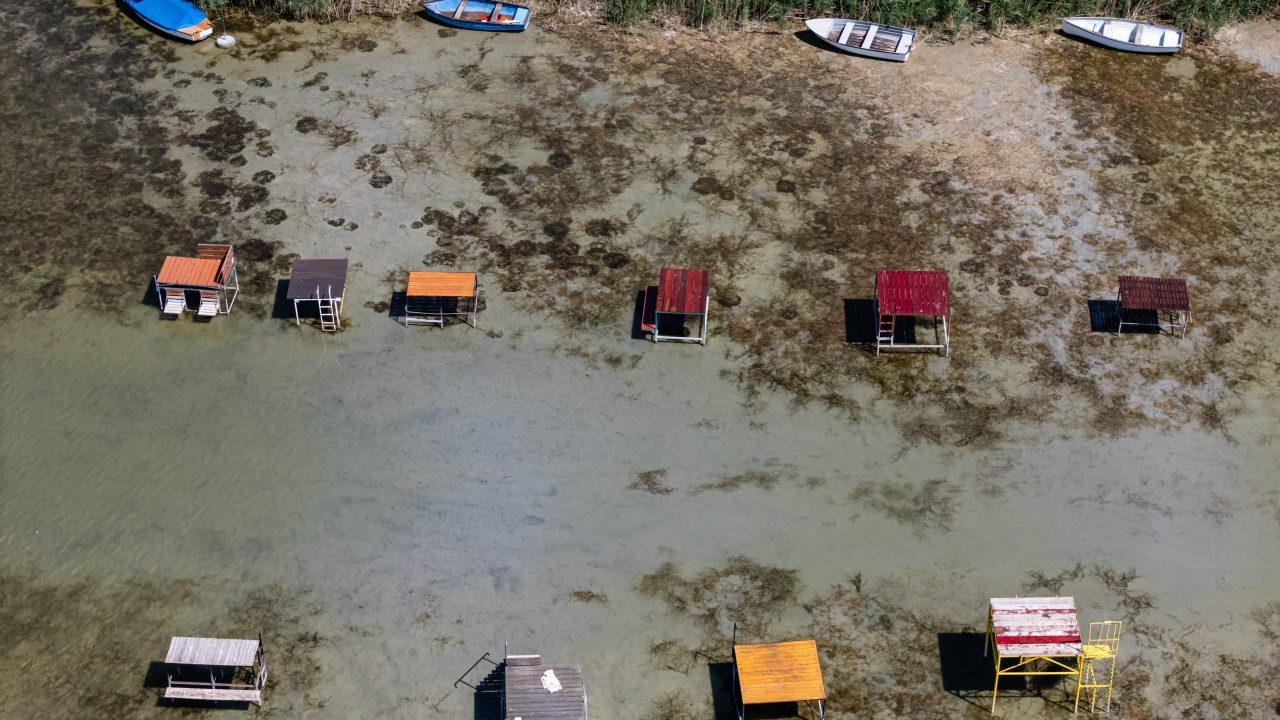
Caption: A drone image shows stranded piers and boats on the dried-out lakebed due to the low water levels of Lake Balaton in Balatonfenyves, Hungary, 19 August 2026. Due to the intense and prolonged summer drought and high evaporation, the water level of Hungary’s largest lake stands at an average of 47 centimeters, falling short of its optimal summer operating level of 110 to 120 centimeters and exposing large sections of the lakebed along the southern shore. EPA/Tamas Vasvari
Updated: August 20, 2026 - 11:25