 Edit
Shadow war: assassinations become a lasting front in the Russia-Ukraine conflict
From military commanders to dissidents in exile, targeted killings are increasingly shaping a parallel battlefield that may outlive the war itself
The fatal shooting of Russian artist and Kremlin critic Semyon Skrepetsky in eastern Poland this week has once again highlighted a darker dimension of the Russia-Ukraine conflict: a growing shadow war of targeted killings, sabotage and covert operations that increasingly extends far beyond the battlefield.
Polish authorities have described the killing as a likely premeditated assassination, though investigators have not publicly identified a motive or attributed responsibility. Skrepetsky, who lived in exile after leaving Russia in 2021, was known for satirical depictions of Russian President Vladimir Putin, Belarusian leader Alexander Lukashenko and Chechen strongman Ramzan Kadyrov.
Whether or not the murder ultimately proves politically motivated, it fits into a broader trend that has accelerated since Russia’s full-scale invasion of Ukraine in 2022: the return of intelligence services as visible actors in a conflict increasingly fought through clandestine operations as well as conventional warfare.
During the Cold War, targeted killings were exceptional events that often triggered diplomatic crises. Today, they increasingly resemble a routine instrument of statecraft. Russia and Ukraine have both incorporated intelligence operations into their broader war strategies, blurring the line between the battlefield and civilian space. Military officers, occupation officials, dissidents, propagandists and intelligence assets have all become potential targets.
What distinguishes the current phase of the conflict is not merely the number of operations, but their geographical reach. Assassinations, sabotage and covert actions have spread from the occupied territories to Moscow, St Petersburg, Warsaw, Berlin and London, turning much of Europe into an arena of intelligence competition.
Over the past four years, Ukraine’s security services have built a reputation for carrying out sophisticated operations deep inside Russian territory. Russian military officers, occupation officials, collaborators and individuals linked to Moscow’s war effort have repeatedly been targeted in attacks ranging from car bombings and shootings to drone strikes.
While Kyiv rarely claims responsibility directly, Ukrainian officials have often hinted at involvement, presenting such operations as legitimate acts of wartime self-defence against individuals participating in Russia’s aggression.
The campaign has demonstrated a growing ability by Ukrainian intelligence agencies to project force far beyond the front lines. Western security experts increasingly describe Ukraine as possessing some of the most battle-tested intelligence services in Europe.
Russia, meanwhile, continues to rely on methods that long predate the current war.
The Kremlin has repeatedly been accused by Western governments of targeting defectors, dissidents, former intelligence officers and political opponents abroad. Cases such as the poisoning of former Russian spy Sergei Skripal in Britain and the killing of former Chechen commander Zelimkhan Khangoshvili in Berlin established a pattern that many European security agencies believe remains active today.
Since the invasion of Ukraine, European intelligence services have warned that Russia has increasingly supplemented traditional espionage with sabotage networks and proxy operatives recruited through criminal channels or online platforms. Reuters and AP have reported growing concern among Western officials that Moscow is increasingly outsourcing operations to loosely connected intermediaries, providing both flexibility and plausible deniability.
Ukraine makes similar accusations against Russia inside Ukrainian territory. Earlier this month, Ukraine’s national police chief alleged that Russian operatives were recruiting young women through messaging platforms to carry out poisonings and assassinations of Ukrainian servicemen. Ukrainian authorities say they have uncovered multiple such plots this year alone.
The result is that intelligence operations are becoming increasingly central to the conflict itself.
Unlike conventional military campaigns, covert operations can continue even when ceasefires are negotiated or front lines stabilise. Intelligence services tend to pursue longer-term objectives: eliminating perceived threats, deterring opponents, gathering information and maintaining influence.
That reality suggests that even a future peace agreement may not bring an end to the violence occurring in the shadows.
In that context, the significance of cases such as the killing of Skrepetsky extends beyond the fate of one dissident artist.
The war has already transformed Ukrainian intelligence services into highly capable offensive actors. Russia, meanwhile, retains extensive experience in covert operations accumulated over decades.
In December 2024, Russian Lieutenant General Igor Kirillov, head of Russia’s nuclear, biological and chemical protection forces, was killed in Moscow by an explosive device. Ukrainian security sources cited by several international media outlets claimed responsibility, describing the operation as retaliation against a senior military figure linked to Russia’s war effort. The attack marked one of the highest-profile assassinations attributed to Ukrainian services inside Russian territory.
Another notable case was the August 2022 car bombing that killed Darya Dugina near Moscow. Russian authorities blamed Ukrainian intelligence, while Kyiv denied involvement.
In April 2023, pro-war military blogger Vladlen Tatarsky was killed in a bomb attack at a café in St Petersburg. Russian investigators accused individuals linked to Ukraine of organising the operation. Tatarsky had become one of the most influential voices supporting Russia’s invasion and frequently commented on battlefield developments.
The campaign has also extended beyond Russia’s borders. In February 2024, Russian helicopter pilot Maxim Kuzminov was found dead in Spain after defecting to Ukraine months earlier. Western media reported that Spanish investigators examined possible links to Russian intelligence services, although definitive conclusions were never publicly established.
One of the most dramatic incidents attributed to Russian intelligence occurred in August 2024, when former Ukrainian lawmaker and military officer Iryna Farion was shot dead in Lviv. Ukrainian authorities later announced the arrest of a suspect and investigated possible Russian involvement. Kyiv has repeatedly argued that Moscow seeks to eliminate influential public figures as part of a wider campaign of destabilisation.
In July 2025, senior Ukrainian security officer Ivan Voronych was shot dead in Kyiv. Ukrainian investigators treated the killing as a targeted assassination and later linked suspects to Russian intelligence networks. The attack highlighted that Ukraine’s own security establishment has become a direct target in the covert war running parallel to the conventional conflict.
Sources: Reuters, AP, SEGA, DW
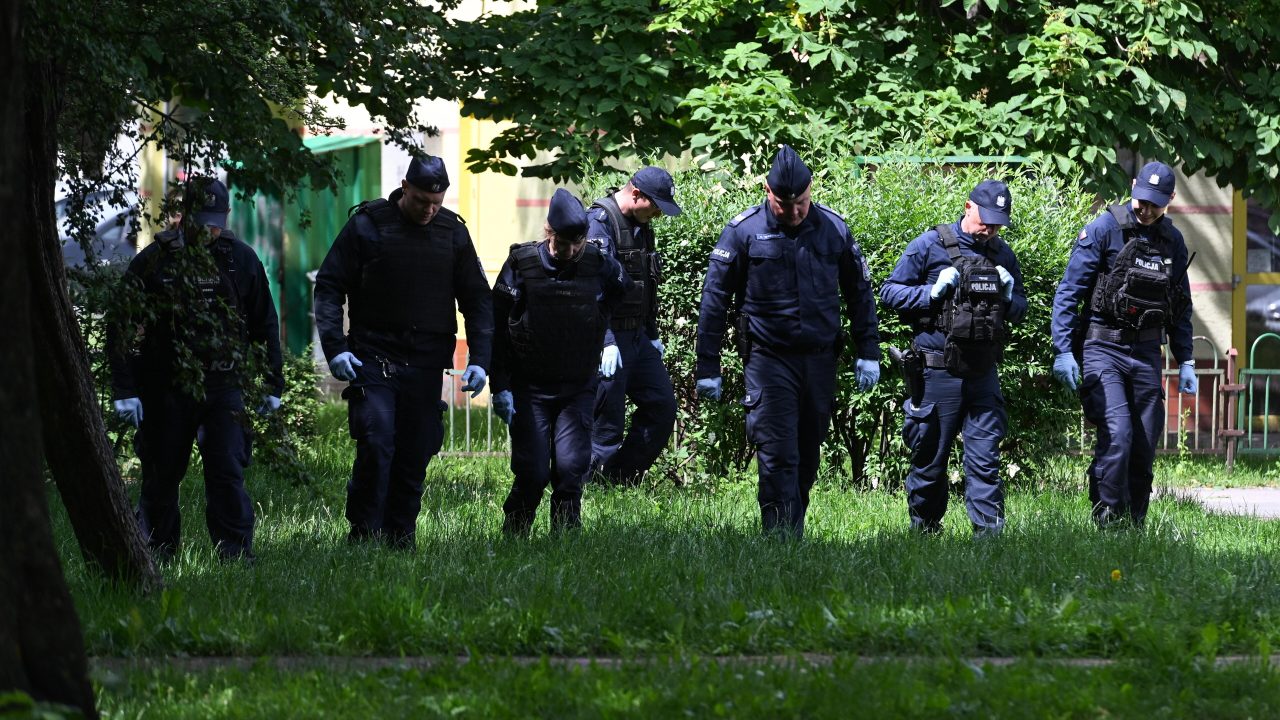
Caption: Police officers inspect the scene of a shooting in Biala Podlaska, eastern Poland, 15 June 2026 (Issued on 16 June 2026). A Russian artist and cartoonist Semyon Skrepetsky known for mocking Russian President Vladimir Putin was shot dead in Biala Podlaska on 15 June. The 44-year-old Russian citizen had been living in the city of Biala Podlaska close to the Belarusian border. EPA/WOJTEK JARGILO
Updated: June 16, 2026 - 15:53