 Edit
NASA set for first crewed moon return in over half a century
Success in Artemis will mark America's triumphant return to the moon and cement its role as the architect of humanity's first permanent lunar outposts - outpacing China
NASA is gearing up to send the first crew of astronauts toward the moon in more than 53 years aboard its Artemis II mission, a pivotal step not only in returning humans to lunar soil but in laying the groundwork for permanent U.S.-led bases on the moon amid a sharpening space race with China.
Three U.S. astronauts and one Canadian are scheduled to lift off Wednesday on NASA’s Orion capsule atop the Space Launch System rocket for a 10-day test flight that will loop around the moon and return – venturing farther into space than any humans have travelled before. The mission marks the first crewed flight in the Artemis program, the cornerstone of America’s strategy to reestablish dominance on the moon and counter China’s rapid advances.
Not since Apollo 17 in 1972 has NASA put boots on the lunar surface. Now, the agency is targeting a crewed landing at the moon’s rugged south pole by 2028 – but with a bold new focus under recently appointed administrator Jared Isaacman: scrapping plans for a distant orbiting lunar station in favour of building permanent bases directly on the surface. This shift underscores Washington’s determination to establish a sustained human presence that will serve as a strategic outpost for resource exploitation, scientific discovery, and long-term operations.
The United States remains the only nation to have landed humans on another world, thanks to the six Apollo missions fuelled by Cold War rivalry with the Soviet Union. The latter didn’t send cosmonauts on the moon, but succeeded to land twice, in 1970 and 1973, a Lunokhod, a robotic lunar rover.
Today, the primary challenger is China, which has achieved multiple robotic lunar landings and is methodically advancing its program toward a crewed moon landing targeted for 2030. U.S. officials view Beijing’s progress as a direct threat to American leadership in space, prompting NASA to accelerate Artemis as a way to secure the high ground – literally – before China can establish its own foothold.
A stepping stone to permanent lunar bases – and Mars
NASA astronaut Christina Koch, the Artemis II mission specialist, described the moon on Sunday as a “witness plate” to the solar system’s formation and a critical stepping stone to Mars, where evidence of past life might be found.”
Many, many countries have recognized the value that there is in exploring further into the solar system, to the moon and on to Mars,” Koch told reporters. “They recognize that not only can we gain all these extremely tangible benefits, but that we have the opportunity to answer the question that could be the question of our lifetime, which is, are we alone?”
“Answering that question starts at the moon,” she added. “The question is not should we go, but should we lead, or should we follow?”
Through a series of increasingly ambitious Artemis missions stretching into the next decade, the U.S. is deliberately setting the rules for lunar operations and coexistence. The goal is clear: to establish permanent, habitable bases on the moon’s surface where nations and private companies can mine resources, test technologies, and train for the far more demanding journey to Mars.
Recent program adjustments under Isaacman have explicitly prioritized these surface bases over earlier concepts of a lunar gateway station, signalling a faster track to a lasting American presence.
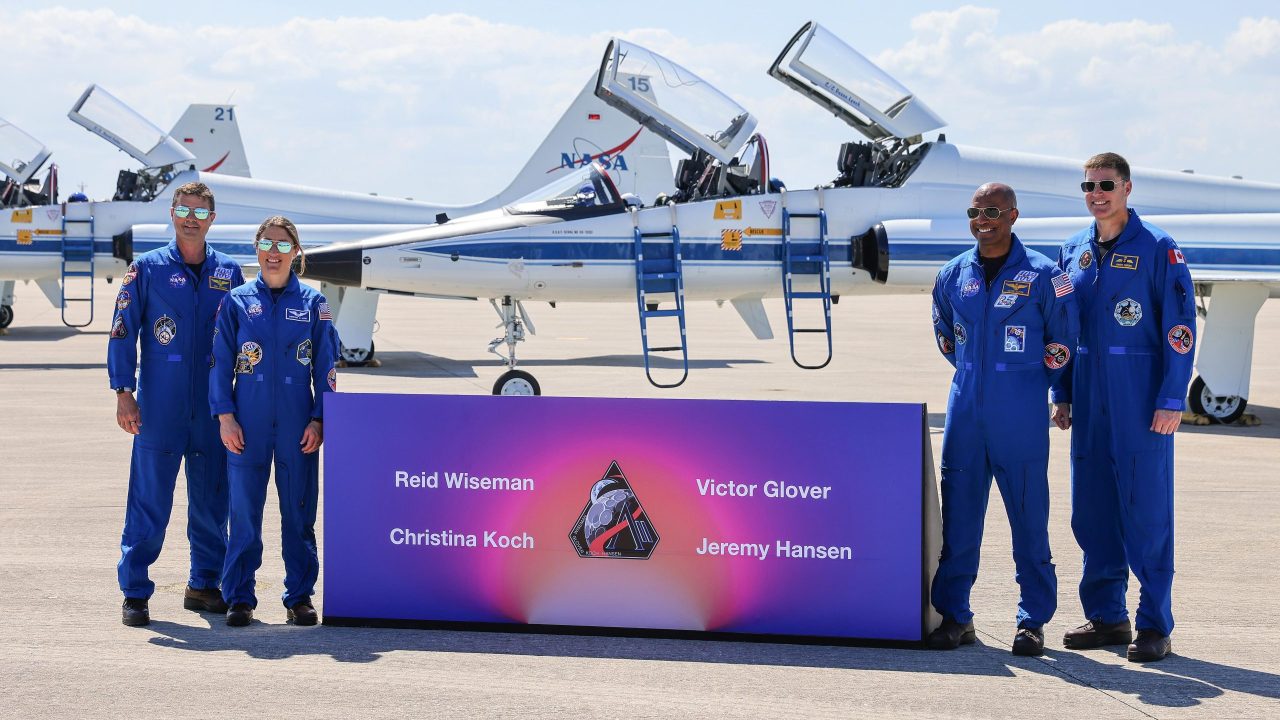
Joining Koch are NASA astronauts Victor Glover and Reid Wiseman, along with Canadian astronaut Jeremy Hansen – the first from his country to fly in lunar vicinity. Hansen’s seat stems from a 2020 NASA-Canadian Space Agency agreement that leveraged decades of Canadian robotics expertise on the International Space Station.
Commercial partners and the lunar economy
NASA is leaning heavily on private industry to fuel its lunar ambitions, aiming to spark a commercial market that supports permanent bases. Boeing and Northrop Grumman are key contractors for the SLS rocket, while Lockheed Martin builds the Orion capsule. SpaceX’s Starship and Blue Origin’s Blue Moon lander – developed with NASA funding but available for other customers – will play central roles in future landings.
A January PricewaterhouseCoopers analysis projects $127 billion in potential revenues from lunar surface activities by 2050, with required investments between $72 billion and $88 billion. Yet analysts caution that near-term growth remains government-driven. “I do not see a short-run economic value that companies would be able to derive that would allow NASA to be hands-off,” said Akhil Rao, an economist and former NASA researcher.
Artemis II will rigorously test Orion’s life-support systems, crew interfaces, navigation, and communications – building on the successful uncrewed flight in 2022. Launch is targeted for 1 April, with backup opportunities through 6 April and a subsequent window opening 30 April, weather and technical issues permitting.
Artemis III, now slated for 2027, will demonstrate the complex docking of Orion with lunar landers in Earth orbit before the crew heads to the surface – a rehearsal for the permanent base-building era. The first crewed landing itself has been realigned to Artemis IV under the program’s updated objectives.
The stakes are high: success in Artemis will not only mark America’s triumphant return to the moon but cement its role as the architect of humanity’s first permanent lunar outposts – outpacing competitors like China and securing the strategic high ground for generations to come.
With Reuters and additional content by EUalive
Caption: (L-R), Commander NASA Reid Wiseman, mission specialist NASA Christina Koch, pilot NASA Victor Glover and mission specialist Canadian Space Agency (CNA) Jeremy Hansen pose for the official photo after arriving at the Launch and Landing Facility at NASA’s Kennedy Space Center in Titusville, Florida, USA, 27 March 2026. The Artemis II Crew Arrival is the official event marking the astronauts’ arrival at the Kennedy Space Center ahead of their launch. According to NASA, Artemis 2 is a crewed lunar flyby mission, the second in NASA’s Artemis program, and the first human mission beyond low Earth orbit since 1972, testing spacecraft systems ahead of future Moon landings. EPA/CRISTOBAL HERRERA-ULASHKEVICH
Updated: March 31, 2026 - 09:53