 Edit
Serbia’s pro-government TV accused of intimidation through covert surveillance broadcasts
Critics say the "Na merama" programme's message is: ‘We know everything about you - be careful what you do, what you say and where you go’”
A controversy over media practices in Serbia is escalating after prominent journalists and public figures accused the pro-government Informer television channel of using covert surveillance footage to intimidate critics of the authorities.
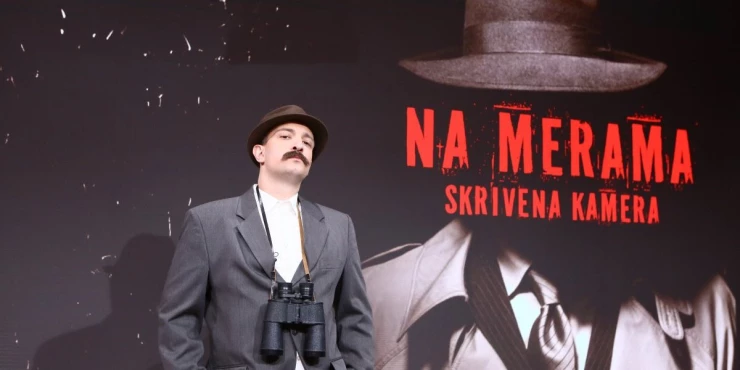
The dispute centres on the programme “Na merama” (“Under surveillance”), broadcast by Informer TV, which airs secretly obtained recordings of opposition politicians and other public personalities. According to critics, the show has no journalistic value and serves primarily as a tool of pressure and intimidation.
Filip Švarm, editor-in-chief of the respected weekly “Vreme”, said that broadcasting such material constitutes “typical intimidation, which can also be described as unlawful”. Speaking to the independent Beta news agency, partner of EUalive, Švarm argued that the programme does not belong to any recognised journalistic genre and lacks any public interest justification.
“This is a so-called programme, because it does not fall under any form of journalism,” Švarm said. “It is a typical secret-police-style setup intended to frighten citizens, sending the message: ‘We know everything about you – be careful what you do, what you say and where you go.’”
Švarm was reacting to repeated episodes of “Na merama”, in which Informer TV aired secretly obtained footage of opposition politicians, former ministers critical of the government, basketball coaches, actors, analysts and other public figures. The clips reportedly show where these individuals live, how they move around the city, whom they meet and where they go.
Informer TV claims the footage is provided by its viewers through what it calls the GOSI network – the “Viewer Intelligence Service of Informer”. Švarm, however, dismissed this explanation as implausible.
“That is a lie,” he said. “Maybe someone occasionally sends a video, but that is marginal. This is the same lie used when the authorities claimed that footage from a meeting of Novi Sad activists and students in March 2025 was handed over by one of the participants. It was recorded by a service, no one gave it to them.”
According to Švarm, the essence of the programme lies not in exposing wrongdoing, but in surveillance and intimidation, with the clear message that people should watch what they say and do because “everything is known about them”. He described the broadcasts as yet another regime-driven attack on basic civilisational values, arguing that spying on people in the streets and filming their movements cannot be interpreted otherwise.
One of the individuals featured in “Na merama” was military analyst Aleksandar Radić, who also spoke to Beta, describing the broadcast of the footage as a direct threat. Radić rejected Informer’s portrayal of the show as humorous.
“They sell it as a humorous programme, but it clearly isn’t – there is a striking absence of any humour,” he said. Radić added that the idea of an amateur viewer network collecting such detailed material was not credible, as extensive resources would be required to systematically track and film individuals.
For Radić, the programme represents a call for the radicalisation of attitudes towards those it targets. “If someone is labelled on television as being ‘on the other side of the front’, a climate is created in which those people become permissible targets,” he said, noting that he has already experienced hostile reactions in public.
Radić believes he was targeted because of his critical public statements, particularly after student demonstrations on 15 March last year, when he insisted that the authorities had used so-called sound weapons to disperse protesters. He recalled that Informer later aired a documentary in which one of the interviewees expressed surprise that Radić was still “walking freely” in the streets.
Serbia downgraded as internet freedom declines across Europe
“I perceive that as a threat and a call for me to stop walking around freely,” Radić said.
He added that legal options for responding to the broadcasts are extremely limited. As Informer insists that the footage is supplied by viewers, it becomes very difficult to prove that state services or professional structures are involved in producing the recordings.
The controversy reflects wider concerns about media freedom and political pressure in Serbia, frequently documented by domestic and international observers. Beta, one of Serbia’s longest-standing independent news agencies, has repeatedly reported on tensions between pro-government outlets and critical journalists, as well as on accusations that certain media serve as informal instruments of political power rather than independent watchdogs.
As Serbia continues to formally pursue European Union membership, issues of press freedom, protection of privacy and the rule of law remain central to assessments of the country’s democratic credentials. The “Na merama” case has once again highlighted how blurred the line between journalism and intimidation can become in a deeply polarised media environment.
According to reports by international observers, freedom of expression and information are legally protected but not consistently upheld in practice. Serbia has been described as only “partly free” by Freedom House, and pro-government media, including Informer, have been criticised for engaging in smear campaigns and polarising reporting.
In past years, students and activists have protested outside the Informer headquarters, calling it a “media war… between lies and truth” and demanding restrictions on its broadcasting licence, illustrating public frustration with perceived abuses in pro-government media coverage.
There are also regulatory complaints against Informer for violating electronic media rules, including failures to meet legal obligations regarding hate speech, privacy and impartiality. Civil society groups have filed multiple complaints with Serbia’s Regulatory Authority for Electronic Media, noting repeated violations of broadcasting standards.
Anti-EU narratives dominate Serbian TV as pro-Russian framing persists, report finds
Caption: A screenshot from the “Na Merama – Hidden Camera” programme [Informer]
Updated: January 14, 2026 - 17:17