 Edit
UN report exposes widespread abuse of Ukrainian civilians in Russian detention
The report’s recommendations are clear: both Russia and Ukraine must uphold their obligations under international law
A new report by the UN Human Rights Office, released on 23 September, paints a stark picture of the plight of thousands of civilians detained since Russia’s full-scale invasion of Ukraine in 2022. The findings point to systematic abuse in Russian-occupied territory and highlight growing pressure on Ukraine’s own justice system as it prosecutes conflict-related cases.
According to the report, Russian authorities have subjected Ukrainian civilian detainees to torture and ill-treatment, including sexual violence, in what the UN describes as a “widespread and systematic manner.” Most of the 216 released detainees interviewed since June 2023 provided “consistent and detailed accounts” of their suffering in captivity, ranging from severe beatings and electric shocks to mock executions, prolonged stress positions and threats against family members.
One conclusion is unequivocal: “The cumulative effect of these measures, combined with a lack of accountability, has placed many Ukrainian civilians outside the effective protection of the law during their detention, and contributed to an oppressive environment and climate of fear in the occupied territory of Ukraine.”
Arbitrary detentions and enforced disappearances
The report documents a pattern of arbitrary detention, in which civilians were “picked off the streets in occupied territory, charged under shifting legal bases and held for days, weeks, months and even years, often with limited contact with their families.”
The Russian Federation has applied its own criminal law in occupied areas, in violation of international humanitarian law, which requires respect for the laws in force in the territory unless absolutely prevented. This, combined with the absence of legal safeguards, has led to high numbers of enforced disappearances and widespread uncertainty for families.
By May 2025, Ukrainian authorities estimated that some 1,800 civilians remained in Russian custody, although the actual figure is believed to be significantly higher. Families continue to struggle with limited or no information about the fate of their loved ones.
Calls for accountability
UN High Commissioner for Human Rights Volker Türk stressed that the findings expose the scale of the violations. “Our report lays bare the human rights violations inflicted on civilian detainees,” he said. “It is essential that the human rights of civilian detainees, who have been severely impacted by this terrible conflict, are prioritised in any peace talks.”
The report concludes that many of these abuses may amount to war crimes or crimes against humanity. It calls for the immediate release of arbitrarily detained civilians, access for international monitors to detention facilities, and independent investigations into violations.
Strain on Ukraine’s justice system
While most of the report focuses on Russian-occupied territory, it also examines Ukraine’s treatment of detainees. Under Ukrainian control, authorities have mainly detained their own citizens on charges of treason, espionage and collaboration with the occupying authorities. Many of these cases involve individuals prosecuted for performing activities such as construction, garbage removal or emergency services during the occupation – tasks that international law recognises may be lawfully compelled by an occupying power.
By July 2025, Ukraine held 2,258 conflict-related detainees in official pre-trial and penal facilities, with some 20,000 open cases pending. This surge has strained the criminal justice system. Although Kyiv has taken steps to strengthen procedural safeguards and improve detention conditions, the UN continues to document cases of torture and ill-treatment, with accountability described as “limited.”
Türk reiterated that international law is unambiguous: civilians must be treated humanely and detained only on lawful grounds. “They must be released from detention as soon as such grounds cease to exist,” he said.
Human rights as a precondition for peace
The report’s recommendations are clear: both Russia and Ukraine must uphold their obligations under international law, ensure independent oversight of detention facilities, and provide redress to victims. For Russia, this means halting the use of torture, ending enforced disappearances and releasing those held arbitrarily. For Ukraine, it means ensuring fair trial guarantees, preventing ill-treatment and strengthening accountability.
At a time when negotiations on the future of Ukraine remain uncertain, the UN’s findings serve as a reminder that human rights cannot be sidelined. “People have been arbitrarily picked off the streets … and held for days, weeks, months and even years,” Türk said. “This must end.”
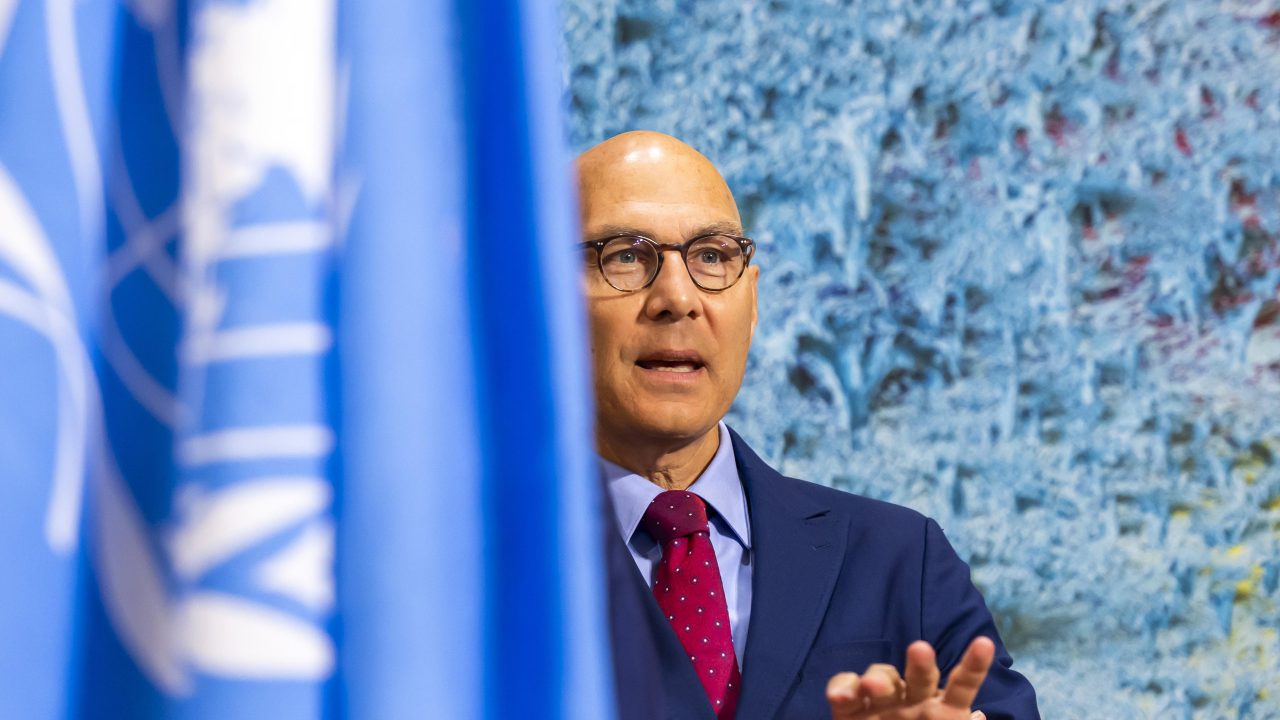
Caption: United Nations High Commissioner for Human Rights Volker Turk gestures prior to the 60th session of the Human Rights Council, at the European headquarters of the United Nations in Geneva, Switzerland,08 September 2025. EPA/SALVATORE DI NOLFI
Updated: September 24, 2025 - 05:45


