 Edit
Ukraine, U.S. and Russia set for trilateral talks in UAE as Zelenskyy outlines peace efforts in Davos
Zelenskyy said negotiations will take place on 23 January and urged Europe to act more decisively on security
Ukrainian President Volodymyr Zelenskyy announced that a trilateral meeting between representatives of Ukraine, the United States and Russia is expected to take place in the United Arab Emirates on Friday, 23 January, with discussions focused on the terms of a potential agreement to end the war.
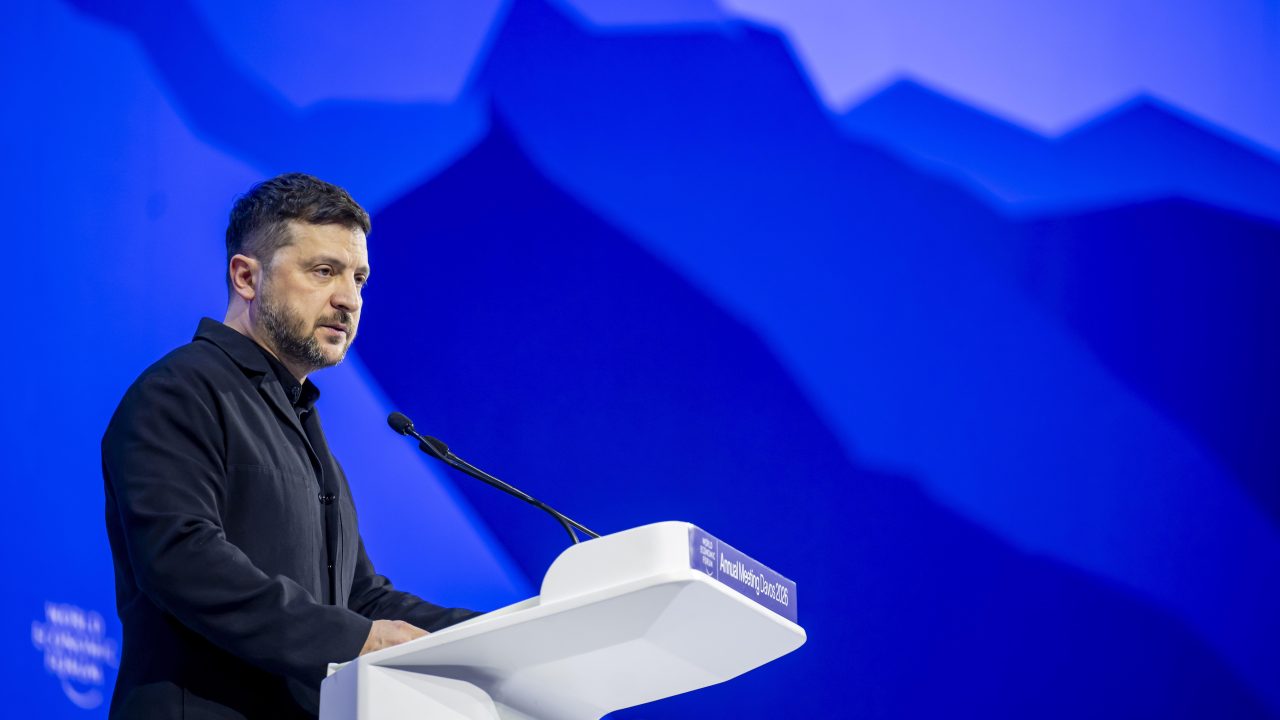
Speaking at the World Economic Forum in Davos on 22 January, Zelenskyy said the talks would be held at the level of negotiators and are expected to last two days. According to the Ukrainian president, the American delegation was scheduled to travel to Moscow following his meeting with U.S. President Donald Trump, after which Ukrainian and American teams would meet ahead of the trilateral format.
“This will be the first trilateral meeting in the Emirates. I think it will be tomorrow, and the day after tomorrow. This will be a meeting that will last two days,” Zelenskyy said, ья ,кдшеа фщ EUalive’s partnes Suspilne.
He added that documents “aimed at ending Russia’s war” against Ukraine are “almost ready”.
Europe, security and Greenland
In his Davos address, delivered after meeting Trump, Zelenskyy devoted much of his speech to Europe’s security posture, warning that the continent remains unprepared for escalating threats.
He recalled that he had ended his Davos speech last year by saying that “Europe needs to know how to defend itself”, adding that a year later and nothing has changed.
“Everyone turned their attention to Greenland, and it is clear that most leaders simply are not sure what to do about it. It seems like everyone is just waiting for America to cool down on this topic, hoping it will pass. But what if it does not? What then?,” Zelenskyy said.
The Ukrainian president criticised the limited European military presence in Greenland, saying that small troop deployments fail to send a credible deterrent signal. “What message does that send to Putin? To China? And perhaps, most importantly, what message does it send to Denmark?”, he asked, arguing that Europe must either commit serious forces or risk not being taken seriously.
Zelenskyy also said Ukraine could assist NATO in countering Russian naval activity near Greenland, stressing that Kyiv has both the expertise and the weapons, but noting that Ukraine is not a NATO member.
Iran, Belarus and accountability
Turning to broader geopolitical failures, Zelenskyy criticised the international response to protests in Iran, saying the world stood aside while the ayatollah’s regime violently suppressed demonstrators. “Iran was on the brink of collapse. In Europe, there was a celebration of the New Year. Seasonal vacation. While the politicians returned to work and began to form a position, Ayatollah has already killed thousands of people. (…) If the regime survives, it is a clear signal to everyone. Kill enough people, and you will remain in power,” he said.
He drew a parallel with Belarus, where protests following the 2020 presidential election failed to receive international backing. According to Zelenskyy, the consequences are now visible in the deployment of Russian missiles on Belarusian territory, capable of reaching much of Europe.
“But when you refuse to help the people who are fighting for freedom, the consequences are always negative. Belarus in 2020 is an example. No one helped their people. And now Russian missiles Oreshnik are deployed in Belarus and reach most of the European capitals. This would not have happened if the Belarusian people had won in 2020.”
Zelenskyy also contrasted the arrest of Venezuelan leader Nicolas Maduro following a U.S. operation with the absence of legal proceedings against Russian President Vladimir Putin, despite what he described as the largest war in Europe since World War II. “The fact is that Maduro is in court in New York. Excuse me, but Putin is not in court. And this is the fourth year of the largest war in Europe since the Second World War. And the one who started it is not only free. He is still fighting for his frozen money in Europe”, Zelenskyy said.
Sanctions, arms and Europe’s divisions
The Ukrainian president argued that existing sanctions on Russia are insufficient, noting that Russian oil continues to flow and finance the war. He questioned why Europe does not seize tankers from Russia’s shadow fleet, following the example of U.S. actions against Venezuelan oil shipments.
He also warned that sanctions loopholes allow Russia to continue producing missiles, using components sourced from abroad, including from companies in Europe, the United States and Taiwan.
Zelenskyy said Europe must overcome internal divisions that prevent a unified response, pointing to disputes between member states and reluctance to take decisive action on defence spending and arms deliveries.
“Instead of becoming a real global force, Europe remains a beautiful, but fragmented, kaleidoscope of small and medium forces. Instead of becoming a leader in the defense of freedom all over the world, especially when the attention of America shifts to other places, Europe looks lost, trying to convince the American president to change. But he will not change,” he said.
He added that long-range weapons for Ukraine have been discussed throughout 2025, but without results, while Russian drones and missiles continue to strike Ukrainian cities.
Meeting with Trump and next steps
Zelenskyy described his meeting with Trump in Davos as positive, saying both teams had worked intensively and that the talks had reached a difficult “last mile”.
“The documents aimed at ending the war are almost ready,” he said, adding that Ukraine is working honestly and expects Russia to be ready to stop the aggression.
He stressed that security guarantees will not work without U.S. involvement, even as European partners discuss post-war arrangements, including the possible deployment of contingents and joint patrols.
The upcoming meeting in the UAE follows a series of negotiations held since late November, including talks in Geneva, Miami and Berlin, as well as multiple rounds of discussions in Washington involving Ukrainian, American and European representatives.
Zelenskyy has said that a 20-point peace plan is close to completion and that, following meetings with Trump in December, the sides had agreed on most elements of the proposal, as well as on security guarantees.
U.S. special representative Steve Witkoff announced in Davos that he would travel to Moscow immediately after the forum, ahead of the trilateral meeting in the Emirates.
Caption: Ukrainian President Volodymyr Zelenskyy speaks during a panel discussion during the 56th annual meeting of the World Economic Forum(WEF), in Davos, Switzerland, 22 January 2026. The 2026 summit, running from 19 to 23 January and held under the theme ‘A Spirit of Dialogue,’ brings together global political leaders, corporate executives, and scientists to address international challenges. EPA/GIAN EHRENZELLER
Updated: January 22, 2026 - 22:08


