 Edit
Trump administration blocks Harvard from enrolling foreign students, signals broader crackdown
The targeting of this landmark university reflects a calculated blend of ideology, personal animus, and political strategy
The Trump administration on 22 May revoked Harvard University’s certification to enroll international students under the Student and Exchange Visitor Program (SEVP), effective for the 2025-2026 academic year, forcing current foreign students to transfer or risk losing legal status.
Homeland Security Secretary Kristi Noem accused Harvard of “fostering violence, antisemitism, and coordinating with the Chinese Communist Party,” escalating a targeted campaign against the Ivy League institution.
The move, affecting nearly 6,800 international students (27% of Harvard’s 2024-2025 enrollment), follows Harvard’s refusal to comply with Noem’s demands for records on foreign student visa holders, including protest-related materials from the past five years.
Harvard denounced the action as “unlawful” and “retaliatory,” arguing it undermines its academic and research mission. Congressional Democrats, including Representative Jaime Raskin, called it an attack on Harvard’s independence.
The decision comes amid broader tensions, including Trump’s recent freeze of $3 billion in federal grants to Harvard and a separate $60 million grant termination by the Department of Health and Human Services over alleged failures to address antisemitic harassment. Noem signaled similar actions against other universities, such as Columbia, stating, “This should be a warning to every other university to get your act together.”
Trump’s complicated relationship with universities
Donald Trump’s relationship with universities, particularly elite institutions like Harvard, is marked by a mix of ideological opposition, personal vendettas, and strategic political posturing. His administration’s actions reflect a deep-seated distrust of academia, which he often portrays as a breeding ground for “anti-American,” “Marxist,” or “radical left” ideologies. This perception stems from several factors:
- Ideological clash: Trump has consistently criticised universities for their liberal-leaning faculties and student activism, particularly on issues like pro-Palestinian protests, which he and his allies view as antisemitic or anti-American. His targeting of Harvard, a symbol of academic prestige, amplifies his narrative that elite institutions are out of touch with conservative values. By focusing on issues like antisemitism and alleged ties to foreign entities like the Chinese Communist Party, Trump taps into broader conservative anxieties about cultural and geopolitical threats.
- Personal grievances: Trump’s history with universities is fraught with personal slights. His own academic record at Wharton has been scrutinised, and he has faced criticism from academic circles for his policies and rhetoric. Harvard’s hiring of prominent Democrats and its resistance to his administration’s demands may be perceived as direct challenges, fuelling retaliatory measures like the Student and Exchange Visitor Program (SEVP) revocation and grant freezes. This pattern suggests a vendetta against institutions that symbolize intellectual elitism, which Trump has long positioned himself against.
- Political strategy: Targeting universities serves Trump’s broader political agenda. By framing elite institutions as hubs of radicalism, he rallies his base, which often views academia with suspicion. The crackdown on foreign students, particularly from China (Harvard’s largest foreign student group in 2022), aligns with his hardline immigration and anti-China rhetoric, appealing to voters concerned about national security and economic competition. The threat of expanding this policy to other universities signals a willingness to use federal power to reshape higher education, a move that resonates with supporters who see it as reining in liberal strongholds.
- Economic and Global Implications: Harvard’s international students, who often pay higher tuition, are a significant revenue source for universities. The administration’s actions could disrupt this financial model, potentially weakening institutions economically while sending a chilling message to global academic communities. Critics, like Aaron Reichlin-Melnick of the American Immigration Council, argue that punishing students as “collateral damage” risks alienating talent and damaging the U.S.’s reputation as a hub for higher education.
However, Trump’s approach risks legal and political backlash. A federal judge’s ruling on Thursday, requiring proper regulatory procedures to terminate foreign students’ legal status, highlights potential overreach. Harvard’s lawsuits to restore funding and its defiance of Noem’s demands suggest that universities may mount significant resistance, framing Trump’s actions as attacks on academic freedom. This tension underscores a broader struggle: Trump’s desire to reshape academia versus institutions’ entrenched autonomy and global influence.
With Reuters. Edited by g.g.
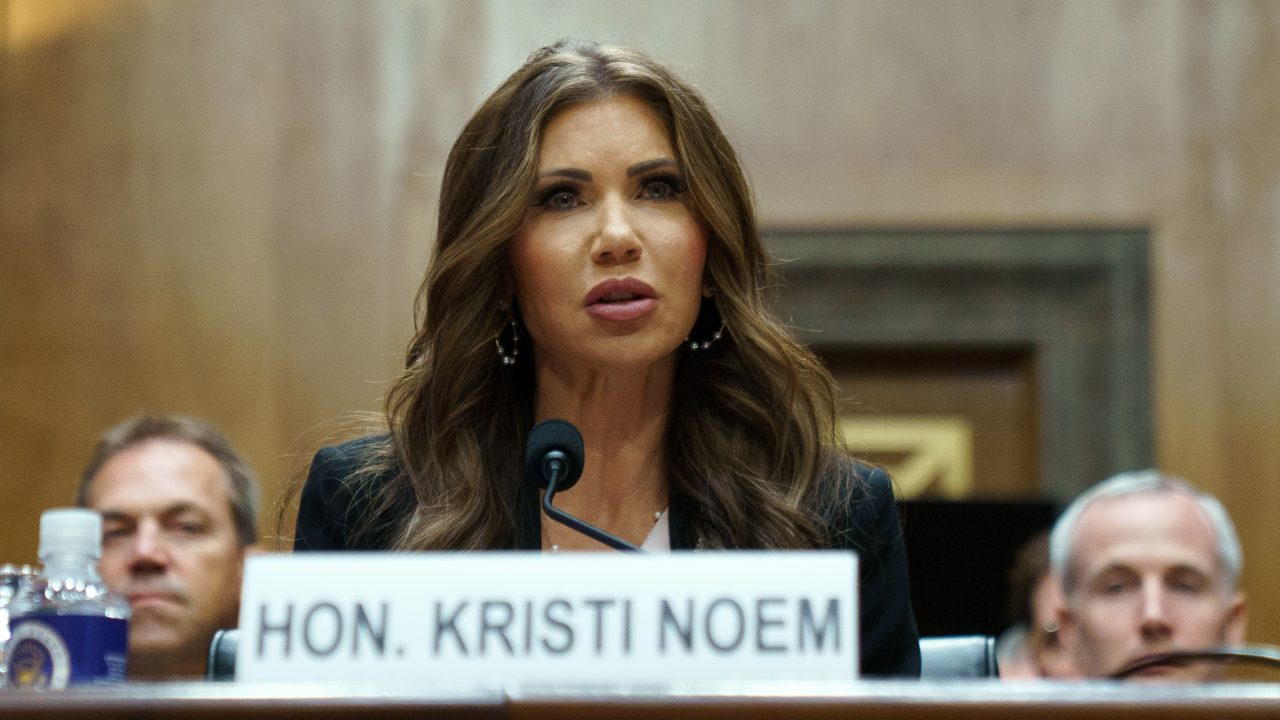
Caption: Secretary of the US Department of Homeland Security Kristi Noem attends a budget hearing at the Senate Committee on Homeland Security and Governmental Affairs, at the US Capitol, in Washington, DC, USA, 20 May 2025. [EPA-EFE/WILL OLIVER]
Updated: May 23, 2025 - 06:46