 Edit
The peace plan that isn’t: how Trump pressures Ukraine – and Zelenskyy prepares to fold
If Russia keeps the territories it seized by force and pays no price for doing so, mass murder becomes a valid negotiation tool
Trump’s plan doesn’t prevent a future war. It guarantees it – and makes sure Russia wins the sequel, writes Sed Tkachuk.
Volodymyr (Sed) Tkachuk is a communications specialist and free-lance journalist, signing Sed Tkachuk. His other columns can be found here.
There’s an old rule in diplomacy: when a deal arrives with a gun to your head, it isn’t a peace plan. It’s a stick-up. Today’s thief isn’t wearing camouflage on the Donbas front; he’s dialling Kyiv from the White House, armed with a 28-point “proposal” drafted with Russian fingerprints smeared all over it.
President Donald Trump calls it a path to peace. Everyone else – from Berlin to Vilnius, from Ottawa to Tokyo – recognises it as a crude ultimatum: cede land, shrink your army, ditch NATO, and pretend you’re grateful. It’s the geopolitical equivalent of telling a hostage, “Smile for the photo, or we stop feeding you.”
The plan is so lopsided Moscow could have faxed it. And maybe it practically did: even US Senator Mike Rounds had to clarify that the document was first received, not written, by the U.S. government. That’s diplomatic code for: “Don’t blame us, blame the Russian lobbyist who slid it across the table.”
That lobbyist-adjacent “diplomat” is Steve Witkoff, a Florida real estate developer suddenly playing peacemaker, alongside Russia’s sovereign fund director, a moonlighting con artist with several passports, Kirill Dmitriev. You cannot make this up: a property mogul negotiating Europe’s future with a Kremlin financier, while U.S. lawmakers like Marco Rubio scramble to distance themselves from a plan their own administration helped deliver.
Or perhaps the author of the “same handwriting” behind both “partners” has begun preparing a second hybrid front — from the Atlantic to Europe?
But here’s where it gets worse. Trump’s pressure campaign would be a lonely coercion if Ukraine’s own President weren’t doing his part to soften the ground.
Zelenskyy’s latest address wasn’t a message to the nation. It was conditioning. A pre-emptive stripping of resistance.
A professional profiler broke down his rhetoric: the speech is a textbook pressure tactic, engineered to make Ukrainians accept a “difficult choice” already being brokered behind closed doors. It’s a masterclass in manipulating collective anxiety.
Zelenskyy presents a manufactured dilemma – either we lose our dignity or we lose our partner – as if the only future left to us is choosing which form of surrender hurts less. He then externalises responsibility with the vague claim that “we are under pressure,” which isn’t an explanation at all, but an alibi designed to shift blame from those actually making the decisions.
The emotional overload that follows – winter fear, warnings about losing support, lofty talk of dignity – works to overwhelm the public so thoroughly that they stop looking for logic and start looking for relief, the kind of relief that could easily arrive in the form of a signed capitulation. And throughout it all, he sacralises himself by invoking an oath, a heroic mission, a moral struggle, because when leaders wrap concessions in sacred language, it’s usually because they’re preparing to justify them.
Zelenskyy is no Putin. But he is not behaving as a leader preparing to reject blackmail.
He is behaving as a leader preparing his people to swallow it.
With statements like that, Trump should hug him tight – he’s practically hiding him from Epstein’s black book.
And the U.S. figures pushing it – JD Vance, Army Secretary Dan Driscoll and Steve Witkoff, all personally involved in the “pressure diplomacy” – are banking on Zelensky’s ability to sell it to his own people.
Trump claims he’s offering peace because “Ukraine is losing land.” That’s like advising a home invasion victim to sell their bedroom to the intruder for calm sleeping conditions.
Let’s be brutally clear: if Russia keeps the territories it seized by force and pays no price for doing so, every dictator on the planet receives the same invitation – mass murder becomes a valid negotiation tool. Slaughter enough civilians, bomb enough cities, and borders will adjust themselves.
For Moscow, this isn’t peace. It’s a smoke break between attacks, a pause to reload the gun they’ve already fired at Europe. And while doing so, the plan demands Ukraine shrink its army to 600,000. That isn’t a peace term; it’s the culinary step before carving. Ukraine’s military is the only fully battle-hardened force in Europe, and weakening it now isn’t “ending the war” – it’s prepping the cut for the next butcher.
Europe would lose its only army with modern battlefield experience.
And when Putin comes for Moldova or the Baltics, because Ukraine would lose the right to shoot down Russian planes and naval vessels, who do you think they’ll call for advisors? Spain? Malta? No – Ukraine’s soldiers are Europe’s deterrent.
Trump’s plan doesn’t prevent a future war. It guarantees it – and makes sure Russia wins the sequel.
Let’s follow the money, the oldest compass in geopolitics.
Under this plan, the United States wouldn’t just mediate peace – it would assume control of seized Russian assets and then profit from them, turning the freeze on Kremlin capital into a business model. A brand-new U.S.-Russia investment pipeline would spring up in energy, artificial intelligence, rare-earth minerals and Arctic extraction – wonderfully convenient sectors for oligarchs and for real estate dealmakers like Steve Witkoff, who helped shape the proposal. Europe, meanwhile, would be reduced to footing the reconstruction bill without holding any leverage at all. And Russia, instead of being punished for invasion and mass atrocities, would get to convert war crimes into capital gains.
This isn’t diplomacy. It’s a multinational money laundering scheme disguised as peace.
And when a plan enriches oligarchs, sidelined U.S. business figures, and a lobbyist-friendly White House faction, perhaps the question is no longer, “Is it peace?”
It’s: which American insiders are expecting kickbacks?
Zelenskyy says Ukraine must choose between dignity and a key partner. Wrong. He must choose whether to lead a country or manage its liquidation through psychological tricks.
Ukraine’s choice is simpler than his speech admits:
Say no now.
Force Europe – and even a transactional Trump White House – to negotiate with Ukraine, not over Ukraine.
Demand a plan that doesn’t reward mass murder, doesn’t redraw borders by force, and doesn’t disarm the only army Russia actually fears.
There is no dignity in swallowing a gun to “keep partnership.”
A partner who demands surrender at knifepoint isn’t a partner.
He’s just another bully in a more expensive suit – and this one is flanked by Rubio, Driscoll, Vance, and Witkoff pretending to be diplomats.
Bush Institute’s David Kramer said it best: “The plan should be dropped and replaced with a simple one-point plan: Russia, get out of Ukraine.”
Let’s add one more point for clarity: And if the U.S. wants to call itself leader of the free world, it needs to stop behaving like a consulting firm for Kremlin-adjacent venture capital.
Ukraine doesn’t need dignity speeches. It needs actual allies.
And if Zelenskyy wants to be remembered as a leader, not a PR technician preparing capitulation, he must stop conditioning his nation for surrender disguised as “strategy.”
To conclude, let’s put the cards on the table.
It’s long been known: when someone loudly tells a story in the middle of a crowd, it’s usually so that his partner can slip a hand into someone’s pocket.
18 December is the day the European Union must decide whether it will continue supplementary financing of Ukraine’s budget – and European security along with it.
Ukraine’s government has officially stated that the funds for military salaries and weapons procurement will only last until March.
You don’t negotiate peace by rewarding invasion. You negotiate peace by making invasion pointless.
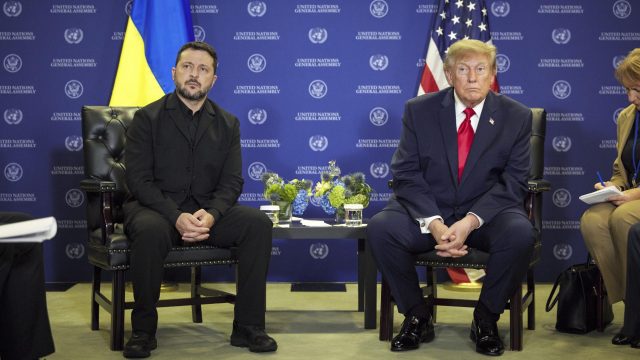
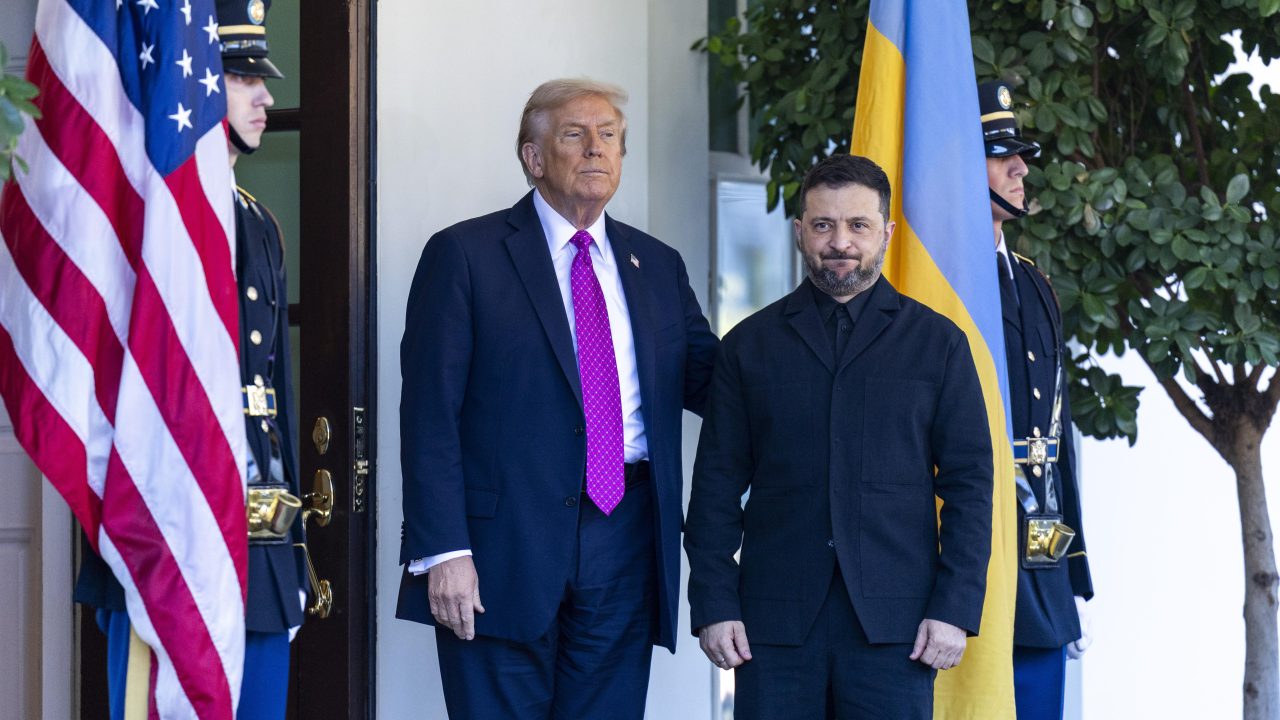
Caption: US President Donald Trump (L) greets Ukrainian President Volodymyr Zelensky as he arrives at the West Wing of the White House in Washington, DC, USA, 17 October 2025. The leaders are scheduled for a working lunch in the Cabinet Room, where President Zelensky is expected to request long-range missiles as part of an arms package. EPA/SHAWN THEW
Updated: November 24, 2025 - 08:27