 Edit
Serbian President revives compulsory military service, citing phantom threats from neighbors
His decision is consistent with his repeated assertions of anti-Serbian plots orchestrated by Zagreb, Pristina, Tirana, and others
Serbian President Aleksandar Vučić announced on 29 January the impending reinstatement of compulsory military service, a policy abandoned in 2011, framing it as an essential response to what he portrays as mounting threats from neighboring states.
The decision, which Vučić had already approved in principle back in September 2024, appears deeply intertwined with his repeated assertions of anti-Serbian plots orchestrated by Zagreb, Pristina, Tirana, and others – claims that lack substantiation and have been met with outright denial or dismissal from the accused parties. Additionally, he seeks to garner support from conservative voters ahead of the upcoming early elections scheduled for the end of the year.
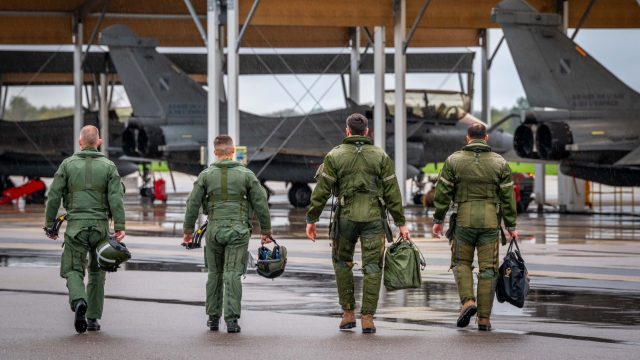
Vučić detailed that the mandatory service for young men will last 75 days and is slated to begin either in December 2026 or March 2027, pending final preparations. A decision on the exact timeline is expected within the next one or two months, after which the proposal will go before the National Assembly for approval. Registration of eligible conscripts would then start in September or October 2026.
Speaking after a high-level military briefing at the Guard House in Topčider, attended by Defence Minister Bratislav Gašić, Chief of the General Staff General Milan Mojsilović, and other top brass, Vučić insisted that facilities must be upgraded to provide conscripts with proper conditions. While the armed forces reportedly have sufficient basic gear like rifles, boots, and uniforms, renovations continue at recruitment centers, clinics, and barracks to make the experience “positive and formative.”
The president portrayed the program as more than a military necessity, arguing it would instill responsibility, discipline, seriousness, and patriotism in young people.
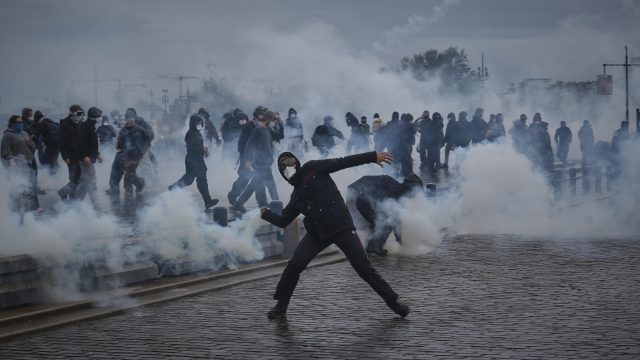
Meanwhile, since November 2025, young people and students have been protesting against the government following the tragic collapse of the train station canopy in Novi Sad, which resulted in the deaths of 16 people.
This societal angle echoes long-standing rhetoric from Vučić and his allies, who have periodically floated conscription’s return since 2017 amid shifting geopolitical realities. Yet the timing and emphasis suggest a stronger motive: bolstering Serbia’s deterrent capabilities against perceived external dangers. The government has committed nearly 90 million euros over three years to revive infrastructure long oriented toward a professional army model.
Vučić highlighted Serbia’s defence achievements to justify the shift, noting record spending at 2.65 percent of GDP (potentially higher with indirect funds), with over half directed toward modernization. Air force and air defence upgrades stand out, with similar plans for other branches. War reserves appear ample: fuel at up to 140 percent in some categories, clothing and footwear at 106 percent, and food for 60 days of operations. These figures paint a picture of a well-prepared force, raising questions about why conscription is suddenly urgent if the professional military is already so robust.
The real driver emerges in Vučić’s alarmist rhetoric about regional security. He expressed grave concern over “military alliances in Serbia’s neighborhood” seemingly directed against the country, without naming specifics in some remarks but explicitly pointing fingers elsewhere. On 5 January speech in Trebinje marking the Day of Republika Srpska, deemed unconstitutional by Bosnia and Herzegovina’s Constitutional Court, Vučić decried the “dirtiest campaign” against Serbia, extending beyond familiar foes in Pristina and Zagreb to Sarajevo and Podgorica. He described a “new military alliance” of Zagreb, Pristina, and Tirana as explicitly “against the Serbian people,” warning that Zagreb seeks to dominate Podgorica and fold it into this supposed anti-Serbian framework. Addressing Serb officials including Milorad Dodik, Vučić predicted tough years ahead but pledged Serbia’s support for Republika Srpska while vowing to preserve peace through sufficient deterrence.
This narrative centers on a March 2025 defence cooperation declaration signed by Croatia, Albania, and Kosovo, aimed at joint responses to common security challenges, interoperability, and potential multinational or NATO exercises. The pact involves two NATO members (Croatia and Albania) and Kosovo, which Serbia does not recognize as independent. While the agreement has prompted regional commentary on shifting dynamics – especially amid broader European defence buildup following Russia’s invasion of Ukraine, independent analyses describe it as routine cooperation rather than an offensive bloc targeting Serbia. Critics, including regional outlets and observers, have labeled Vučić’s portrayal as exaggerated or paranoid, noting that the declaration focuses on stability and shared threats, not aggression toward Belgrade.
Notably, officials from Croatia, Albania, and Kosovo have consistently rejected Vučić’s accusations of hostile intent. The cooperation is framed as defensive and pragmatic, not conspiratorial. Vučić’s insistence on an “offensive alliance” aimed at destroying or isolating Serbia fits a pattern of portraying regional developments through a lens of victimhood and encirclement, often to rally domestic support or justify militarization. Such claims echo longstanding Serbian nationalist narratives of external plots, yet they receive little corroboration beyond Belgrade’s state-aligned media. The EU and NATO have remained largely silent on the specific allegations, though broader concerns about Balkan tensions persist.
By linking conscription directly to these alleged threats, Vučić positions the policy as a defensive necessity rather than an aggressive escalation. Serbia maintains military neutrality, avoiding NATO membership while cultivating ties with Russia and China for arms. The move contrasts with neighbors like Croatia, which reintroduced its own conscription around the same period amid global uncertainties. Yet Vučić’s emphasis on deterrence – “peace can only be preserved if Serbia is a sufficient deterrent”, suggests a belief that only strengthened forces can counter imagined plots.
Croatia becomes fourth NATO country with compulsory military service
As preparations advance, the reinstatement of 75-day service marks a significant pivot for Serbia, blending military pragmatism with ideological messaging. Infrastructure upgrades and budgetary commitments signal intent, but the underlying rationale rests heavily on Vučić’s conspiratorial worldview – one repeatedly challenged by those he accuses.
Sources: BETA, B921, Radio Television of Serbia
Vučić accuses neighbors of anti-Serbian campaign and military alliance in Republika Srpska speech
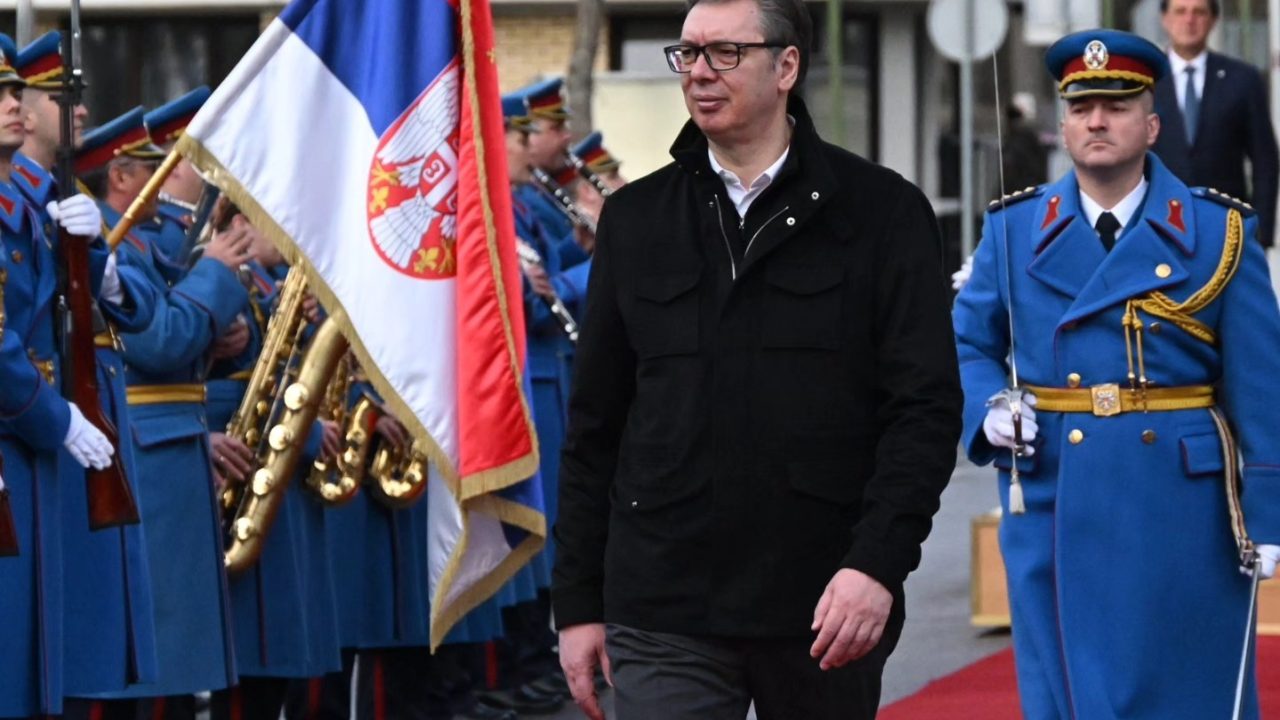
Caption:Speaking after a high-level military briefing at the Guard House in Topčider, attended by Defence Minister Bratislav Gašić, Chief of the General Staff General Milan Mojsilović, and other top brass, Vučić insisted that facilities must be upgraded to provide conscripts with proper conditions.(Presidency of Serbia)
Updated: January 30, 2026 - 16:14