 Edit
Romanian PM walks on thin ice as fiscal reforms spark political turmoil
A key point of contention remains the proposed overhaul of public administration which includes drastic cuts
The Romanian government assumed on 2 September responsibility in parliament for a second package of fiscal reforms aimed at addressing the country’s significant budget deficit, which stood at 9.3% of gross domestic product last year, according to local media reports.
The two chambers of parliament convened in consecutive sessions to execute the “assumption of responsibility” procedure.
Under this process, a bill is considered approved if no vote of no confidence is submitted within three days. Conversely, if a majority of deputies and senators support a no-confidence motion, the government falls. Despite holding a comfortable majority, the ruling coalition faces growing unrest both within society and among its four-party alliance, largely due to the austerity measures included in the reforms.
The second fiscal package comprises five bills targeting specific sectors: special pensions, healthcare, management of state-owned companies, and tax reforms.
Prime Minister Ilie Bolojan acknowledged that the current fiscal measures are not perfect but argued that they are just and necessary to eliminate waste and privileges.
Asked about the scenario of a resignation, given the threat he made during the coalition meeting on Sunday, Bolojan replied: “I hope we can find a solution so that when you hold a public position, regardless of the hardships you have, whatever you are put in the position to endure, you know that it is worth doing this, not just to hold a position, but to be able to do something, in my case, for Romania.”
“If you just sit in a position and you can’t do the things you know need to be done to get the country through this difficult period, it doesn’t justify staying in this position, but this is not a matter of threats or ultimatums, it’s simply a common sense observation and I hope we reach a solution and this very important package by mid-September,” the prime minister also declared.
A controversial fiscal package
The government had previously implemented a first package of reforms, effective 1 August, which included raising VAT from 19% to 21%, increasing excise duties on fuel, alcohol, and cigarettes by 10%, and introducing health contributions for pensions exceeding 3,000 lei (approximately 1,160 euros). Further reforms are scheduled for January 2026.
Despite these efforts, public sector wage costs rose by 10% in the first half of the year, contrary to the expected 5% reduction outlined in the draft budget. Bolojan admitted that the fiscal situation is more severe than initially anticipated, emphasizing the necessity of reform.
Coalition dynamics and fiscal responsibility
Since the annulled and re-run presidential election in December 2024 and May 2025, Romania has faced political upheaval. The results triggered the resignation of former Prime Minister Marcel Ciolacu, leading to the formation of a new government.
This broad coalition, led by Bolojan, a centrist reformist, unites four pro-European parties: the National Liberal Party, the Social Democratic Party (with the largest parliamentary group), the centre-right Union for the Salvation of Romania, and the Democratic Union of Hungarians in Romania.
Bolojan underscored on 2 September that a stable coalition relies on trust and adherence to shared objectives, particularly the critical goal of correcting the fiscal deficit through revenue enhancement and expenditure cuts.
With Romania’s deficit nearing 10% of GDP – approximately 30 billion euros, the government cannot rely solely on revenue growth to balance the budget. Instead, expenditure reduction remains a key priority.
Reforms in regulatory bodies
Bolojan announced that the government is taking responsibility for reforming key regulatory bodies, including the Financial Supervisory Authority (ASF), the National Energy Regulatory Agency (ANRE), and the National Communications Management and Regulation Authority (ANCOM). These institutions are criticized for bloated staff costs and salaries disconnected from reality.
The parliamentary atmosphere was tense during the session, with Bolojan’s speech met with applause from ruling coalition members and boos from opposition MPs. The largest opposition party, the far-right Alliance for the Unity of Romanians (AUR), demanded his resignation, chanting “Resign!”
The public administration reform dispute
A key point of contention remains the proposed overhaul of public administration. The initial plan envisioned a 20-25% reduction, but Bolojan argued that this was insufficient for meaningful reform and proposed a cut of over 40%.
This proposal has sparked internal disagreements, leading to a two-week postponement of the reform and threats of resignation from the prime minister.
Bolojan illustrated that a 40% reduction in local government employees – from 189,777 to approximately 126,862, would effectively mean a 10% decrease in occupied positions, considering vacant posts. He highlighted that only about half of Romania’s 3,228 municipalities would need to restructure.
Bolojan announced that a dedicated working group would be established by mid-September to analyse and finalise solutions. The goal is to achieve a 10% reduction in personnel within local public administration. He emphasised that many central institutions are overstaffed and that significant savings could be realized through personnel reductions and restructuring at both central and local levels.
Union protests and public backlash
The National Federation of Public Administration Trade Unions announced plans for a general strike, citing fears of the largest wave of layoffs in three decades.
The union condemned the government’s approach, alleging a lack of transparency and meaningful consultation, and warned of a two-hour warning strike followed by a broader protest campaign.
Following a meeting with President Nicușor Dan, the ruling coalition agreed to establish a working group dedicated to local administration reform. This move comes amidst ongoing internal disputes over the scope and scale of personnel reductions, which remain a highly sensitive issue within the coalition.
Bolojan reiterated that swift implementation of these measures is vital for Romania’s economic stability, emphasizing that reducing public expenditure is necessary to attract investments and sustain public services in the long term.
Sources used: HotNews.ro, News.ro, Reuters
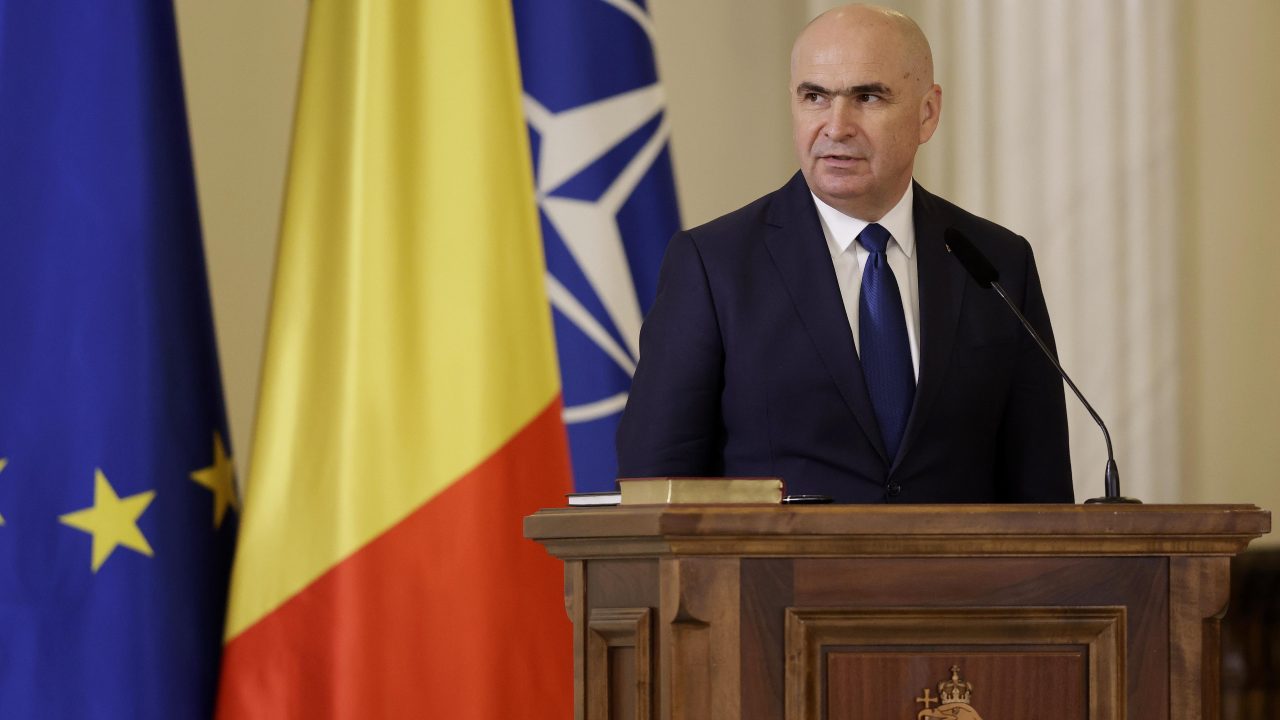
Caption: Romania’s new Prime Minister Ilie Bolojan delivers his speech after the swearing in ceremony held at the Presidential Palace in Bucharest, Romania, 23 June 2025. The government led by Bolojan passed the vote of confidence in the joint plenary session of the two Chambers of Parliament, with 301 votes in favor and 9 votes against. EPA/ROBERT GHEMENT
Updated: September 3, 2025 - 05:51






