Edit
EditIran directs Houthis to shut Red Sea gateway if U.S. strikes power infrastructure
This threat emerges against the backdrop of renewed U.S. airstrikes on Iran and the rapid unravelling MOU aimed at halting the conflict
Tehran has instructed Yemen’s Houthi movement to stand ready to close the Bab el-Mandeb strait – the critical gateway to the Red Sea – if the United States strikes Iranian power infrastructure, according to senior Iranian and regional sources. This threat emerges against the backdrop of renewed U.S. airstrikes on Iran and the rapid unravelling of a June 2026 memorandum of understanding (MOU) aimed at halting the conflict.
The directive, conveyed recently to Houthi allies, reflects Iranian leadership discussions on raising the costs of potential U.S. escalation. Houthis have reportedly deployed missiles and drones near the strait in Yemen’s highlands overlooking Hodeidah and the Gulf of Aden, awaiting orders. Iranian Revolutionary Guard Corps (IRGC) representatives already in Yemen would control the timing of any closure.
Background: war erupts and a fragile deal forms
The conflict began on 28 February, when the United States and Israel launched strikes on Iran targeting its nuclear and missile programs. Iran responded by closing the Strait of Hormuz, which previously handled around one-fifth of global oil supplies.
A fragile interim ceasefire took shape in mid-June 2026 through Pakistan-mediated talks. On or around 18 June, U.S. President Donald Trump and Iranian President Masoud Pezeshkian electronically signed the “Islamabad Memorandum of Understanding” (MOU). Key provisions included:
– An immediate and permanent end to military operations on all fronts (including Lebanon).
– A 60-day (extendable) window to negotiate a final comprehensive deal.
– The U.S. beginning to lift its naval blockade on Iran immediately, with full removal within 30 days.
– Iran facilitating safe commercial passage through the Strait of Hormuz for 60 days at no charge, with demining and obstacle removal efforts.
– U.S. commitments (with regional partners) to develop a plan worth at least $300 billion for Iran’s reconstruction and economic development.
– Phased sanctions relief for Iran, including related to UN resolutions and unilateral U.S. measures, tied to the final agreement.
– Iran maintaining the status quo on its nuclear program during talks.
The deal offered a brief respite and a path toward de-escalation, with hopes of reopening energy routes and addressing broader disputes.
The MOU unravels
The short-lived agreement collapsed in early July 2026. Renewed hostilities followed Iranian attacks on commercial shipping in the Strait of Hormuz, prompting the U.S. to reimpose sanctions on Iranian oil and launch fresh strikes.
Iran has suspended its commitments under the MOU. On 18 July, Supreme Leader Mojtaba Khamenei issued a written statement accusing the U.S. of repeated breaches. He stated that these violations showed President Trump’s signature was “utterly worthless and devoid of credibility.” Khamenei warned that the U.S. would face “even heavier costs and further humiliation,” adding that the Iranian nation and the “resistance front” (Iran’s network of regional allies) had “unforgettable lessons” in store for Washington.
Renewed U.S. strikes and escalation
U.S. Central Command has conducted multiple consecutive nights of airstrikes on Iran, including an eighth night reported around 18 July. Targets have included military coastal surveillance and air defense facilities, surveillance sites, logistics infrastructure, underground weapons storage, and maritime capabilities.
The latest round was triggered after an Iranian attack on 17 July killed two U.S. service members in Jordan, with a third reported missing. This brought the total U.S. service members killed since the war began to 16. Strikes aim to degrade Iran’s ability to threaten shipping in the Strait of Hormuz and punish IRGC forces.
Iran has reported dozens of deaths and hundreds of injuries from recent U.S. strikes and claims retaliatory actions against U.S.-linked assets in countries including Jordan, Kuwait, and Bahrain (claims largely unverified by independent sources). Iran has also accused the U.S. of targeting infrastructure near the Strait of Hormuz.
Red Sea threat and global energy risks
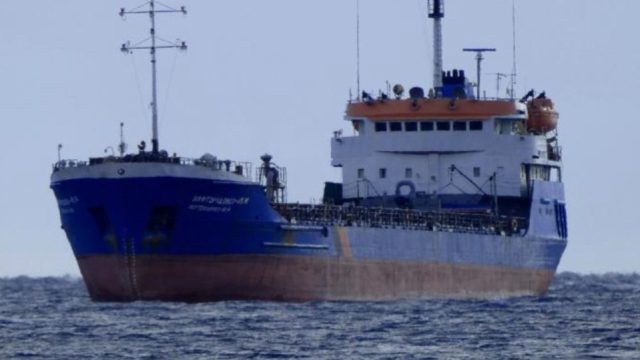
The potential Houthi closure of Bab el-Mandeb would compound existing disruptions. With the Strait of Hormuz already shut by Iran, the Red Sea route (carrying around 7% of global energy supplies in recent diversions) serves as a key alternative. Significant volumes of Gulf oil, including Saudi exports via the Yanbu terminal, now flow through it.
Houthis previously disrupted Red Sea shipping during the Gaza conflict, forcing costly reroutes around Africa. Any new attacks could severely exacerbate the global energy crisis, drive up shipping costs and insurance, and fuel inflation fears. A source close to the Houthis noted that even basic capabilities could interrupt traffic: “Anybody with a firing rifle can interrupt the shipping.”
Separately, Houthis fired missiles at Saudi Arabia on or around 13 July after accusing Riyadh of bombing a Houthi-controlled airport, breaking a four-year truce in Yemen’s civil war.
Broader context and outlook
Iran views the Houthis as part of its “Axis of Resistance” alongside groups like Hezbollah, though the Houthis have not formally joined the direct U.S.-Iran fighting. The U.S. maintains that Iran supplies the Houthis with weapons, funding, and training (via Hezbollah links), which Tehran denies.
The situation remains highly fluid and dangerous. With both the Strait of Hormuz and potential Red Sea chokepoints at risk, global energy markets face significant uncertainty. Diplomatic efforts appear stalled, and the collapse of the June MOU has returned the conflict to active military exchanges, raising the spectre of wider regional spill-over.
With Reuters, edited by g.g.
Caption: Houthi troopers shout slogans while standing guard during a protest against Saudi Arabia, in Sana’a, Yemen, 17 July 2026. Thousands of Houthi supporters demonstrated in Sana’a against Saudi Arabia a day after Houthi leader Abdul-Malik al-Houthi threatened to target Saudi oil facilities if Riyadh escalated its military involvement in Yemen. Saudi Arabia has supported the Yemeni government militarily and politically since 2015, after Houthi forces seized much of northern Yemen. EPA/YAHYA ARHAB
Updated: July 19, 2026 - 07:30