 Edit
Eiffel Tower shut after female staff were moved out of sight for a Hindu delegation
The operator now admits the visitors’ conditions should never have been accepted
The Eiffel Tower closed on Monday after staff walked out over a private visit that, they say, made women disappear from the workplace. Paris has ordered an investigation. The operator now admits the visitors’ conditions should never have been accepted.
On Saturday, about 100 people linked to BAPS, a global Hindu organisation based in Ahmedabad, made a private tour of the monument. The group was in France for events around the inauguration of a new temple in the Paris suburbs, at Bussy-Saint-Georges. Union representative Diane Davoine said that as the delegation passed through, women were told to leave their posts so men could take them. Staff later described “professional instructions that led to female employees being sidelined, replaced and made invisible because of their sex.” Some were asked to wait in side rooms and to avoid certain zones.
Tensions built over the weekend. On Monday, employees met, voted to stop work, and signs at the base of the tower cited “operational reasons.” Davoine said the aim was both to confront management and to make sure women are never treated that way again. She also said women felt humiliated. Management apologised to staff. A representative said the monument was expected to reopen as normal on Tuesday.
The operating company, SETE (Société d’Exploitation de la Tour Eiffel), has gone further than a generic apology. It confirmed that the delegation asked for the visit to be arranged so as to limit “interactions with women,” including around a protocol visit by a spiritual representative on the second floor. SETE said those conditions “should not have been accepted.” Ariel Weil, SETE’s president and mayor of central Paris, said no religious motive could justify a distinction based on gender and that it was time for clarity.
BAPS said the visit was timed at the start of opening hours because of the size of the group, to avoid disrupting other visitors. “To the best of our knowledge, at no point was anyone prevented access to the Eiffel Tower. Nevertheless, we sincerely apologise for any pain or inconvenience caused,” it said. The organisation presents itself as a volunteer spiritual fellowship; it has large temples in cities including London, Los Angeles and Sydney. The dispute is less about who physically escorted women off the floor than about who agreed to organise a public monument around a request to keep women out of a guest’s path.
Paris Mayor Emmanuel Grégoire said workers’ anger was legitimate and that an investigation would start “as soon as possible.” He wrote that such conditions were unacceptable and not the values of the city or of the tower, “where everyone should be able to move about and act freely, without distinction between women and men.” National Assembly president Yaël Braun-Pivet said welcoming others never means abandoning French values: “In France, women are fully present in public life. No one tells them to become invisible.” Reactions also came from the right: Marine Le Pen said France would never accept that women’s presence be “limited”; regional president Valérie Pécresse said she was shocked that a delegation had asked for female employees to be kept out of their path.
The political line in Paris is unusually aligned: the problem is not that a religious group asked for a quiet, early visit. It is that a company running one of France’s most visited monuments treated a request to minimise contact with women as a logistical detail rather than a line it could not cross. The inquiry now has to establish who authorised that, how far the instructions went, and what rule will stop it happening again.
Shocking precedents in Italy
A famous case unfolded in Rome, in January 2016.During Iranian President Hassan Rouhani’s visit, Italian authorities at the Capitoline Museums boxed nude classical statues (including a Venus) behind white panels for a meeting with Prime Minister Matteo Renzi. The official line was respect for Iranian “culture and sensitivity.” Rouhani’s side said they had not asked for it. Italians treated it as self-censorship; the row was huge. A few months earlier, Italy had also covered a nude statue for a UAE official in Florence.
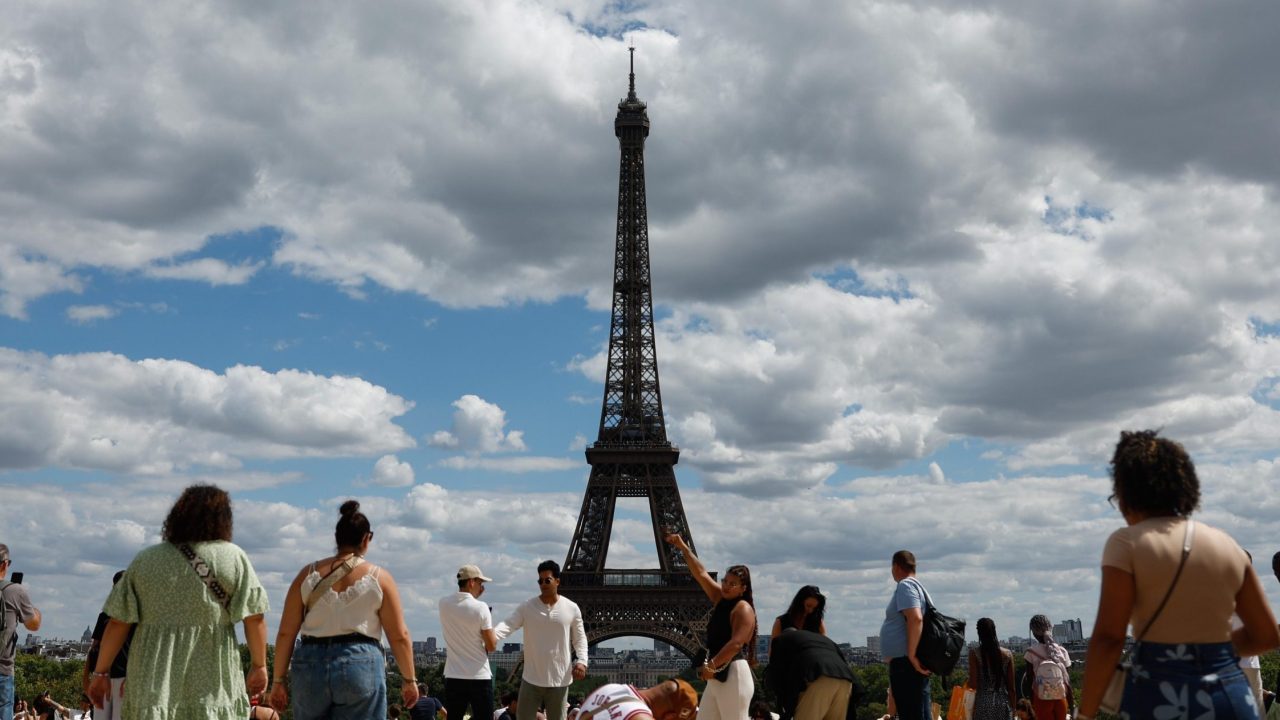
Caption: People spend time at Place du Trocadero during a summer afternoon, near the Eiffel Tower in Paris, France, 5 August 2026. EPA/MOHAMMED BADRA
Updated: September 8, 2026 - 08:27