 Edit
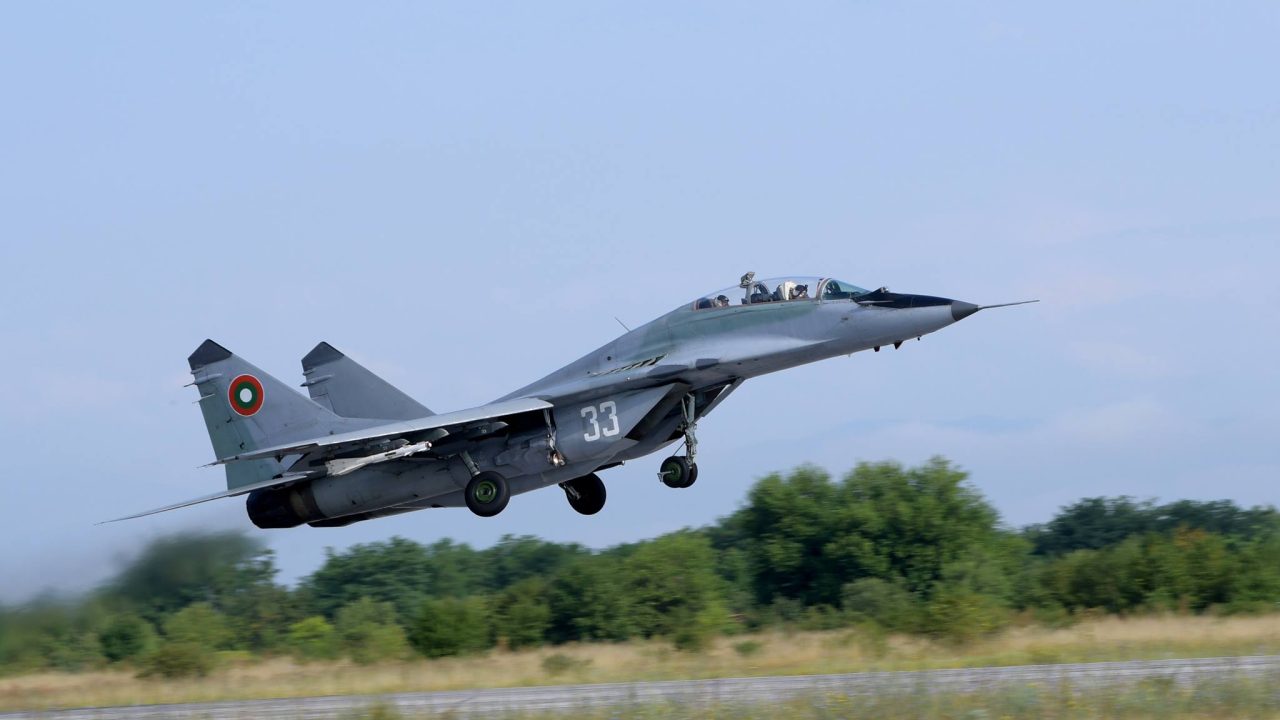
Bulgaria to hunt Russian drones with Soviet-era MiG-29s
With MiG-29s nearing end of service and delayed F-16 deliveries, the country is ill-equipped to secure NATO’s eastern border
Bulgarian Defence Minister Atanas Zapryanov has sought to reassure citizens after Russian drones breached the airspace of NATO members Romania and Poland, underscoring the alliance’s determination to strengthen its eastern flank.
In a televised interview with bTV, Zapryanov declared that Bulgaria’s ageing MiG-29 fighter jets are ready to engage “if necessary” and emphasised that both NATO and national measures are being reinforced to protect civilian safety.
“People should remain calm. We are taking measures. NATO is taking measures. Surveillance will be increased to shield people from such concerns,” the minister said, adding that Sofia has already stepped up monitoring of its northeastern airspace. He stressed that the early detection of aerial objects is the crucial factor: “Once detected, their destruction and neutralisation is easier.”
Zapryanov praised Poland’s “very adequate” response and confirmed that NATO has launched Operation Eastern Guard, deploying additional air defence and counter-drone assets to all member states bordering Ukraine. According to him, alliance members have classified the incidents as deliberate provocations from Moscow, with the clear understanding that escalation would trigger a military response.
The Bulgarian minister linked the drone incursions to Russia’s broader strategy in Ukraine. “Through this provocation, Moscow aims to demonstrate its uncompromising pursuit of strategic goals in Ukraine, its unwillingness to negotiate, and the fact that such negotiations remain far from reality, regardless of the Trump-Putin meeting in Alaska,” he said.
While Warsaw and Bucharest scrambled fighters and many European countries publicly summoned Russian ambassadors, Bulgaria has refrained from calling in Moscow’s envoy. This measured stance contrasts with the harder line of its NATO allies.
European capitals summon Russian ambassadors over drone violations of Polish airspace
Romania’s defence ministry confirmed that fighter jets were scrambled on Saturday (13 September) when a drone crossed its border during a Russian strike on Ukrainian infrastructure. Defence Minister Ionuț Moșteanu said the Romanian F-16 pilots were close to shooting it down before the drone exited airspace back into Ukraine.
Drone breaches Romanian airspace during Russian attack on neighboring Ukraine
Poland also deployed aircraft and temporarily closed Lublin airport over the weekend, just days after it shot down several Russian drones in its airspace – an unprecedented action for a NATO country since the start of the war. Warsaw’s leaders argue that Russia is probing the alliance’s readiness to respond, a sentiment echoed in NATO headquarters.
At the United Nations, the United States called the airspace violations “alarming” and vowed to “defend every inch of NATO territory,” remarks that appeared aimed at assuaging Washington’s NATO allies after President Donald Trump said Russia’s drone incursion could have been a mistake.
Bulgaria’s capability gap
For Sofia, the provocations highlight a persistent vulnerability: its reliance on Soviet-era aircraft at a time when NATO’s eastern border faces the highest level of tension in decades. Bulgaria has long struggled to maintain its fleet of MiG-29s, which suffer from expiring resources and limited capacity to sustain continuous air policing missions.
Deliveries of new-generation F-16 Block 70 fighters from the United States are therefore seen as critical. Bulgaria ordered 16 aircraft, of which six more are expected this year, following the arrival of the first two earlier in 2025. The remaining jets are due in 2026.
The procurement, however, has been marred by delays. Originally scheduled to begin in 2023, deliveries slipped by two years after Lockheed Martin reported production bottlenecks linked to the COVID-19 pandemic. Bulgarian pilots are undergoing training in the United States, but the Air Force will need at least two more years after full delivery to integrate the aircraft into regular missions.
Zapryanov has repeatedly underlined that the transition from MiGs to F-16s is indispensable for safeguarding NATO’s eastern flank, which runs just 200 kilometres from the Ukrainian frontlines. The new fighters will give Bulgaria a long-overdue boost in interoperability and operational readiness.
On 12 September, a specialised navy team from the Burgas Naval Base retrieved drone debris that were washed ashore on the city’s North Beach. Military experts confirmed the airplane-shaped device contained no explosives and posed no danger, before transferring it to the naval base with Defence Ministry approval. The incident, while not posing an immediate threat, highlights Bulgaria’s exposure to the growing wave of drone-related incidents along NATO’s eastern flank amid Russia’s ongoing war in Ukraine.
Caption: Handout photo by the Defence Ministry showing a Bulgarian MiG-29 during a military exercise in July 2017.
Updated: September 15, 2025 - 05:19


