 Edit
EU leaders cautiously optimistic as U.S. offers NATO-style guarantees to Ukraine
Yet, European sources stressed Moscow's unyielding stance on territory, in particular the parts of Donbas Russia was unable to conquer
European leaders expressed guarded hope on Monday over U.S. proposals for NATO-style security guarantees to Ukraine, viewing them as a potential breakthrough in Berlin talks to end Russia’s war, though deep divisions over territorial concessions persist as EU heads prepare for a pivotal summit later this week.
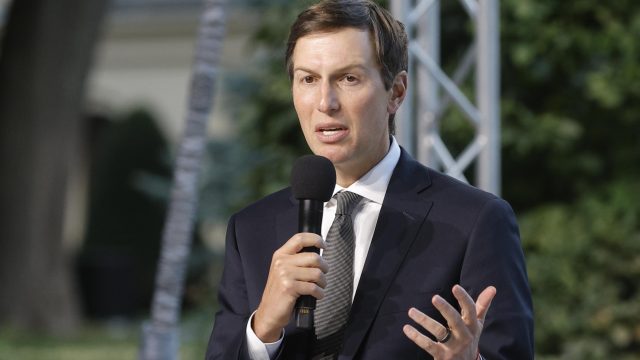
Hosted by German Chancellor Friedrich Merz in the German capital, the negotiations involving Ukrainian President Volodymyr Zelenskyy, U.S. envoys Steve Witkoff and Jared Kushner, and key European figures marked a rare alignment between transatlantic partners.
A joint statement from Germany, France, Britain, and others highlighted “strong convergence” with the U.S., pledging support for Ukraine’s armed forces, a European-led peacekeeping force, forceful guarantees against future attacks, and backing for Kyiv’s EU membership path.
“For the first time since the war began, the possibility of a ceasefire is conceivable,” Merz posted on X, reflecting a tentative optimism echoed across Europe.
Polish Prime Minister Donald Tusk, departing Berlin, told reporters: “Today I had the feeling for the first time … that everyone was behaving like allies from one camp.” He noted U.S. negotiators’ assurances that American security commitments would ensure a military response to any renewed Russian aggression, leaving “no doubt” for Moscow.
Swedish Prime Minister Ulf Kristersson described the guarantees as “clearer and more credible,” a vital step toward lasting peace, but cautioned: “Many difficult questions remain, not least about territories and whether Russia wants peace at all.”
The U.S. offer, detailed by officials as akin to NATO’s Article 5 collective defence clause, represents a shift under President Donald Trump, who has pressured Kyiv for concessions while engaging directly with Russian President Vladimir Putin. Trump, speaking from the White House, said: “We’re trying to get it done,” adding that recent conversations with Putin had brought the sides closer than ever.
Yet, European sources stressed Moscow’s unyielding stance on territory, in particular the parts of Donbas Russia was unable to conquer. A briefed official said: “The atmosphere is good but the goals remain quite far apart on the core.”
Christmas ceasefire?
Zelenskyy, facing domestic resistance to concessions, reiterated Ukraine would not recognize Russian claims to Donbas “de jure or de facto.” He signalled support for a Christmas ceasefire, especially on energy strikes, and vowed to seek U.S. sanctions and long-range weapons if Putin rejects proposals.
Kyiv confirmed its willingness to forgo NATO ambitions for robust Western guarantees, a move Dmitry Peskov, the Kremlin spokesperson, acknowledged as key.
U.S. officials claimed 90% agreement on issues, with “multiple solutions” proposed for territorial gaps, including pressuring Ukraine to withdraw from parts of Donetsk – a “painful” prospect likely to spark backlash at home. One official emphasized guarantees, deconfliction, and oversight as Monday’s focus, believing Trump could secure Russian buy-in.
Another noted Moscow’s openness to Ukraine’s EU integration, aligning with Europe’s priorities to prevent further westward encroachment.
The Berlin momentum comes amid broader EU efforts to bolster Ukraine, with foreign ministers meeting in Brussels on Monday to advance sanctions on Russia’s shadow oil fleet. As talks shift to working groups – potentially in Miami this weekend – Europeans underscore their role in peacekeeping and reconstruction.
This week’s developments set the stage for the European Council summit on Thursday and Friday in Brussels, where leaders will debate strategic support for Ukraine, including finalizing a massive loan backed by over €210 billion in frozen Russian central bank assets.
Following last week’s agreement to indefinitely freeze these assets – overcoming hurdles from Hungary and Slovakia – the summit aims to unlock up to €165 billion in reparations funding, demonstrating EU unity amid U.S. critiques of European weakness on security and other fronts.
EU High Representative Kaja Kallas recently warned that using the assets for Ukraine’s war effort is “increasingly difficult,” highlighting internal challenges.
Nonetheless, the summit will also address enlargement, the multiannual financial framework, and reinforcing strategic autonomy – critical for sustaining support as peace prospects evolve.
With Reuters, edited by g.g.
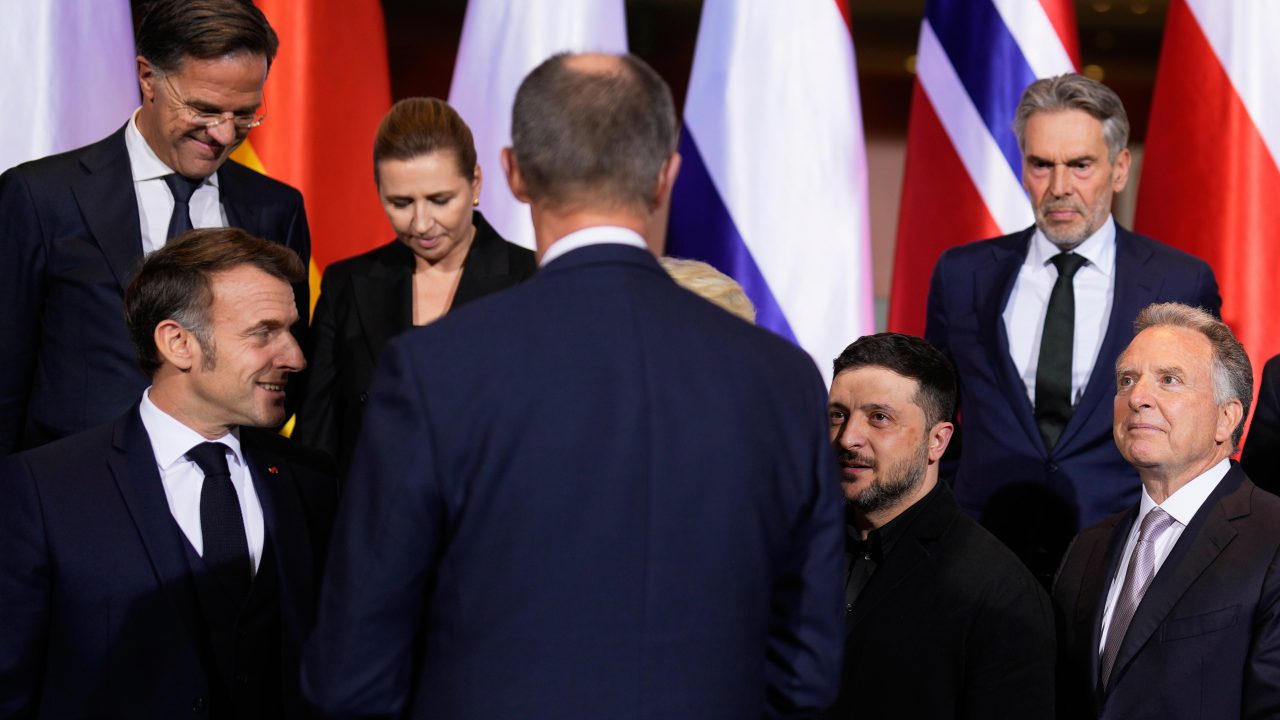
Caption: (L-R) France’s President Emmanuel Macron, NATO Secretary-General Mark Rutte, Denmark’s Prime Minister Mette Frederiksen, German Chancellor Friedrich Merz, Ukrainian President Volodymyr Zelensky, Dutch Prime Minister Dick Schoof, and US Special Envoy Steve Witkoff react during a family photo at the Chancellery in Berlin, Germany, 15 December 2025. Berlin hosts US-Ukraine negotiations on a proposed peace plan, including a possible ceasefire in Ukraine, and a broader multilateral summit with key European leaders. EPA/MARKUS SCHREIBER / POOL
Updated: December 16, 2025 - 07:24