 Edit
Greek PM to announce tax breaks amid economic progress and political challenges
Driven by a booming tourism sector, the economy is approaching its pre-crisis size, with real GDP growth projected at 2.3% for 2025
On 6 September Greek Prime Minister Kyriakos Mitsotakis is set to unveil over €1.5 billion in tax breaks and financial support measures during his annual economic policy speech at the Thessaloniki International Fair, according to three government officials.
The package, targeting middle-income earners, families with children, and pensioners, aims to address a deepening cost-of-living crisis and counter a decline in public support for Mitsotakis’ centre-right New Democracy party.
The measures, set to take effect in 2026, are underpinned by Greece’s robust economic growth, a higher-than-expected budget surplus, and improved tax collection, ensuring no risk to the 2026 budget, a finance ministry official confirmed.
Deputy Prime Minister Kostis Hatzidakis emphasized the focus on reducing taxation for middle-income earners, stating on ERT, “It’s time to reduce taxation for middle-income earners.”
Greece’s economic recovery has been notable since the 2009–2018 debt crisis, which inflicted severe austerity and economic contraction. Driven by a booming tourism sector, the economy is approaching its pre-crisis size, with real GDP growth projected at 2.3% for 2025, according to the European Commission’s 2025 European Semester Country Report for Greece. The report highlights Greece’s progress in addressing long-standing vulnerabilities, such as high public and external debt, non-performing loans, and unemployment, through sustained reforms.
The European Semester is the EU’s annual cycle of economic and fiscal policy coordination, monitoring member states’ economic developments, providing country-specific recommendations, and ensuring sustainable growth and fiscal discipline across the bloc.
The Commission’s In-Depth Review 2025 for Greece notes that strong growth and policy actions have reduced macroeconomic imbalances, though challenges like low business dynamism and lagging competitiveness persist.
Despite economic gains, Greece remains Europe’s most indebted nation, with public debt at approximately 160% of GDP in 2024, though declining, per the Enhanced Surveillance Report. Disposable incomes trail the EU average, eroded by rising energy, food, and housing costs, despite a cumulative 35% minimum wage increase since 2019.
These pressures have fuelled public discontent, contributing to New Democracy’s slide in polls to 22–25% from 41% in the 2019 election, when Mitsotakis campaigned on equitable growth distribution. The government’s lackluster performance in the 2024 European Parliament elections, coupled with controversies over EU farm subsidy misuse and the mishandling of the 2023 train crash that killed 57 people and sparked mass protests, has further eroded support.
Greece: justice à la carte – The OPEKEPE scandal and systemic impunity
Political analysts note that Mitsotakis’ recent rightward shift, including a focus on core conservative voters after progressive policies like same-sex marriage legalization, reflects an effort to regain ground before the 2027 national election.
The European Commission’s 2025 European Semester Spring Package positively assessed Greece’s medium-term fiscal-structural plan, submitted in autumn 2024, for its progress in implementing reforms to boost employment and growth. However, the Commission warns that sustaining these reforms is critical to addressing persistent vulnerabilities, such as high debt and low private investment, as noted in the OECD’s intra-European Economic Area Services Trade Restrictiveness Index, which ranks Greece behind many EU peers in business dynamism.
The tax breaks and handouts, while fiscally viable due to a budget surplus, may face scrutiny for their effectiveness in restoring public confidence, given ongoing corruption allegations and public frustration.
With Reuters and European Commission official documents, edited by g.g.
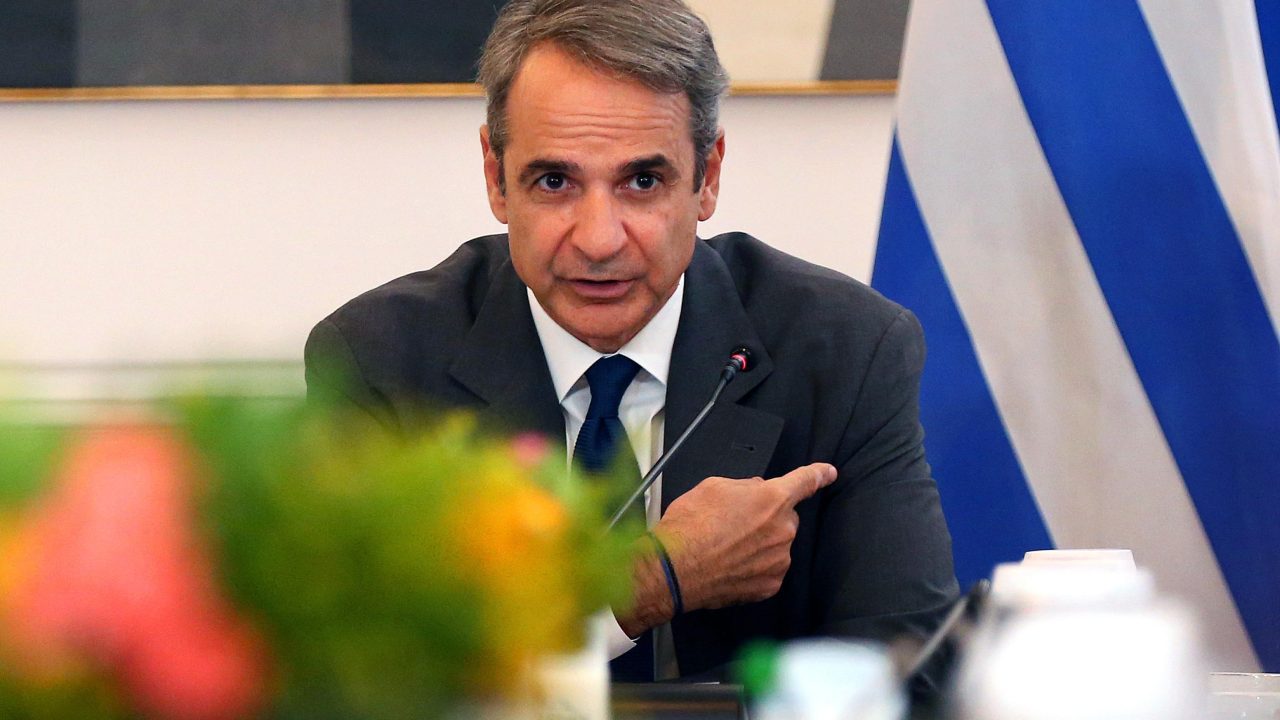
Caption: Greek Prime Minister Kyriakos Mitsotakis attends a cabinet meeting following the newly appointment of some members of the government in Athens, Greece, 30 June 2025. Several ministers have resigned over the scandal involving the Greek Payment Authority of the Common Agricultural Policy (OPEKEPE) on 27 June 2025. EPA/ORESTIS PANAGIOTOU
Updated: September 5, 2025 - 07:21