 Edit
UNESCO issues final warning to North Macedonia and Albania over Ohrid heritage destruction
Ohrid risks being placed on the List of World Heritage in Danger if urgent measures are not implemented by February
UNESCO has given North Macedonia and Albania a final deadline to halt the deterioration of the cultural and natural heritage of Ohrid, one of Europe’s oldest and most significant World Heritage sites. The decision was adopted during the 47th session of the World Heritage Committee in Paris this July. The decision means that in the absence of redress, next year Ohrid would be added to the List of World Heritage in Danger.
The reprieve comes with stringent conditions, urging both governments to address ongoing issues such as unchecked urbanisation, illegal construction, and ineffective conservation efforts, which UNESCO warns are pushing the site towards irreversible degradation.
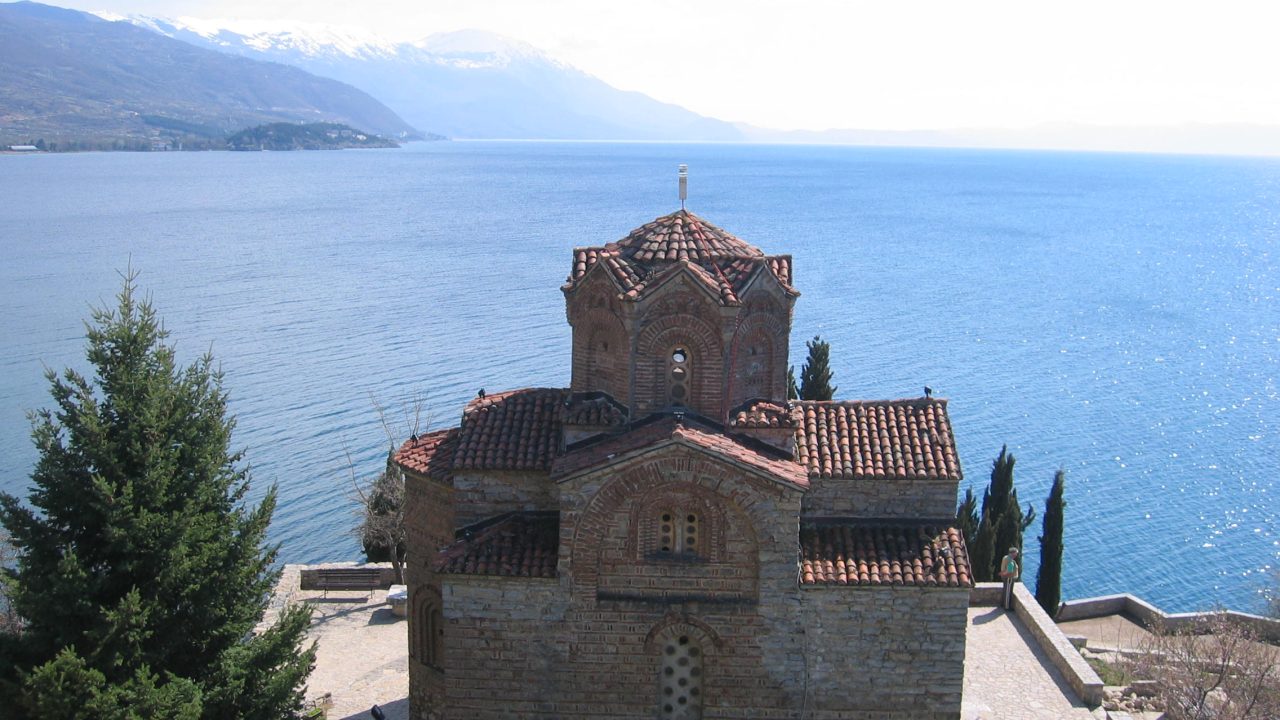
Ohrid is considered a UNESCO site due to its unique combination of natural beauty, with Lake Ohrid’s exceptional clarity and biodiversity, and its rich cultural heritage, including ancient churches, monasteries, and archaeological sites spanning over 2,000 years of history. Lake Ohrid is shared between North Macedonia and Albania.
Despite multiple monitoring missions and repeated calls for action, the 2024 UNESCO report confirmed that the Outstanding Universal Value (OUV) of the site continues to deteriorate. The mission noted that the combined pressures of unregulated development, failure to enforce protection measures, and growing environmental threats are endangering the very attributes that earned Ohrid its World Heritage status in 1979. The Albanian part of the site was added in 2019.
Civil society has become increasingly vocal. A coalition of 39 organisations from North Macedonia, Albania, and across Europe has called for Ohrid to be officially declared endangered, arguing that only stricter corrective measures and emergency international support can safeguard the site’s future.
Inclusion on the List of World Heritage in Danger would allow for the adoption of strict action plans and the mobilisation of urgent funding, potentially forcing authorities to ban harmful activities within protected zones, in line with national heritage laws.
The latest UNESCO report demands a comprehensive revision of urban plans for Ohrid and Struga, an immediate halt to construction in the Studenčište Marsh area, and swift resolution of the problem of illegal buildings that compromise the authenticity of the site. Authorities are also urged to enhance cross-border cooperation to ensure coherent and sustainable management of the shared heritage.
The report highlights specific concerns over ongoing developments, including a five-storey complex in Tushemisht and urbanisation zones near Drilon Springs and the Lin Peninsula, which lack adequate impact assessments. Both Albania and North Macedonia are called upon to suspend infrastructure projects, such as the Drilon-Tushemisht Waterscape development and Corridor VIII transport plans, until cumulative environmental assessments are completed and reviewed by UNESCO advisory bodies.
Galičica National Park, a key component of the Ohrid region, receives recognition for positive conservation actions, including reduced extractive use and improved stakeholder cooperation. However, the report stresses the need for strict enforcement against illegal activities like off-road vehicle use, and the urgent finalisation of zoning and visitor management plans.
With the Sateska River redirection nearing completion and wastewater infrastructure upgrades underway, UNESCO acknowledges some progress. Nonetheless, it criticises the overall slow pace of implementation and calls for immediate action to tackle pollution hotspots, especially in North Macedonia’s Grashnica and Radozda.
The World Heritage Committee expressed deep concern that the cumulative impact of urban development, spatial planning failures, pollution, and large-scale infrastructure projects has already caused significant and potentially irreversible damage to Ohrid’s key heritage attributes. Unless decisive corrective measures are taken, UNESCO warns, the conditions for placing Ohrid on the List of World Heritage in Danger are fully met.
Both countries are now tasked with submitting a detailed progress report and a set of corrective measures by 1 February 2026. Should the required actions fail to materialise, the World Heritage Committee may proceed with listing Ohrid as endangered during its 48th session next year.
The designation of a World Heritage site recognises its outstanding universal value, based on both the integrity of the site and its authenticity. In Ohrid’s case, this encompasses the unique biodiversity of Lake Ohrid, home to over 200 endemic species, and a rich cultural legacy dating back to antiquity.
However, the lack of effective enforcement, short-term political agendas, and fragmented governance continue to jeopardise this status. The UNESCO Committee reiterated that safeguarding Ohrid’s heritage demands a coordinated, cross-border effort, combining robust environmental governance with active civil society participation.
Without immediate intervention, Ohrid stands at risk of becoming a global symbol of heritage neglect – treasured internationally, but overlooked at home.
Caption: Natural and Cultural Heritage of the Ohrid region (North Macedonia)/Graciela Gonzalez Brigas
Updated: August 5, 2025 - 10:38